Portable Toaster: A Practical Guide for Small Kitchens & Travel

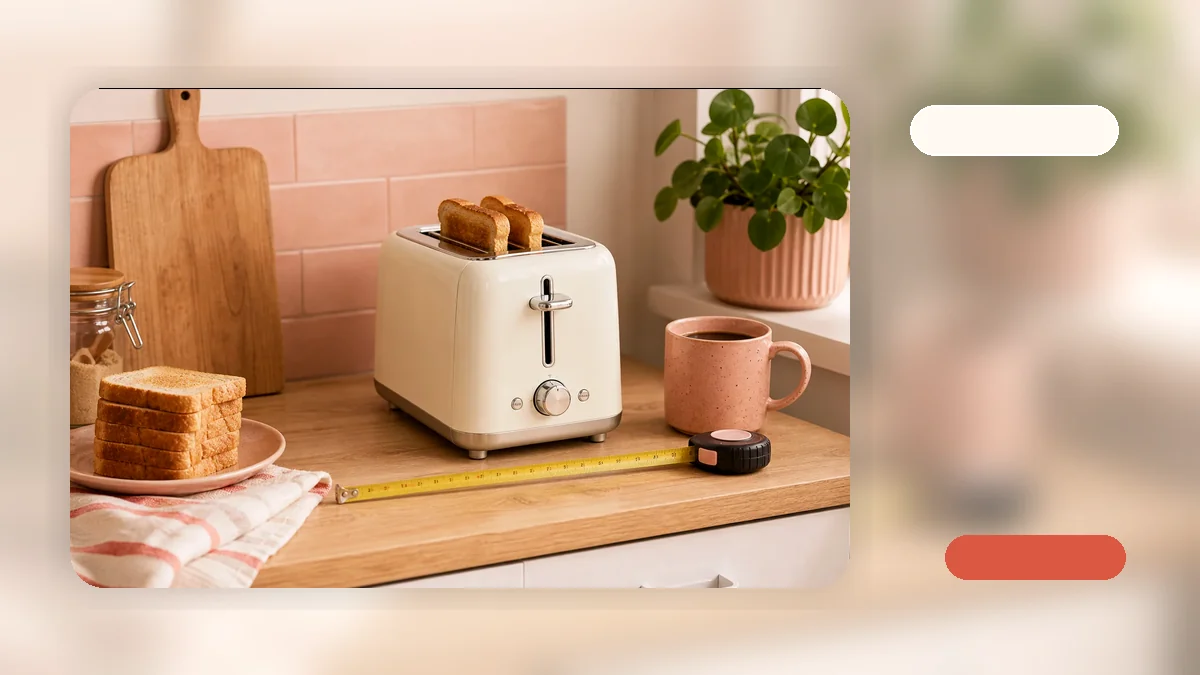
Portable Toaster: What It Actually Means and How to Choose the Right One
When most people search for a portable toaster, they are looking for something small, easy to move, and space-friendly. That is a reasonable thing to want. But the term “portable toaster” covers a surprisingly wide range of products — from compact countertop models that fit in a dorm room to 12V car devices that plug into a cigarette lighter to novelty battery-powered gadgets that may never show up at your door.
The problem is that product pages and marketplace listings often use “portable” as a vague selling word rather than a useful description. In this guide, I want to help you figure out what you actually need based on where you make breakfast, what kind of bread you toast, and how much counter or storage space you have. The right portable toaster depends on your real situation — not on a label.
For a broader overview of toaster features and selection criteria, start with our toaster buying guide.
What Most People Actually Mean by ‘Portable Toaster’
The word “portable” means different things to different people. In my experience reading buyer questions and product descriptions, most searches for a portable toaster fall into a few distinct scenarios.
Scenario 1: Small apartment or dorm. You want a toaster that does not dominate your counter. Your kitchen is small, your storage is limited, and you need something that fits between the coffee maker and the wall. This is the most common situation, and it is the one where a compact countertop toaster works best.
Scenario 2: RV, van, or car travel. You want a toaster that works outside a full kitchen. Maybe you are road-tripping in a converted van, or your RV has a small galley with a standard outlet. You need something that runs on the power you actually have available.
Scenario 3: Camping or outdoor use. You are imagining breakfast at a campsite. This is where expectations and reality tend to diverge — toasting bread requires much more electricity than most people expect.
Scenario 4: Replacing an old, bulky toaster. You had a large countertop toaster that took up too much space, and now you want something smaller and easier to store. You are not necessarily looking for a travel device — just a more compact version of what you already use.
The right toaster depends on which of these scenarios fits your life. If you are in Scenario 1 or 4, a compact 2-slice toaster is almost certainly your answer. If you are in Scenario 2 or 3, the options get more complicated — and I will cover those honestly further down.
Compact Countertop Toasters: The Most Practical ‘Portable’ Option for Most Buyers
For the majority of people searching for a portable toaster, a compact 2-slice countertop toaster is the most practical answer. It gives you real portability in the sense that matters most: a small footprint, a lightweight body, and easy movement between the counter, a cabinet shelf, or a dorm desk.
A mini portable toaster in this category typically weighs between 2 and 4 pounds and measures around 10 to 12 inches wide. That is small enough to tuck into a cabinet when you are not using it, or to leave on a crowded counter without feeling like it owns the space.
A few things matter even in a small toaster:
- Slot width. Even compact models should have slots at least 1.5 inches wide if you ever toast bagels, thick bread, or frozen waffles. Narrow slots force you to squeeze food in, which leads to uneven toasting and frustration.
- Removable crumb tray. In a small kitchen, crumbs collect fast. A removable tray makes weekly cleaning simple. Without one, you are shaking the whole toaster over the trash and still missing half the crumbs.
- Cord wrap or cord storage. A short, tidy cord matters when you are working with limited counter or cabinet space.
- Simple controls. A shade dial and a cancel button are all most people need. Digital controls are fine if you prefer them, but they are not necessary for good toast.
An honest tradeoff: a compact countertop toaster is portable within your kitchen, but it still needs a wall outlet. It will not work in a tent, in a car without a power inverter, or on a picnic blanket. That is a real limitation worth understanding before you buy.
For a good example of what a small-space toaster looks like in practice, see the Classic Compact 2-Slice Toaster for Small Kitchens, which is designed around a clean countertop footprint and straightforward controls.
What to Look for in a Small, Easy-to-Move Toaster
Whether you are buying your first toaster or replacing one that took up too much space, here is a practical checklist for evaluating any small, easy-to-move toaster:
- Measure first. Check the exact dimensions of the toaster and compare them to your available counter or cabinet space. Do not guess — product photos can be misleading about size.
- Weight. Lighter models are easier to move and store, but very lightweight toasters can feel less stable on the counter when you push down the lever.
- Cord storage. A built-in cord wrap or a cord base helps keep your counter tidy, especially in tight kitchens.
- Slot width. At least 1.5 inches if you toast anything beyond standard sandwich bread. Wide slots help fit bagels, thick bread, frozen waffles, and artisan slices.
- Shade control. A simple rotary dial works well for most people. Some compact models offer 5 to 7 shade settings. Digital shade displays are clearer but add cost without changing the result much.
- Crumb tray. Always choose a model with a removable crumb tray. Cleaning a toaster without one is frustrating, especially in a small kitchen where you do not want crumbs on the counter.
- Wattage. Most compact toasters run at 800 to 1000 watts, which is enough for everyday bread. Higher wattage generally means faster toasting, but for a compact model, anything in this range is normal.
- Bagel setting. If you eat bagels regularly, look for a model with a bagel setting. It typically adjusts the heating to brown the cut side more while keeping the outside softer.
The goal is not to find the toaster with the most features. It is to find the one that fits your space, handles your bread, and is easy to clean.
Portable Toasters for Travel and Camping: What Actually Exists
If your idea of a portable toaster involves travel, a car, or camping, the options narrow significantly — and the honest reality is that most of them come with real limitations.
12V car toasters do exist. They plug into a car cigarette lighter or 12V outlet and are designed for basic bread toasting on the road. The tradeoffs are significant: they are slow, hold only one or two slices at most, and heat unevenly compared to a countertop model. They can work in a pinch for a road trip breakfast, but do not expect the same experience as a kitchen toaster.
Portable toaster for camping with an RV is a more practical scenario. If your RV has electrical hookups, a generator, or a 1000W+ inverter, a standard compact 2-slice toaster works fine. You get full toasting performance without any special adapter. Just make sure the wattage of the toaster does not exceed your RV’s power capacity.
For tent camping without any power source, a toaster is not realistic. Standard countertop toasters need 800 to 1500 watts, which is far beyond what a portable battery or solar panel can reliably provide. At a campsite without electricity, your breakfast options are better served by a campfire, a portable stove, or simply eating bread that does not need toasting.
Some marketplace listings advertise a portable toaster for travel that sounds compact and convenient. Before buying, check whether it has a recognizable brand, clear wattage specs, and real customer reviews with photos. Many of these listings lead to small novelty devices with poor heating performance.
Handheld and Battery-Powered Portable Toasters: Honest Limitations
Searches for “portable toaster battery powered” or “handheld portable toaster” lead to a category of products that deserves a direct, honest answer: most of these are not reliable mainstream products.
The fundamental problem is power. Toasting bread requires sustained high heat — typically 800 watts or more. That is a significant electrical draw. Standard portable batteries, power banks, or USB chargers cannot deliver that kind of wattage for the time it takes to toast bread. A fully charged laptop battery holds around 50 to 100 watt-hours; a single toasting cycle at 800 watts would drain it in minutes.
Handheld toaster concepts have appeared in online ads and novelty product listings, but no established kitchen appliance brand currently offers a reliable handheld toaster. Most products in this category are either prototypes, novelty items with poor heating performance, or listings with vague specs and no verifiable brand backing.
The search query “toaster portable car heater” likely reflects some confusion between car heaters and car toasters — these are different products entirely. A car heater warms the cabin. A car toaster is a small 12V device that toasts bread. They are not interchangeable.
My recommendation: if a product has no clear brand name, no verifiable wattage specs, and sounds too good to be true for the price, it probably is. For real travel needs, a 12V car toaster for basic road-trip bread, or a compact countertop toaster in an RV with hookups, are more reliable choices.
Which ‘Portable’ Toaster Setup Fits Your Situation?
Here is a simple way to match your scenario to the right type of portable toaster:
| Your Situation | Best Portable Toaster Type | Key Notes |
|---|---|---|
| Small apartment, dorm, or studio | Compact 2-slice countertop toaster | Widest selection, easiest to clean, needs a wall outlet |
| RV with electrical hookups or generator | Compact 2-slice countertop toaster | Check that toaster wattage fits your RV power capacity |
| Car or van travel without kitchen outlets | 12V car toaster | Slow, limited capacity, uneven heating — but functional |
| Camping without any power source | No toaster recommendation | Consider a camp stove or fire for hot breakfast |
| Want a smaller toaster, period | Compact 2-slice model with crumb tray | Measure your space first; check slot width for your bread |
A note on the portable sandwich toaster search: products marketed as portable sandwich toasters are usually closer to panini presses or contact grills. They press and heat bread around fillings rather than toasting slices in slots. If that is what you are after, it is a different product category with different buying criteria.
Browse our full toaster product selection to compare models that fit your space and breakfast routine.
Keeping a Compact Toaster Clean and Working Well
A compact toaster in a small kitchen needs regular attention. Because the appliance is small and close to walls, cabinets, and other countertop items, crumbs and heat buildup are more noticeable than they would be in a large kitchen.
A few practical habits help:
- Empty the crumb tray weekly. Crumbs build up faster than you expect, and accumulated crumbs can cause smoke, burning smells, or even small flare-ups.
- Unplug and let the toaster cool before cleaning. Never reach inside a hot toaster or shake it while it is still plugged in.
- Wipe the exterior with a damp cloth. Do not submerge any part of the toaster in water.
- Before storing a compact toaster in a cabinet, make sure the crumb tray is empty and the interior is clean. Bread residue left in a closed space creates odor.
For a complete guide to toaster cleaning and maintenance, see our toaster care and cleaning guide.
Frequently Asked Questions
Is there a toaster that works without electricity?
Battery-powered toasters are not a reliable mainstream product category. Toasting requires high heat — typically 800 watts or more — which far exceeds what most portable batteries can deliver. For camping without any power source, a toaster is not a practical option.
Can I use a regular toaster in my car?
Standard household toasters in the US require a 120V wall outlet. They will not work with a 12V car outlet. Dedicated 12V car toasters exist as a separate product category, but they are slow, hold only one or two slices, and heat unevenly compared to countertop models.
What is the smallest toaster I can buy for a small kitchen?
A compact 2-slice toaster is the most practical small-space option. Look for models with a small counter footprint, cord wrap or cord storage, and a removable crumb tray. Measure your available counter or cabinet space before ordering so you know the toaster will actually fit.
Are handheld toasters real?
Handheld toaster concepts have appeared online, but no established kitchen appliance brand currently offers a reliable handheld toaster. Most products in this category are novelty items or limited-availability gadgets with poor heating performance. A compact countertop toaster is a more practical choice for everyday use.
What should I look for in a travel toaster for an RV?
If your RV has electrical hookups or a generator, a standard compact 2-slice toaster works well. Choose one with a small footprint, wattage that fits your RV’s power capacity (typically 800 to 1000 watts), and a removable crumb tray for easy cleaning. Measure your RV galley counter space before buying.
If a compact 2-slice toaster sounds like the right fit for your space, browse our selection of 2-slice toasters to find one that matches your breakfast routine.