
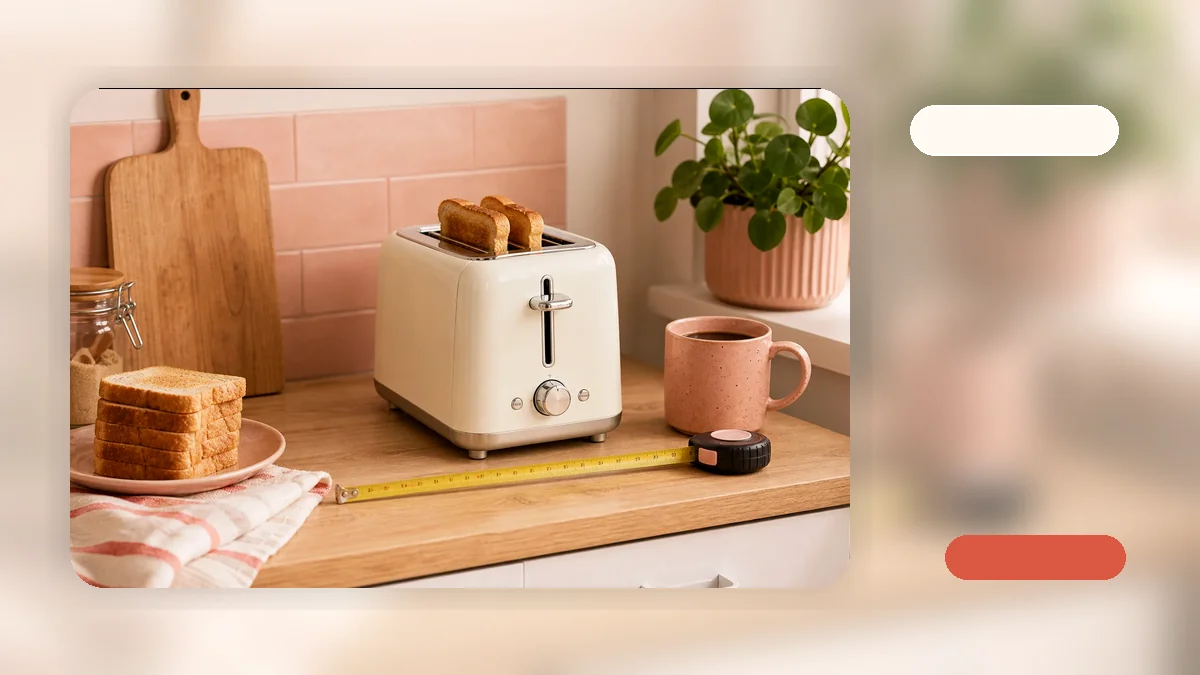
Travel Toaster: How to Choose a Portable Toaster for Small Spaces and On-the-Go Breakfasts
A travel toaster is not a separate category of appliance. In most cases, it is a small, lightweight 2-slice toaster selected for its compact footprint, simple controls, and easy portability. If you have ever stood in a vacation rental kitchen wishing you had a reliable toaster instead of whatever mystery appliance the host left behind, you already understand the appeal.
This guide walks through what actually matters when choosing a portable toaster for travel, dorm life, RV kitchens, or small apartments. We will cover the features that make a difference, the trade-offs to expect, and where a compact 2-slice toaster fits into your breakfast routine — and where it does not.
What Is a Travel Toaster, and Who Actually Needs One?
A travel toaster is a compact, lightweight toaster designed for portability or very small counter spaces. It is useful for RVs, hotel rooms with kitchenettes, dorm rooms, vacation rentals, and tight apartment kitchens where a full-size toaster takes up too much room.
It is not a different kind of appliance. It is usually a small 2-slice toaster chosen for size, weight, and simplicity. The “travel” label on a product page tells you about the toaster’s intended use case — not about a fundamentally different design.
A travel toaster tends to work best for:
- RV travelers and campers with limited counter and electrical capacity
- Dorm students who need a small footprint for one person
- Business travelers staying in places with kitchenette access
- Small apartment renters replacing a bulky toaster that dominates the counter
- Frequent movers who want a lightweight, packable appliance
A travel toaster is probably not the right choice if you need to toast four or more slices at once, regularly toast large artisan bread loaves, or want full digital controls and smart features. For those needs, a standard or larger toaster is more practical. Our toaster buying guide covers the full range of options if you are still deciding what size fits your kitchen.
In my experience reviewing product specs and reading buyer feedback, the people most satisfied with a travel toaster are those who chose it for a specific space constraint — not those who bought it because the word “travel” sounded convenient. Know your counter, know your outlet, and choose accordingly.
Key Features to Look For in a Portable Toaster for Travel
When shopping for a portable toaster for travel, the features that matter most are different from what you might prioritize in a full-size kitchen toaster. Here is what to focus on — and what you can safely ignore.
Size and Weight
Look for a toaster that fits easily in a bag, cabinet, or RV countertop without dominating the space. A compact 2-slice toaster typically measures around 10–12 inches long and 6–7 inches wide. Anything heavier than about 3 pounds starts to feel like a burden in a travel bag. The practical version is simple: if it does not fit in your available space, nothing else about the toaster matters.
Wattage and Power Compatibility
Most travel toasters run between 700 and 1,000 watts. This is lower than many full-size models, which can run 1,200–1,500 watts. For RV users, a lower-wattage model is often safer because campsite hookups and generators have limited capacity. Always check your power source before plugging in — an overloaded circuit is a real problem, not a theoretical one.
Slot Width
Even a compact toaster should have slots wide enough for standard sandwich bread. If you eat bagels, look for slots at least 1.5 inches wide. Wide slots matter more than extra buttons or fancy settings because they determine whether your bread actually fits without forcing. This is one area where checking the actual measurements on the product page pays off more than reading marketing copy.
Shade Control
Five to seven browning settings give you enough control without overcomplicating the interface. For travel use, a simple dial is easier to adjust than a digital panel — and less likely to break if the toaster gets jostled in a bag.
Removable Crumb Tray
A removable crumb tray is essential for travel use. Cleaning opportunities are limited on the road, and accumulated crumbs cause burning smells and sometimes smoke. If the crumb tray does not slide out easily, you will end up skipping cleanup — and paying for it later with a smoky kitchen.
Cord Storage
A built-in cord wrap or cord storage compartment keeps the power cable tidy in a travel bag or small cabinet. It is a small detail, but it makes a noticeable difference when you are packing and unpacking the toaster repeatedly.
Simple Controls
A dial or single lever is preferred over complex digital panels for travel durability. Fewer moving parts means fewer things that can break. For more detail on how these features compare across models, see our toaster care and cleaning guide for tips on maintaining a compact toaster over time.
Travel Toaster vs. Regular Compact Toaster: Is There a Real Difference?
Here is the honest answer: most “travel toasters” on the market are small 2-slice toasters. The distinction is often about marketing, not engineering. A toaster does not need a special label to work well in a small space.
What matters more than whether the product page says “travel” is the actual dimensions, weight, wattage, and whether the toaster fits your specific situation. A good compact 2-slice toaster can serve double duty — working well on your kitchen counter at home and packing easily for a weekend trip or a semester in a dorm.
Dual-voltage models exist, but they are rare in the toaster category. Most toasters sold in the U.S. are single-voltage, designed for 120V outlets. If you are traveling internationally, a U.S.-spec toaster will not work in 220V outlets without a converter — and most manufacturers do not recommend using converters with heating appliances.
In Nora’s editorial experience reading toaster product pages and buyer reviews, the label “travel” or “portable” does not tell you much about quality. The specifications do. Choose by measurements, weight, and features. If you want to shop all toaster models and compare side by side, focus on the ones that match your space and power situation — not the ones with the most appealing product name.
Best Mini Travel Toaster Use Cases: Where a Small Toaster Actually Makes Sense
Grounding the decision in real scenarios helps more than reading a feature list. Here are the situations where a compact toaster genuinely earns its counter space.
RV and camper kitchens. Counter space is limited, and electrical capacity is often lower than a standard home outlet. A low-wattage compact toaster is practical here — just make sure it does not draw more power than your RV system can handle.
Dorm rooms. A small footprint matters when your entire kitchen is a mini fridge and a shared microwave. A 2-slice toaster with a simple dial control is usually enough for one person. In my experience, dorm toaster buyers are happiest when they stop looking at features and start looking at dimensions.
Vacation rentals and Airbnb stays. Bringing your own toaster avoids relying on unknown kitchen equipment. You know it works, you know how to clean it, and you do not have to wonder when someone last used that rusty toaster in the rental kitchen drawer.
Business travel with kitchenette access. If you stay in extended-stay hotels regularly, a lightweight toaster lets you maintain a breakfast routine without eating out every morning. Toast, a bagel, or a frozen waffle is faster and cheaper than a restaurant breakfast.
Small apartment kitchens. If your current toaster dominates the counter, replacing it with a compact model frees up space for other prep. The Classic Compact 2-Slice Toaster for Small Kitchens is one example of a model designed to do its job without taking over your countertop.
Cleaning and Safety Tips for Using a Toaster on the Road
Travel introduces extra variables — unfamiliar outlets, limited cleanup space, and the temptation to skip maintenance. Here are the basics that matter most.
- Let it cool before packing. Never wrap a warm toaster in a bag or towel. It sounds obvious, but in a rush to check out of a rental, people do this more often than you might expect.
- Empty the crumb tray before every trip. Accumulated crumbs cause burning smells and sometimes smoke. Do it after every few uses at home, too.
- Unplug when not in use. This is especially important in unfamiliar electrical setups like RV parks, rental kitchens, or dorm outlets that may be shared with other high-draw appliances.
- Store upright and padded. Pack the toaster upright in a padded bag or between soft items. This helps avoid dents and protects the heating elements from impact damage.
- Keep it away from flammable materials. In tight spaces like RV kitchens or dorm desks, do not use the toaster near curtains, paper towels, or anything that can catch fire. Give it at least a few inches of clearance on all sides.
Users should unplug the toaster and let it cool completely before any cleaning. For routine maintenance tips, our toaster care and cleaning guide covers crumb tray cleaning, exterior wiping, and what to do if you notice a burning smell.
What a Travel Toaster Probably Will Not Do Well
Setting honest expectations prevents disappointment. A compact travel toaster has real limitations, and it is better to know them before you buy.
Narrower slots. Most travel-size toasters have narrower slots than full-size models. Thick bagels, Texas toast, and artisan sourdough slices may not fit without forcing — and forcing bread into a slot is a good way to end up with stuck, unevenly toasted bread.
Less even browning. Compact toasters with smaller heating elements may toast slightly less evenly than larger models with more powerful elements. This is a trade-off of size, not a defect.
It is not a toaster oven. A travel toaster will toast bread, bagels, and frozen waffles. It will not bake, broil, or reheat pizza. If you need those functions, a toaster oven is a different appliance with different dimensions and power needs.
Lower wattage means slower toasting. Models in the 700–900W range take slightly longer to reach full browning compared to a 1,400W kitchen toaster. For most breakfast scenarios, the difference is a minute or two — but it is worth knowing.
International voltage. If you travel outside the U.S., a 120V toaster will not work in 220V outlets safely. Most toaster manufacturers do not recommend voltage converters for heating appliances. This is a safety boundary, not a suggestion.
FAQ: Common Questions About Travel and Portable Toasters
Can I use a toaster in an RV or camper?
Yes, but check your RV’s electrical capacity first. A lower-wattage model in the 700–900W range is a safer choice for limited power setups like campground hookups or generators. If your RV has a standard 120V outlet with adequate amperage, a compact toaster should work without issues. When in doubt, consult your RV manual or an electrician before plugging in high-draw appliances.
What is the difference between a travel toaster and a mini toaster?
In most cases, there is no real engineering difference — it is marketing language. Both terms usually describe a small 2-slice toaster. Instead of relying on the label, focus on the actual dimensions, weight, and wattage. If it fits your space and power source, the name on the box does not matter.
Can I pack a toaster in my luggage for a trip?
A small 2-slice toaster can fit in a carry-on or checked bag, but weigh it first — most compact toasters are 2–4 pounds. Empty the crumb tray before packing to avoid mess. Wrap the toaster in a soft item like a towel or sweater to protect it from impact. A padded travel bag designed for small appliances is the safest option if you travel with a toaster frequently.
Do travel toasters have a bagel setting?
Some compact models include a bagel setting, but many prioritize simplicity over extra features. Here is what matters more: if bagels are a breakfast staple for you, check the slot width before looking for a bagel button. A toaster with 1.5-inch-wide slots and no dedicated bagel setting will handle a standard bagel half better than a toaster with a bagel button and slots that are too narrow. Slot width is the practical constraint; the bagel setting is a bonus.
How much should I spend on a travel toaster?
Most compact 2-slice toasters suitable for travel fall in the $20–$45 range. Paying more typically adds stainless steel housing, a retro design, or brand-name styling — not noticeably better toasting performance. For travel and small-space use, a $25–$35 toaster with a removable crumb tray, simple dial control, and adequate slot width is usually the practical sweet spot. If you are looking for a clear overview of what different price points offer, our toaster buying guide breaks down the features that actually matter at each budget level.
I searched for “time travel toaster” — is that a real product?
No. If you are looking for a toaster you can take on trips, pack in luggage, or use in a small space, you are in the right place. This guide covers portable and compact toasters for real-world travel and small-kitchen use. If you are looking for something from a TV show or a novelty item, this is not that — but we hope the breakfast advice is still useful.
If a compact 2-slice toaster sounds like the right fit for your space or travel plans, browse our 2-slice toaster collection to compare sizes, features, and slot widths.