
In modern life, time management has become one of the most important skills in managing the family rhythm. Mornings are especially hectic, often a crucial time that determines mood and productivity throughout the day. Commuting, preparing breakfast, caring for children, organizing personal belongings—every minute feels precious.
Against this fast-paced backdrop, the toaster has evolved from a simple heating tool into a time management device in the kitchen that helps people organize and improve efficiency. Although its mechanical structure seems simple and its functions uncomplicated, its existence changes the rhythm of morning food preparation, making time more controllable and transforming life from hurried to orderly. This article will explore the time management advantages of the toaster from five key perspectives , revealing why it has become an irreplaceable kitchen assistant in busy mornings.
One advantage: Stable and predictable heating efficiency allows for more precise timing planning.
Many people see a toaster simply as a quick heating tool, but its true value lies in its predictability. Among modern appliances, microwaves heat food quickly, but the moisture content, density, and shape of different ingredients affect the cooking time, often requiring multiple attempts to achieve the desired result.
Frying pans require preheating and temperature adjustments, introducing numerous variables. A toaster, however , virtually eliminates these instabilities. Its heating cavity, heating element spacing, timing circuitry, and internal heat distribution are all fixed, meaning users can accurately predict when food will be ready.
This stability has significant practical implications. Once you set a familiar timer, such as level three or four, you know the bread will reach your desired toasty color in a few minutes. Predictable timing means you can simultaneously complete other preparations, such as washing up, organizing items, making coffee, or packing the kids’ school bags, without constantly worrying about checking the food. This time-free mechanism, shifting from “waiting” to “parallelism,” is the first key advantage of toaster in helping improve morning efficiency.
The toaster ‘s internal circuitry also features a temperature control mechanism to maintain a stable heating curve. Some models even incorporate temperature sensing technology to prevent overheating and scorching. This stability transforms mornings from chaotic to predictable, allowing you to organize everything in a calmer and more controlled manner. This sense of rhythm is often more important than the device’s functionality for busy families.
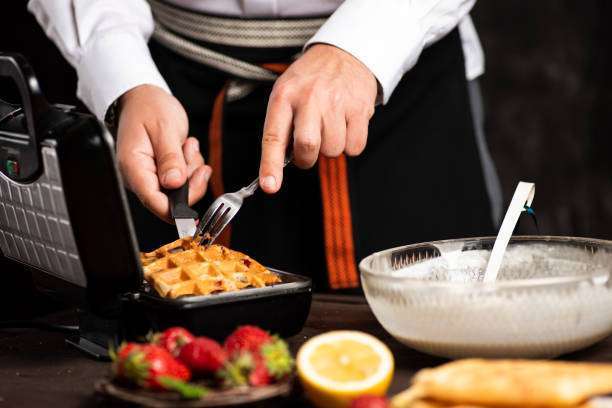
Two advantages: The automatic pop-up mechanism eliminates the need for you to stay nearby, avoiding wasted time.
Among all kitchen appliances, the toaster ‘s automatic pop-up mechanism is arguably the most time-saving design. This structure relies on the coordinated action of spring force, a timer, and a temperature control switch to automatically raise food to a height where it can be removed after the preset heating time. This seemingly simple mechanism actually reflects a deep understanding of user behavior patterns and time management needs.
First, it eliminates the need for constant monitoring of the heat like operating a stove or standing by to prevent overflows like cooking noodles. Its automation means you’ll be notified when the heating process is complete with a sound or a physical pop-up, making the toaster a tool that “won’t secretly overheat.” It won’t turn your breakfast into a charcoal mess if you leave it for a few minutes, nor will it pose a kitchen safety risk due to excessive heat.
This mechanism allows users to freely engage in other activities while the bread is baking, such as making a cup of coffee, tidying up the kitchen counter, or simply taking a few seconds to rest, without worrying about the food’s condition. For those who are time-sensitive in the morning, this shift from passively waiting to actively using time is the core of improving efficiency. When the food preparation process no longer requires your continuous attention, it transforms from a task into an automated process.
More importantly, the automatic pop-up mechanism reduces cognitive load. In the hectic mornings, everyone’s attention resources are limited, and Toaster automates the cooking endpoint determination, eliminating the need for users to perform additional calculations or memorization. This reduced cognitive burden is a key reason why it has become a powerful time management tool.
Three advantages: Simplified operation reduces thinking costs and makes the morning process smoother.
Time management is not just about saving time; it also involves regulating attention and mental rhythm. Toaster ‘s simple design is tailored to the psychological characteristic of limited attention in the morning. Compared to air fryers, microwaves, or smart cooking appliances that require multiple steps to select modes, temperatures, and times, Toaster ‘s operation often relies on just a single knob and a lever.
This extremely simplified operation eliminates the need for users to repeatedly think about “which mode to choose” or “whether to adjust the temperature,” or to determine whether the heating area needs preheating. It uses a fixed setting corresponding to a specific level of doneness, making the relationship between operation and result clear and direct. Users require almost no cognitive judgment; simply pressing a button puts the device into a stable operating state.
This advantage of reduced cognitive load is invaluable in time management, especially in the morning when we’re already multitasking. Less cognitive burden allows users to prepare breakfast in a more relaxed state of mind. This ease is reflected not only in the operation itself but also in the smoothness of the entire process. Simplified steps allow users to enter a streamlined, rhythmic household chores mode, avoiding pauses or delays caused by complex operations.
Meanwhile, the button layout, knob feedback, and tactile feel of the toaster have been refined over the years to achieve a design highly intuitive for human use. Users are virtually immune to accidental touches or incorrect settings, and this high success rate further reduces wasted time due to errors. All these factors make the toaster a device that requires no learning curve or conscious thought, and this simplicity is a crucial psychological support for improving the morning rhythm.
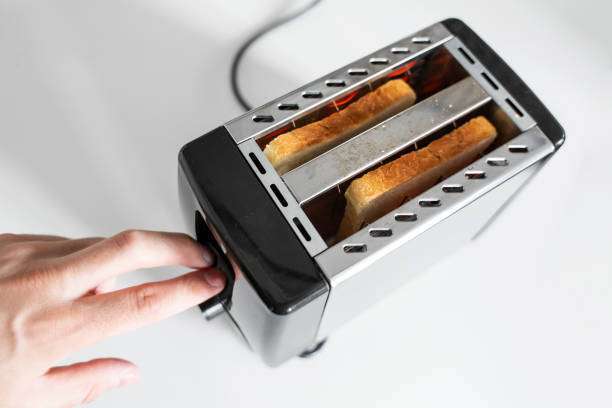
Four advantages: Multitasking capability makes kitchen workflow more efficient.
In the morning kitchen, multitasking is almost the norm; for example, you might be heating milk, preparing fruit, or tidying up lunch while frying eggs. The toaster ‘s independent heating chamber and timer system allow it to work independently without occupying the stove or requiring extra attention. This independence is a crucial foundation for enabling parallel multitasking.
Unlike microwaves that occupy the center of the countertop and frying pans that dominate the stove, toasters typically sit quietly in a corner, without interfering with the use of other tools. Once you place bread in the toaster, it becomes a self-contained mini-system; you don’t need to monitor the flame, stir or flip it, and there are no issues with smoke or spills. This means you can focus more on other tasks that require real-time operation, such as frying eggs or making coffee.
This parallel processing capability not only saves time but also restructures the morning kitchen rhythm. For example, in traditional breakfast preparation, if you need to personally oversee every step, you have to complete one task before moving on to the next. The addition of a toaster transforms the entire process from sequential construction to parallel collaboration. The moment you press a button, it becomes your kitchen assistant, working together to advance the timeline.
Meanwhile, the toaster ‘s stability ensures that sudden uneven heating or malfunctions won’t disrupt the overall workflow. Its consistent heating curve and clear operating logic eliminate unexpected variables, minimizing risks during multitasking. Users can plan their actions based on this stability, creating an efficient kitchen workflow.
Five advantages: Standardized workflow ensures a stable breakfast rhythm and enhances a sense of control over the day.
The true core of time management isn’t about saving a few minutes, but about establishing a stable, repeatable, and predictable rhythm of life. Toaster works precisely at this level. Pressing a button each morning, waiting for the fixed time, and the food popping out steadily—this series of steps creates a small but consistent ritual. For busy people, this stable break from the chaos of the morning is a crucial anchor for managing their day’s rhythm.
This streamlined breakfast preparation method reduces uncertainty, eliminating the need to worry about how to prepare breakfast every day or the inconsistency of the results. Consistent heating efficiency and fixed time expectations make breakfast preparation a low-energy, repetitive activity, rather than a daily decision-making process. Fewer decision points mean a smoother morning routine, which is especially important in mornings when cognitive resources are limited.
At the same time, the toaster ‘s consistent output cultivates a sense of control in the user. Each button press corresponds to a fixed result, and each heating cycle completes within the expected range. This stability psychologically reduces the chaos of the morning. This increased sense of control improves overall mood, reduces stress caused by rushing, and makes the workday flow more smoothly.
The accumulation of this stable rhythm can even influence the daily routines of family members. Children know when the bread will be ready, another family member knows when to make coffee, and the family’s morning routines gradually form an orderly and collaborative pattern. The toaster becomes the starting point and time marker for this collaboration, making time management not only affect individuals but also the overall rhythm of the family.
Conclusion
The toaster plays an indispensable role in busy modern families far more than just baking bread to a crisp. Its true power lies in shaping rhythm, freeing up attention, and optimizing processes. From predictable heating times to automatic pop-up mechanisms, from cognitive reduction through simple operation to support multitasking, and to a stable, repetitive breakfast rhythm, every advantage revolves around one core principle: making mornings more efficient, easier, and more controllable.
When an appliance helps you reduce stress, increase efficiency, and bring a stable rhythm to your life during your busiest times, it becomes more than just a kitchen tool; it becomes a key partner in time management. The toaster is just such a device, making busy mornings less hectic and allowing your day to begin with control and certainty.