9 Smart Toaster AI Innovations: Heating Curves Completely Upgrade the Breakfast Experience

In an era of comprehensive upgrades to smart home appliances, the evolution of toasters was once considered an “unbreakable” technological field. The traditional core structure remained virtually unchanged for decades, still relying on mechanical timers, resistance heating elements, and simple temperature protection mechanisms. However, with the leaps in artificial intelligence, dynamic temperature algorithms, and materials science over the past decade, this seemingly simple kitchen appliance has begun to usher in its own intelligent revolution. Smart toasters are no longer content with simply heating and crisping bread; they strive to learn user preferences, analyze changes in bread texture, optimize heating curves, and even automatically generate optimal heating strategies based on humidity, thickness, and ambient temperature.
Smart toasters have not only improved baking results but also changed the way users experience breakfast. From the fixed mechanical heating of the past to today’s real-time monitoring of temperature and moisture evaporation rate, from the unavoidable uneven baking of the past to today’s ability to dynamically adjust heat and precisely control the degree of caramelization, the addition of AI has made the toaster a device that truly “understands bread.”
I. The adaptive heating curve enables more scientific control of caramel aroma.
Traditional toasters rely on fixed time and temperature output, unable to automatically adjust heating based on changes in bread material, density, or humidity. AI-adaptive heating curves completely change this. A smart toaster collects data in real-time during heating, including temperature, bread surface reflectivity, and moisture evaporation rate, and automatically adjusts heating power, making the entire process no longer determined by time but guided by the “target texture.”
The essence of adaptive heating curves is to simulate a professional baking process. Traditional ovens create a crispy exterior and soft interior through segmented temperature increases, and AI toaster is also learning this method. It lowers the heat at the beginning to ensure even heating inside the bread and then increases the power once the moisture has evaporated to a certain extent, allowing the surface to undergo the Maillard reaction quickly. The end result is a more even caramelization, a richer aroma, and even more precise baking results for breads from different brands.
II. Intelligent recognition of bread thickness enables precise heat adjustment.
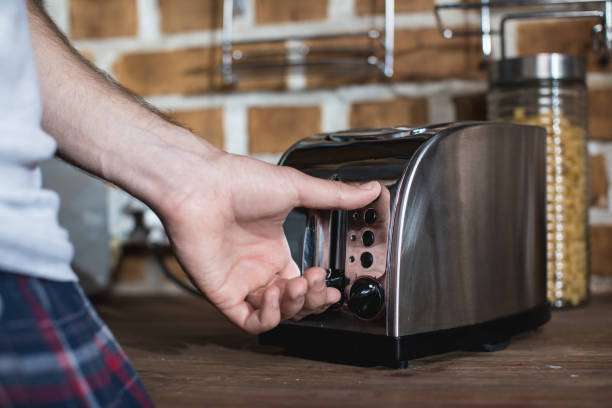
One of the key factors affecting bread toasting results is thickness. Thin slices of bread are prone to burning, while thick slices are prone to undercooking; traditional toasters cannot automatically adjust for this. Smart toasters use thickness recognition technology to determine the thickness of the bread slices using optical or pressure sensors and dynamically adjust power, time, and heating curves accordingly.
The significance of intelligent recognition lies in avoiding repeated trial and error for users. In the past, users could only estimate “which setting is most suitable” based on experience, but intelligent recognition makes the operation simpler and more predictable by automatically recognizing the thickness. Thick slices of bread no longer need to be heated for longer or repeatedly, and thin slices of bread will not have burnt edges, resulting in a more consistent overall taste.
Third, AI learns user preferences, making each baking process closer to the ideal taste.
a smart toaster is its learning ability. It can record the user’s preferred browning level, desired caramelization, and bread type, and use historical data to predict the expected result of the user’s current choice. As usage increases, the AI will gradually create a personalized “taste profile” for each user.
This learning ability makes the toaster more personalized. Different family members can even have different preference settings. The AI will automatically determine who is using the machine based on how buttons are pressed and the position of the browning knob and load the heating curve most suitable for that user. This highly personalized design makes breakfast more in line with individual habits, eliminating the need for repeated adjustments to settings.
IV. Real-time monitoring of moisture evaporation enhances the aroma and flavor profile.
The aroma of bread originates from the Maillard reaction, and one of the key variables in the Maillard reaction is the rate of moisture evaporation. Traditional toasters , lacking real-time monitoring mechanisms, are prone to uneven moisture evaporation, leading to suboptimal baking results. Smart toasters analyze the evaporation process using built-in infrared sensors or spectral detection modules, thereby determining the bread’s condition in real time.
When the AI detects that the moisture evaporation rate is too fast, it automatically reduces the power to prevent premature caramelization of the surface; when the evaporation rate is slow, it increases the heat to drive the reaction, allowing the overall aroma to be released more fully. This dynamic monitoring mechanism makes the aroma of the toast more natural and layered, allowing you to experience the perfect balance of crispness and softness from the very first bite.
V. Precise temperature control technology ensures that every slice of bread has a perfectly uniform color.
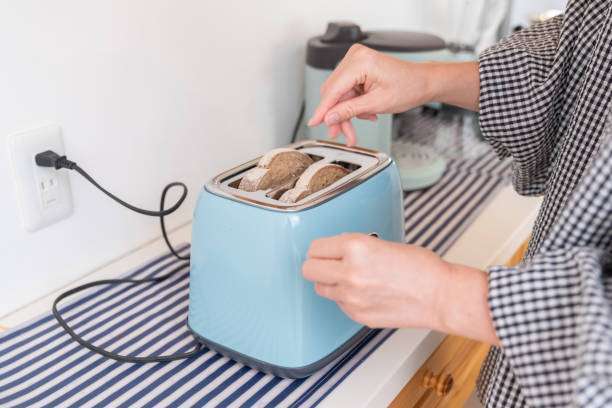
Uneven browning has always been the most common problem with traditional toaster. The smart toaster uses an array of temperature sensors to monitor the temperature distribution of the heating element in real time, upgrading the traditional method of heating with a single resistor to a precise control mode. When temperature fluctuations exceed the standard, AI immediately adjusts the power to restore even heating across the entire area.
Precise temperature control not only ensures even coloring but also reduces the formation of charred areas, thereby minimizing bitterness and carbonization. For consumers who value aesthetics, this technology enhances the visual appeal of breakfasts. For health-conscious consumers, reducing unnecessary high-temperature carbonization also makes food safer.
VI. The intelligent pop-up mechanism selects the optimal timing in real time based on the baking status.
Traditional automatic toaster mechanisms rely on time or temperature limits, while the smart toaster uses AI to analyze a combination of factors to determine when to pop up. These factors include bread thickness, humidity, heating curve trends, and target browning level. The biggest advantage of the smart toaster mechanism is that it avoids over-baking or under-baking.
Smart devices can even determine the optimal texture of bread within a single second, rather than relying solely on a scale or mechanical timer. This precise judgment eliminates the worry of the bread burning after a short absence, making the entire breakfast process more relaxed and comfortable.
VII. Environmental sensing capabilities make the heating curve more stable.
The temperature and humidity of the kitchen environment have a significant impact on toaster performance. In winter, the room temperature is low, and the bread temperature is even lower, requiring a longer preheating time; in summer, high humidity may delay evaporation. The smart toaster uses environmental sensors to analyze these variables in real time and automatically compensate for them, ensuring stability in every baking process.
Environmental awareness further enhances the intelligence of the heating profile, enabling the device to automatically adapt to different seasons and varying levels of humidity or dryness. This technology frees the toaster from external environmental constraints, resulting in more consistent results.
8. Intelligent energy management makes equipment more energy-efficient and effective.
AI isn’t just about improving baking results; it’s also about optimizing energy consumption. A smart toaster can analyze the heating curve to reduce unnecessary high-power output, thus achieving energy savings. It dynamically adjusts power based on the bread’s condition, for example, reducing subsequent heating when the surface reaches the Maillard reaction stage to preserve aroma without excessive energy expenditure.
Intelligent energy management enables devices to improve performance while reducing electricity costs and is a key trend for future smart kitchens. For families seeking high energy efficiency, this capability represents a fundamental upgrade to the toaster design philosophy.
9. Intelligent linkage and remote control make the user experience more convenient.
The intelligent AI innovation is not only reflected in the heating curve itself but also in the external interaction methods. The device can connect to a mobile application, allowing users to start preheating via their phones before getting out of bed. The smart toaster can also be integrated with smart home systems, enabling voice control or collaborative operation with other kitchen appliances.
More importantly, AI can continuously update its algorithms through internet connectivity, making the device increasingly intelligent. Acquiring new heating curves from the cloud, adapting to more types of bread, and learning more user behavior patterns all become possible. This intelligent linkage transforms the toaster from a static product into a continuously evolving kitchen partner.
Conclusion
Nine AI-powered innovations have comprehensively enhanced the breakfast experience. From thickness recognition to heating curve learning, from temperature monitoring to environmental awareness, and from intelligent judgment of the pop-up mechanism to energy efficiency optimization, each technology is evolving towards greater precision, thoughtfulness, and humanization. The toaster has transformed from a traditional mechanical device into a crucial element in the smart kitchen, not only improving food quality but also providing users with a more relaxed, enjoyable, and efficient breakfast experience.
More smart toaster and feature guides
Smart toaster features are easiest to evaluate when you connect them to real breakfast routines, not feature lists alone.
Quick FAQ
What is an AI toaster meant to improve?
Most smart or AI toaster ideas focus on more convenient controls, shade consistency, preset routines, or adapting settings to different bread types.
Should every buyer choose a smart toaster?
Not always. A simple toaster may be better if you mainly need dependable slots, easy cleaning, and straightforward shade settings.