Bread burns easily instead of being crispy? Learn how toasters heat and how to fix it.

Quick answer: why does a toaster heat or brown unevenly?
Uneven browning usually comes from crumbs, bread thickness, frozen spots, off-center placement, a shade setting that is too high, or older heating elements. Start with cleaning and bread fit before assuming the toaster has failed.
| What to check | Why it matters |
|---|---|
| Start with the simple causes | Crumbs, bread fit, placement, and settings often explain everyday toaster problems. |
| Watch for warning signs | Repeated smoke, sparks, damaged cords, or breaker trips are reasons to stop using the toaster. |
| Compare the broader guide | Use the how a toaster works when the issue connects to choosing, cleaning, or replacing a toaster. |
- Unplug and cool the toaster before cleaning.
- Empty the crumb tray and remove loose crumbs.
- Try a standard slice at a moderate setting.
- Check whether thick or frozen bread fits freely in the slots.
FAQ
Can crumbs make a toaster brown unevenly?
Yes. Crumbs and stuck pieces can affect smell, smoke, and how cleanly a cycle runs.
Should I use a higher setting for uneven toast?
Not first. Clean the toaster and check bread placement before increasing the shade setting.
When should I stop troubleshooting?
Stop using the toaster if it sparks, trips a breaker repeatedly, or smokes after careful cleaning.
On busy mornings, a slice of golden, crispy toast always lifts the spirit. However, many people encounter the same frustrations when using toasters : sometimes the bread is burnt and bitter, while other times it’s too soft and lacks crispness. Using the same machine and the same type of bread, the results can be completely different. This is due to the subtle interaction between the toaster’s heating principles and the bread’s inherent properties. Understanding these principles is crucial for truly mastering the quality of toasting.
1. The real reason why bread becomes burnt or not crispy
a toaster is simple: high-temperature radiation from a heating wire rapidly dehydrates and caramelizes the bread surface, creating a crispy crust. The problem is that this process is extremely sensitive to moisture and temperature distribution.
has a high moisture content
. When heated, the surface is not completely dry yet, so the steam inside will continue to escape, making it difficult for the crust to become crispy. Especially when heated for a short time, this moisture will make the outer layer soft and even damp.
Uneven heating leads to burnt areas.
Many toasters have uneven heating wires, which can age and accumulate dust over time, causing certain areas to overheat. When bread is placed in these “hot spots,” it can easily become burnt on one side and pale on the other.
toaster settings:
Different bread thicknesses, sugar content, and oil content can affect heating performance. If you use the default setting and your bread is thin or high in sugar, it can burn quickly. Sugar caramelizes at a low temperature, and if the heating wire temperature is too high, the surface will darken prematurely while the interior remains moist.
Storage affects texture.
Bread taken out of the refrigerator can easily become burnt on the outside and cold on the inside when heated. This is because the starch ages in the cold environment, leading to uneven moisture distribution. Bread that hasn’t been refrigerated will dry out faster on the surface at high temperatures, while still releasing moisture from the inside.

2. Understand the “temperature logic” of toaster
Many people think that a toaster is simply “heated until burnt,” but in fact, its working principle is more like a “surface dehydration + caramelization reaction.” When the heating wire is energized, it releases strong infrared radiation, causing the surface temperature of the bread to rise rapidly. When it reaches about 150°C to 180°C, the sugars and proteins undergo a “Maillard reaction,” which is the key process that turns the toast golden brown.
However, if the temperature exceeds 200°C, the caramelization reaction will intensify, and the sugars will be broken down into bitter substances. Therefore, controlling the heating time and temperature range is very important. Different brands and models of toasters also have different temperature control sensitivity, which is why the same gear has different effects on different machines.
3. The correct way to make toast “crispy but not burnt”
Adjust the heating time and setting.
For thick slices of bread, choose medium-high setting, while for thin slices, choose medium-low setting. If the bread is high in sugar or oil (such as butter toast or honey bread), the heating time can be slightly shortened to prevent premature burning.
Bread should be allowed to warm up or dry slightly before
being taken out of the refrigerator. It is best to let the bread sit at room temperature for 5-10 minutes, or preheat it on low for 30 seconds to allow the moisture inside to redistribute before reheating. This will prevent the problem of burnt outside and soft inside.
If some toasters are unevenly heated, you can pause and flip them halfway through baking, or pat the bread to help the steam escape. This will make both sides more evenly browned and have a more balanced taste.
Avoid putting too many slices in the oven at once.
Filling the entire oven tray at once will block the airflow and undercook the center. Maintaining air circulation will help moisture escape, making the surface crispier.
Clean bread crumbs and dust regularly.
Crumbs accumulated on the heating wire can affect heat radiation efficiency and may cause local overheating and burnt food. Clean the tray and heating area weekly to maintain flavor and extend the life of the equipment.
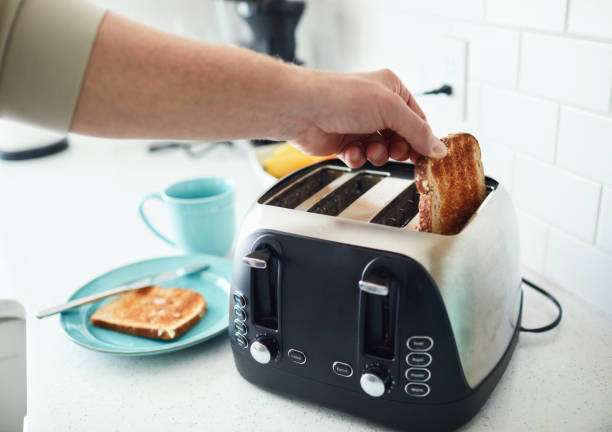
4. Bonus Tips: Take Crispy and Fragrant to the Next Level
For a crispy, café-like texture, lightly brush the bread with butter or olive oil. The oil helps conduct heat, allowing the outer layer to brown faster while locking in the tenderness of the interior. A sprinkle of sugar before baking can also enhance the aroma and color of the caramelized layer. Just be careful with the timing to avoid burning.
V. Summary
bread burns or doesn’t crisp up in the toaster is actually the result of a balance between moisture, temperature, and time. Only by understanding the physics and chemistry of baking can you truly create ideal toast. Don’t let every baking experience rely on luck. By adjusting a few details, you can consistently bake perfect toast that’s crispy on the outside, soft on the inside, and fragrant.