
4 Slice Retro Toaster: How to Choose One That Looks Good and Works Well
A 4 slice retro toaster sits at the intersection of style and function. It looks like something from a 1950s diner — rounded edges, chrome accents, a pop of mint or red — but it still has to toast your bagels evenly every morning. If you are thinking about buying one, this guide will help you figure out whether the retro style fits your kitchen, your breakfast routine, and your counter space, and what to check before you commit.
Choose a toaster by bread type, kitchen size, breakfast routine, and budget. The look can be a great reason to pick one model over another, but only after the basics are covered.
What Is a Retro 4-Slice Toaster?
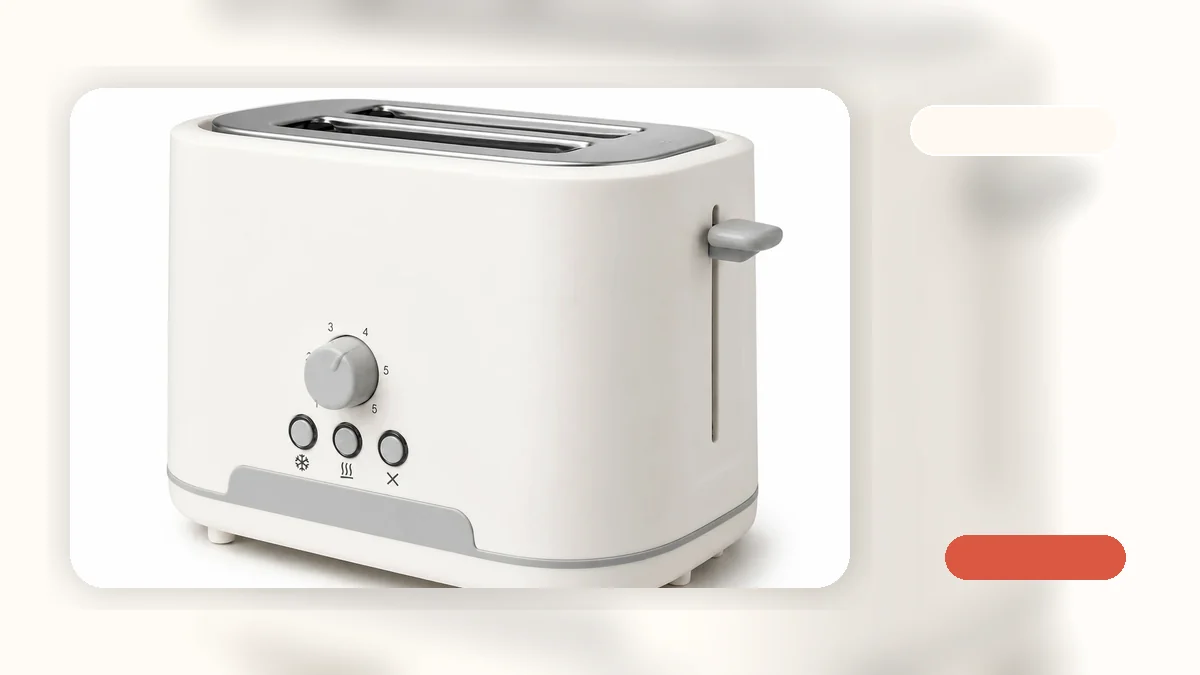
A retro toaster is a toaster whose design borrows from mid-century kitchen aesthetics. Think rounded corners, chrome trim, analog-style dials, and color finishes like pastel mint, cherry red, cream, or powder blue. Some echo the 50s retro style two slice toaster look but scaled up to four slots. The “retro” label refers to how the appliance looks, not to older or outdated heating technology inside.
A 4-slice toaster, in practical terms, is built for households where two or more people eat breakfast at roughly the same time. Instead of running two batches through a smaller model, you toast four slices in one cycle. That makes it a natural fit for families, couples, or anyone who goes through bread quickly on weekday mornings.
If you live alone or rarely need more than two slices at once, a retro toaster 2 slice model may be a better fit — less counter space, same style options. You can browse this Retro 2-Slice Wide Slot Toaster with 6 Shade Settings to see what a compact retro model looks like in practice.
For the full range of 4-slice options — retro and otherwise — our main collection of 4-slice toasters is a good starting point.
Style vs. Function: The Real Trade-Offs
Here is the honest version: some retro toaster 4 slice models are designed primarily to look good. The exterior finish is gorgeous, the color matches your kitchen, and the chrome details catch the light. But when you look closer at the actual toasting — the slot width, the shade dial, the crumb tray, the lever feel — the details may not be as well thought out as the styling.
That does not mean all retro toasters are style over substance. It means you need to check the same functional specs you would check on any toaster, regardless of how it looks.
The features that matter most in daily use:
- Slot width. Can the slots fit a bagel half, a thick slice of sourdough, or a frozen waffle without forcing it? Wide slots matter for bagels, thick bread, frozen waffles, and artisan slices. Some retro models have narrow slots that only work with standard sandwich bread.
- Shade control. Is the dial or button easy to read and set? A numbered dial is more useful than a vague “light to dark” range with no markings.
- Crumb tray. Does it slide out easily? Can you empty it without turning the toaster upside down? A removable crumb tray makes routine cleaning easier and reduces the chance of burning crumbs that cause smoke.
- Lever quality. Does it feel sturdy, or does it wobble? A loose lever is a daily annoyance that no amount of chrome trim will fix.
In my experience reviewing toaster complaints and product specs, the most common regret from buyers is not about the color — it is about finding out too late that the slots were too narrow or the crumb tray was hard to reach. Our toaster buying guide covers the full checklist if you want to compare models side by side.
One more thing about price: the retro style does not belong to a single price tier. You can find retro toasters at budget, mid-range, and premium levels. A higher price sometimes means better build quality or more features, but not always. Some well-known brands like De’Longhi offer a retro 4 slice toaster with solid construction and good controls, while lesser-known brands may look similar but cut corners on internal components. Price alone is not an indicator of better function — check the specs.
Is a 4-Slice Retro Toaster a Good Fit for Your Kitchen?
A 4 slice toaster retro model works best for specific situations:
- Families or couples who eat breakfast around the same time and want to toast multiple slices without waiting.
- Kitchens with enough counter space to handle a wider appliance. A 4-slice toaster takes up roughly twice the footprint of a compact 2-slice model.
- Anyone who wants a style focal point. If your kitchen has a theme — farmhouse, diner, mid-century modern — a retro toaster can tie the look together without much effort.
It may not be the right choice if:
- You live alone and rarely toast more than two slices at once. A compact 2-slice toaster for small kitchens will save you counter space and do the same job.
- Your apartment kitchen has very limited counter space. A 4-slice model has visual weight — it looks substantial, which is the point of the retro style, but it also takes up real estate.
- You mostly toast one thing at a time and do not mind running two cycles through a smaller toaster.
The practical version is this: if two or more people in your household eat toast, bagels, or frozen waffles at the same time, and you have the counter space, a 4-slice retro toaster makes sense. If you are the only one eating breakfast, the extra slots will sit empty most mornings.
Key Features to Check Before You Buy
Once you have decided that a retro 4 slice toaster is the right capacity, here is a quick checklist to run through before choosing a specific model:
| Feature | What to Look For | Why It Matters |
|---|---|---|
| Slot width | At least 1.5 inches (3.8 cm) or wider | Fits bagels, thick bread, and frozen waffles without forcing |
| Shade settings | 6 or 7 numbered levels | More control over browning; easier to repeat your preferred setting |
| Crumb tray | Removable, easy to slide out | Simplifies cleaning, reduces burning smell and smoke |
| Controls | Clear labels for defrost, reheat, cancel, bagel | Useful buttons that match how you actually eat breakfast |
| Auto shutoff | Present and reliable | Helps reduce risk if you walk away while toasting |
| Cool-touch housing | Stated in product specs | Safer in homes with kids or tight counter arrangements |
| High-lift lever | Lifts small items above the slot rim | Makes it easier to grab English muffins or small bread slices without burning fingers |
I have a small crumb tray obsession — I will admit that. After years of reading buyer complaints about smoke, burning smells, and crumbs accumulating inside toasters, I always check whether a crumb tray is removable and easy to access. If it is not, that is a dealbreaker for me, no matter how good the toaster looks on the counter.
For more detail on each of these features, the toaster buying guide breaks them down by use case and kitchen type.
Retro Style vs. Other Materials: What Else to Consider
Retro toasters usually come in painted or porcelain-style finishes — glossy surfaces in mint, red, cream, or pastel blue, often with chrome or brushed-metal accents. These finishes look distinctive, but they handle wear differently than plain stainless steel.
A stainless steel housing tends to be easier to wipe down, less prone to visible scratching, and more neutral in appearance. It also shows fingerprints more easily, which some people find annoying. A Stainless Steel Toaster with 2-Slice, 4-Slice, and 6-Slice Options is a good example of a more understated look that still covers multiple household sizes.
Retro finishes, by contrast, hide fingerprints better but may scratch or fade over time if cleaned with abrasive materials. The color is the reason most people choose a retro toaster — and that is a valid reason. But it is worth knowing the maintenance difference before you decide.
Other style categories worth knowing about:
- Classic/compact: Simple designs focused on saving space rather than making a visual statement.
- Modern digital: Touch controls, LED displays, minimal visual clutter. A different aesthetic direction entirely.
- Retro 4 slice toaster models with mixed materials: Some combine a retro shape with a stainless steel body, trying to split the difference.
The best material depends on whether you value an easy-wipe surface or a specific color pop in your kitchen. Neither choice is wrong — it depends on your priorities.
Caring for Your Retro Toaster: Cleaning and Daily Use
Colored and glossy retro finishes need slightly gentler care than plain stainless steel. Here is what to keep in mind:
- Unplug and cool down first. This applies to every toaster, but it is especially important with a painted or glossy surface — wiping a hot finish can cause discoloration.
- Use a soft, damp cloth. Avoid abrasive sponges, steel wool, or harsh chemical cleaners. These can scratch or dull the retro finish over time.
- Empty the crumb tray regularly. Accumulated crumbs can burn, create smoke, and leave a stale smell in your kitchen. A removable crumb tray makes this a 30-second task.
- Wipe the exterior once a week. Fingerprints, grease splatter, and kitchen dust build up on any countertop appliance. A quick wipe keeps the retro finish looking the way it should.
If you maintain a retro toaster the way you would maintain any well-used countertop appliance, the finish should hold up for years. The main risk is aggressive cleaning, not normal daily use.
FAQ: Common Questions About Retro 4-Slice Toasters
Are retro-style toasters harder to clean than regular stainless steel ones?
Not significantly. Cleaning difficulty depends more on whether the toaster has a removable crumb tray and how accessible the slot interiors are. The exterior finish — whether retro gloss or stainless steel — mainly changes which cloth or cleaner you should use. A glossy retro finish may need a soft cloth instead of an abrasive sponge to avoid scratching, but the core cleaning steps are the same. If a nostalgia retro 2 slice bagel toaster or a 4-slice model has a slide-out crumb tray, daily cleanup is straightforward regardless of style.
Does the retro style affect how well the toaster toasts bread?
No. Heating performance depends on the internal heating elements, the wattage, and how well the shade control is calibrated — not on the exterior shape or color. A retro toaster with good internal components and a well-designed shade dial can toast just as evenly as a standard stainless steel model. The outside is decoration; the inside does the work.
Is it worth paying more for a toaster just because it looks retro?
That depends on how much the kitchen aesthetic matters to your daily routine. If having a specific color or style on your counter makes your mornings more pleasant, and the toaster meets your functional needs — wide slots, easy cleaning, clear shade control, reliable auto shutoff — then the style premium can be worthwhile. What I would avoid is sacrificing core features for looks. A beautiful toaster with narrow slots, a hard-to-reach crumb tray, and vague controls will frustrate you within a month. Start with function, then choose the style that fits.
If you have decided a 4-slice toaster is the right capacity for your household, explore the different style options available in our 4-slice toaster collection.