What Do the Numbers on a Toaster Mean? | Shade Control Guide

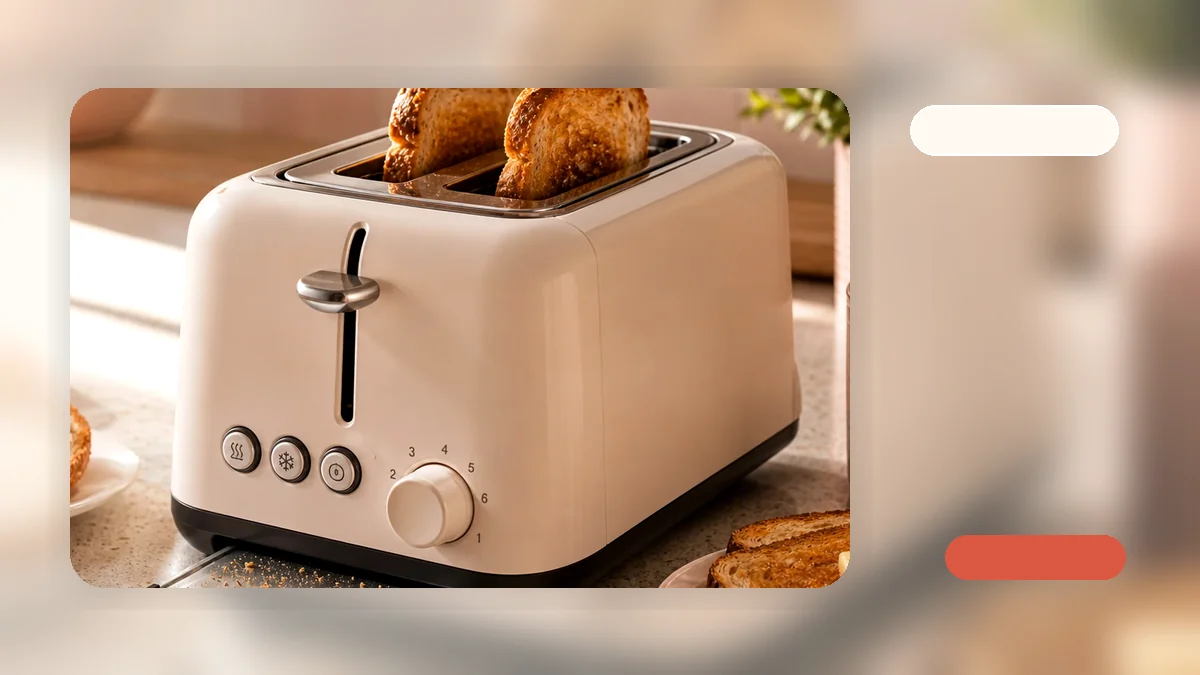
What Do the Numbers on a Toaster Mean? A Practical Guide to Shade Settings
If you have ever stared at the dial on your toaster and wondered what do the numbers on a toaster mean, you are not alone. It is one of the most common questions people have when they buy a new toaster or move into a place with an unfamiliar one. The short answer is that the numbers control how dark or light your toast will be. They are shade settings, not temperature readings or timer minutes.
This guide will walk you through how those numbers actually work, what affects your results, and how to pick a setting that matches your breakfast. For a broader look at choosing a toaster for your kitchen, our toaster buying guide covers the full decision process.
The Numbers Control Browning, Not Exact Temperature
When people ask what do the numbers on the toaster mean, they often assume each number corresponds to a specific temperature or a set number of minutes. That is not quite how it works. In most toasters, the numbered dial or digital setting controls shade level. A lower number means lighter toast. A higher number means darker toast.
The range varies by model. Some toasters use a 1-to-5 scale. Others go from 1 to 7, or use labeled zones like light, medium, and dark. Whatever the format, the function is the same: shade control. You are choosing a target level of brownness, and the toaster adjusts its cycle time or heat intensity to get there.
An important detail is that a “3” on one toaster will not produce the exact same result as a “3” on a different brand or model. There is no universal standard for what each number means across all toasters. The numbers are relative to that specific machine’s range. So if you switch toasters, expect a small adjustment period while you find your preferred setting again.
How Shade Settings Actually Work in Your Kitchen
To understand what does the numbers on a toaster mean in practice, it helps to think about what is happening inside the machine. When you select a shade level, the toaster runs its heating elements for a duration and intensity that should bring your bread to that color. Higher numbers mean a longer or hotter cycle, which produces darker, crispier results.
But the numbers are not the only factor. The type of bread you use, the thickness of the slice, and whether the bread is fresh or frozen all affect the final result. A thin slice of sandwich bread on setting 3 will usually come out darker than a thick slice of sourdough on the same setting, because the heat penetrates the thinner bread more quickly.
If your toaster has a bagel setting, that is separate from the browning number. The bagel setting typically changes where the heat goes, focusing more on the cut side of the bagel while gently warming the outside. You still choose your preferred shade level with the dial. Similarly, a defrost function adjusts the cycle for frozen items like waffles or frozen bread, adding time before the standard toasting phase begins. You can read more about maintaining consistent performance in our toaster care and cleaning guide.
What Does This Mean for Choosing Your Toaster Setting?
If you are wondering what do the numbers mean on a toaster and how to use them, the practical advice is simple: start in the middle of the range and adjust from there. If your toaster goes from 1 to 5, start at 3. If it goes from 1 to 7, start at 3 or 4. Toast one slice, see how it looks, and adjust up or down for your next round.
Lighter settings work well for items that are delicate or already partially cooked, like reheating a croissant or toasting a thin English muffin. Darker settings are better when you want a firm, crispy crust on heartier bread like sourdough or whole grain slices. If you are using frozen waffles or bread straight from the freezer, you may need to go a notch higher than you would for fresh bread.
There is no universally correct number. The right setting is the one that gives you the toast color and texture you actually enjoy eating. In my experience reading toaster feedback and talking to people about their breakfast habits, most people settle into a favorite setting within the first few mornings and rarely change it after that.
Finding a Toaster with Clear, Usable Controls
Now that you understand what does the numbers mean on a toaster, it is worth thinking about how to choose a model that makes those settings easy to use. Look for a dial or digital display that is clearly labeled and easy to read in a busy morning kitchen. You do not need a toaster with a dozen buttons and preset modes if you mostly toast the same kind of bread each day.
Simple, intuitive controls are more useful than feature overload. A model with a solid shade range, a cancel button, and basics like a removable crumb tray will cover most everyday needs. For example, the Classic Compact 2-Slice Toaster offers straightforward shade control in a compact format that fits well in small kitchens and apartments.
If you want to compare different styles and control layouts, browse the full range of toaster styles to find a model that matches both your counter space and how you like to manage your morning routine.
Frequently Asked Questions About Toaster Numbers
Does a higher number on the toaster make the toast come out faster?
No. A higher number usually means a darker shade, which typically requires a slightly longer or more intense toasting cycle. It does not speed up the process. The toast will take more time in the toaster, not less.
Why does my toast not match my expectation for a certain number?
Several variables affect the outcome beyond just the setting. Bread type, slice thickness, moisture content, and whether the toaster has been used recently all play a role. A toaster that has already run one or two cycles will heat up faster than a cold one, which can make the same setting produce slightly darker results on the second or third use.
What do the little pictures of bread on the dial mean?
If your toaster uses icons of lightly toasted to darkly toasted bread instead of numbers, the principle is the same. The pictures are visual shade level guides. Moving the dial toward the darker bread image increases the toasting time or heat. Moving it toward the lighter image reduces it.
Is there a standard for what “3” means across all toasters?
No. There is no universal standard for toaster shade numbers. A “3” on one toaster may be lighter or darker than a “3” on another. The numbers represent relative positions within that specific toaster’s range. When you switch toasters, treat it as a fresh start and adjust from the middle.
If you are looking for a toaster with simple, clear shade controls for your morning routine, see the Classic Compact 2-Slice Toaster for a practical, easy-to-read option.