Toaster Lever Won’t Stay Down? Safe Troubleshooting Steps

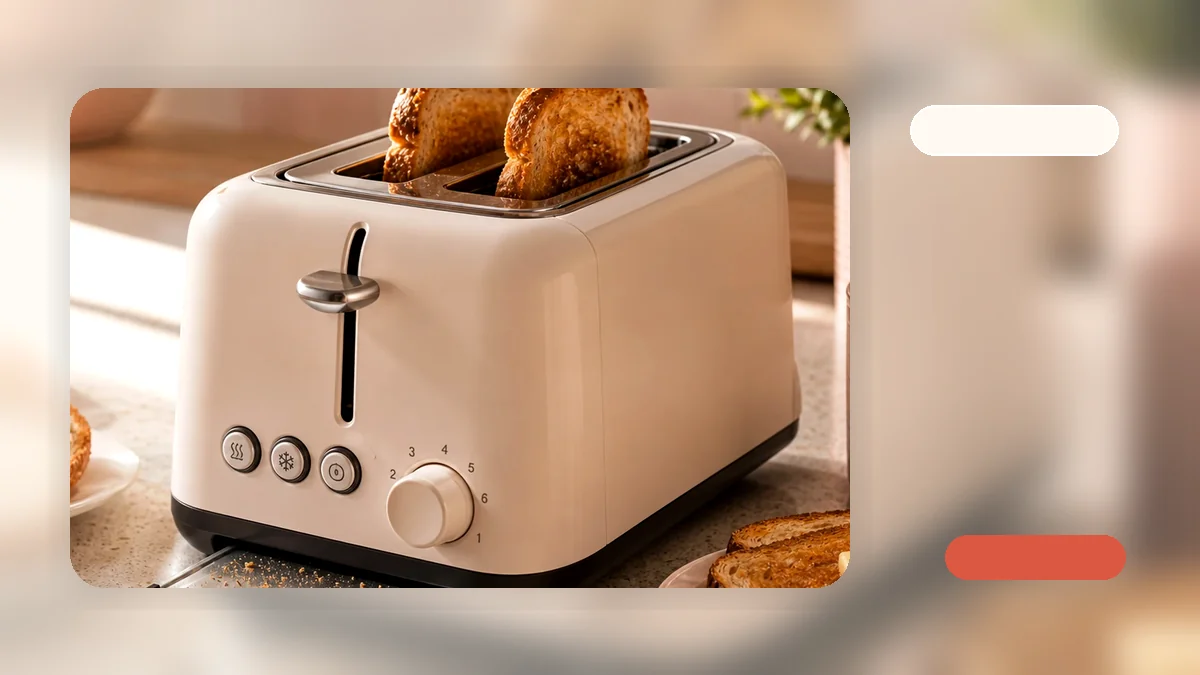
Toaster Lever Won’t Stay Down? Troubleshooting Steps and When to Replace It
You push the lever down, and it pops right back up. You try again. Same thing. If your toaster lever won’t stay down, it is frustrating — especially when you are just trying to make breakfast before heading out the door. The good news is that the cause is often simple, and in many cases, you can figure it out with a few safe, external checks. The less good news is that sometimes the problem means your toaster has reached the end of its life.
This guide walks you through why a toaster lever might not stay down, what you can safely check on your own, and when it makes more sense to start shopping for a replacement rather than trying to save the one you have.
Safety First: What to Do Before Troubleshooting
Before you touch anything, unplug the toaster. Let it cool completely if you were just using it. This sounds obvious, but it is the most important step, and it is the one people skip when they are annoyed and in a hurry.
If your toaster won’t stay down, the temptation is to hold the lever while it is plugged in, try to force it, or poke something inside the slots to figure out what is stuck. Do not do any of those things. A toaster that is plugged in still has electricity running to its internal components. Inserting metal objects — a knife, a fork, a screwdriver — into the slots is a serious electrical and fire hazard.
This guide focuses on external, safe checks only. We are not going to tell you to open the toaster’s housing or tinker with internal parts. That is not because we do not think you are capable. It is because the risk of electric shock or damage to the heating elements is not worth it for an appliance that may simply need to be replaced. If you want more background on toaster safety habits, we cover that in our toaster safety tips guide.
Why Won’t My Toaster Lever Stay Down? Common Reasons
If you have been wondering “why won’t my toaster lever stay down,” here are the most common causes — and none of them require special tools to identify.
A full or jammed crumb tray
This is the single most common reason. Over time, bread crumbs collect inside the toaster and fall into the crumb tray. When the tray gets too full, crumbs can push up against the internal carriage mechanism and prevent the lever from locking into the down position. In a small apartment kitchen where counter space is tight and cleaning might get pushed off, this happens faster than you would expect.
Debris blocking the carriage or lever
Sometimes a piece of bagel, a chunk of frozen waffle, or a torn-off crust gets lodged inside one of the slots or near the carriage. This can physically block the lever mechanism from engaging. If you have been toasting thicker items — bagels, artisan bread, Texas toast — this is more likely to happen, especially if the slot width is a tight fit.
A misaligned or jammed internal carriage
The carriage is the part inside the toaster that moves the bread up and down. If it gets bumped, bent, or knocked out of alignment — even slightly — the lever might not catch. This is not something you can easily see from the outside.
Mechanical wear on the latch or lever
Toasters do not last forever. The small latch that holds the lever down is a mechanical part, and after years of daily use, it can wear out. If your toaster is several years old and the lever has been getting gradually harder to engage, this may simply be the end of its useful life.
An internal electronics or thermostat failure
In some cases, the lever not staying down is a symptom of a deeper problem. The toaster’s thermostat or internal circuitry — the parts that tell the toaster to heat up and stay on — may have failed. When these systems do not engage properly, the toaster may release the lever as a safety response. This is a sign that the problem is not just mechanical.
For a deeper look at the features that make modern toasters easier to maintain — including removable crumb trays designed for easy cleaning — see our guide to toaster care and cleaning.
Step-by-Step: How to Fix a Toaster That Won’t Stay Down
These are safe, external checks you can perform at home. They will not fix every problem, but they address the most common ones. Think of them as the first — and often only — steps you need to try.
Step 1: Unplug the toaster and let it cool
We said it before, and we will say it again. Unplug the toaster. Wait at least 15 minutes if it was recently in use. The outside of a toaster may feel cool while the inside is still hot. Give it time.
Step 2: Remove and empty the crumb tray
Most toasters have a crumb tray that slides out from the bottom or the back. Pull it out, empty it into the trash, and wipe it clean. While you have the tray out, turn the toaster upside down over the trash can and gently shake it to dislodge loose crumbs. Do not hit or bang the toaster — just let gravity do the work.
In my experience, I keep a small brush next to my toaster for exactly this kind of thing. It is not fancy, but it means I actually clean the crumb tray before it becomes a problem. A lot of toaster issues — burning smells, uneven browning, and yes, a lever that won’t stay down — trace back to crumbs that should have been emptied a week ago.
Step 3: Inspect the slots for visible obstructions
Look into each slot with a flashlight if you have one. You are checking for a large piece of bread, a bagel chunk, or anything that does not belong. If you see something, try to shake it out gently. Again, do not reach in with metal tools. If a piece of bread is really wedged in there, sometimes a wooden chopstick or the handle of a wooden spoon can help nudge it free — but only after the toaster is unplugged and cool.
Step 4: Try the lever again
After cleaning, plug the toaster back in and try pushing the lever down. If it stays down and the toaster heats up normally, the issue was likely a buildup of crumbs or debris. That is a good outcome, and it is a reminder to clean the crumb tray regularly — ideally once a week if you use your toaster daily.
Step 5: If it still won’t stay down, stop
If the lever still pops up immediately after a thorough cleaning, the problem is almost certainly internal. This is not something you can safely diagnose or repair at home. Continuing to force the lever or use the toaster in this state is not a good idea. See the next section for what to do instead.
If you are looking for a toaster with straightforward controls and a removable crumb tray that is easy to maintain, the Classic Compact 2-Slice Toaster for Small Kitchens is designed with exactly that kind of daily-use simplicity in mind.
When It’s Time to Stop Troubleshooting and Replace Your Toaster
Here is the honest answer: if your toaster lever won’t stay down after you have emptied the crumb tray, cleared any visible debris, and given it a clean restart, the problem is most likely an internal failure. That could be a worn-out latch, a broken carriage spring, a failed thermostat, or a circuit board issue. None of these are safely user-serviceable.
A toaster that does not stay in the down position is not just inconvenient — it can be a safety concern. The lever mechanism is tied to the heating cycle. If the toaster cannot complete its normal operating sequence, it may not heat predictably, and in some cases, it could pose an electrical or fire hazard. Most appliance safety guidelines recommend replacing a toaster that behaves erratically rather than continuing to use it.
The practical version is this: a toaster that won’t stay down is telling you it is done. And honestly, modern toasters are not expensive. A simple, reliable 2-slice or 4-slice toaster with a solid lever, easy-to-remove crumb tray, and clear shade control will cost less than a few breakfasts out — and it will work predictably every morning.
When you are ready to replace yours, our toaster buying guide walks you through what to look for based on your kitchen size, the bread you toast, and the features that actually matter for daily use.
Frequently Asked Questions
Why won’t my Black and Decker toaster lever stay down?
While specific mechanisms vary between brands and models, the most common reasons a Black and Decker toaster lever won’t stay down are the same as any other toaster: a full crumb tray, debris blocking the carriage, or a mechanical latch failure. Start with the safety checks and cleaning steps described above. If those do not resolve the issue, the problem is likely internal and not safely repairable at home.
Is it safe to keep using a toaster that pops up immediately?
No. If the lever pops up right away, the toaster is not completing its normal heating cycle. This often means a critical internal safety or heating mechanism is not engaging properly. Continuing to use it could pose a fire or electrical hazard. Unplug it and replace it.
Can I fix the toaster lever mechanism myself?
For safety reasons, we do not recommend opening a toaster to repair internal components. The heating elements, electrical wiring, and internal circuits create real risks of shock or fire when handled without proper training. Stick to safe, external checks like clearing crumbs and inspecting for debris. If those do not work, replacement is the practical and safer choice.
If your toaster has seen better days, it may be time for a simple, dependable replacement. Browse our toaster collection to find one that fits your kitchen, your breakfast routine, and your morning patience.