
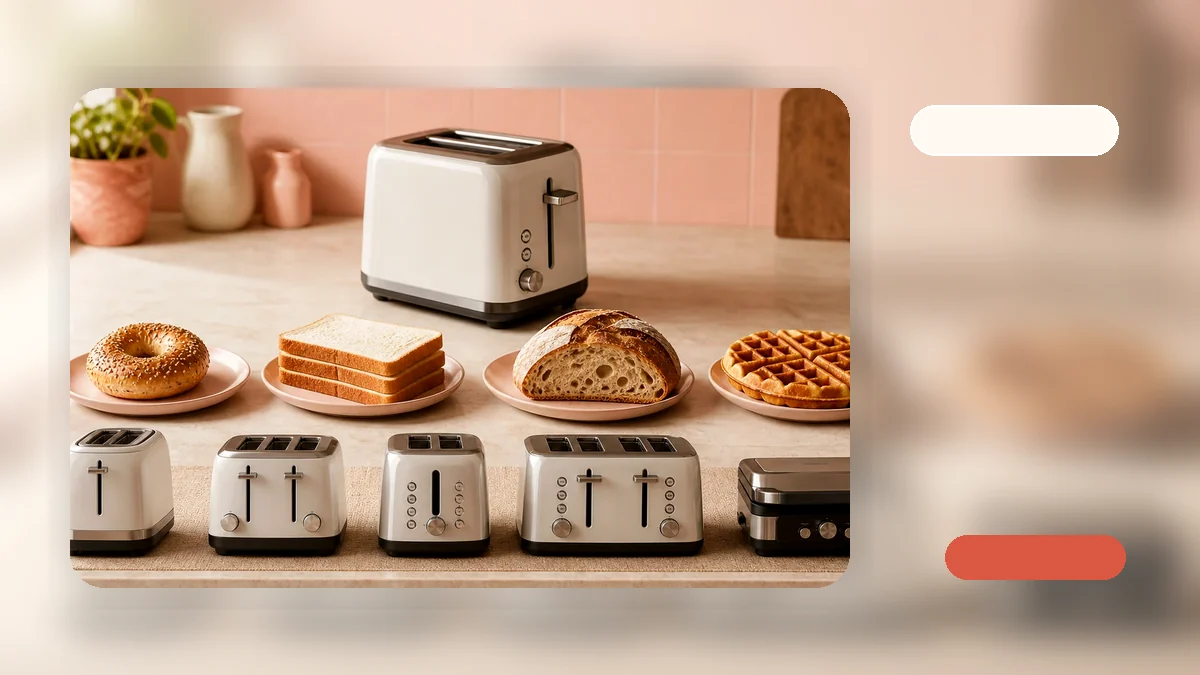
How to Choose a Toaster for Artisan Bread: A Practical Guide
Choosing the right toaster for artisan bread isn’t about finding the fanciest model—it’s about understanding what makes your sourdough, baguette, or whole-grain loaf fit properly and toast evenly. If you’ve ever tried to force a thick slice of artisan bread into a standard toaster, you know the problem: it gets stuck, burns on the edges, or barely toasts in the center. This guide explains the features that actually matter for artisan bread and helps you match a toaster to your kitchen and breakfast habits.
Why Artisan Bread Toasters Need Special Features
Artisan bread is different from standard sandwich bread. Slices are often thicker, irregular in shape, or longer than what fits in a basic toaster. A regular toaster might have slots that are too narrow or too short, forcing you to bend or cram the bread in. This can lead to uneven toasting, broken slices, or a frustrating morning routine.
The most important factors are slot width and length. Wide slots—typically 1.5 inches or more—allow thicker or irregular slices to fit without pressure. Long slots accommodate elongated loaves like sourdough boules or baguettes that you slice lengthwise. If your bread doesn’t fit easily, you won’t get consistent results, no matter how many shade settings the toaster has.
In Nora’s experience reading toaster specifications and user complaints, the most common issue with artisan bread is sizing. A toaster that handles sandwich bread perfectly may struggle with a rustic rye or a thick-cut walnut loaf. Before looking at features, check whether your typical bread slices will physically fit.
For a broader overview of toaster types and features, our toaster buying guide covers the basics for different bread and kitchen needs.
Key Features to Look For in a Toaster for Artisan Bread
Finding the best toaster for artisan bread means focusing on features that address the unique characteristics of these loaves. Here’s what to prioritize:
Long Slots for Elongated Slices
Long-slot toasters have slots that are wider and longer than standard models. They’re designed for slices that don’t fit in regular slots—like the middle of a sourdough round or a lengthwise-cut baguette. If you often toast irregular or long slices, a long-slot model is worth considering.
Wide Slots for Thick or Irregular Slices
For the best bread toaster for crispy bread, slot width is key. Look for slots at least 1.5 inches wide. This allows thick slices from country-style loaves, dense rye bread, or homemade boules to fit without scraping against the heating elements. Wide slots also help with frozen artisan bread, which can be slightly thicker after toasting.
Precise Shade Control
Artisan bread varies in density, moisture, and thickness. A toaster with more shade settings—say, 7 levels instead of 5—gives you finer control over the browning. This helps prevent burning on high-moisture sourdough while still achieving a crisp crust on drier breads. In our experience, shade control is one of the most practical features for dialing in your preferred toastiness.
Bagel Settings for Even Toasting
Many artisan breads, especially those with seeds or a thick crust, toast better with a bagel setting. This feature typically heats the cut side more intensely while gently warming the outer crust. It’s useful for achieving even browning on breads that might otherwise char on the edges before the center warms through.
Defrost and Reheat Functions
If you freeze artisan bread slices, a defrost function can save time. It gently thaws and toasts in one cycle. A reheat function is handy for warming already-toasted slices without over-browning. These aren’t essential, but they add convenience for regular users.
For more on adjusting toast settings for different bread types, see our article on adjusting toasting modes for different breads.
Matching Your Toaster to Your Kitchen Space and Breakfast Routine
The right bread toaster fits your kitchen and how you actually eat breakfast. Consider these factors:
Kitchen Size and Countertop Space
For small kitchens or apartments, a compact 2-slice toaster with wide slots is often the most practical choice. It takes up less counter space while still accommodating most artisan slices. Models with cord wrap help keep your countertop tidy. If counter space is limited, measure your available area before buying.
Household Size and Breakfast Timing
If you’re single or a couple, a 2-slice toaster is usually sufficient. For families or when multiple people eat breakfast together, a 4-slice toaster can save time by toasting more slices at once. Some 4-slice models have independent controls, so you can toast different bread types or settings simultaneously.
Frequency of Artisan Bread Use
If you toast artisan bread daily, investing in a toaster with long or wide slots and precise shade control makes sense. If it’s occasional, a simpler model with basic wide slots may be enough. Think about your typical week: how often do you toast artisan bread versus sandwich bread or frozen waffles?
For those with limited space, the compact 2-slice toaster for small kitchens is a practical option. It’s designed for apartment kitchens and everyday use, with a small footprint and simple controls. Similarly, the affordable black 2-slice toaster is a value-focused choice for basic toasting needs.
Common Questions About Toasting Artisan Bread
Can I use a regular toaster for artisan bread?
Yes, if the slice fits without forcing or bending. However, long or wide slots are recommended for consistent results. Regular toasters often have narrow slots that can crush thick or irregular slices.
How do I prevent artisan bread from burning in the toaster?
Start with a lower shade setting and monitor the first use. Artisan bread varies in moisture and density, so you may need to adjust settings. Features like bagel settings can help with even heating, especially for crusty loaves.
Is there a way to toast bread without a toaster?
Yes, you can use an oven, a pan on the stovetop, or a grill. How to toast a bread without a toaster: slice it, brush with a little oil or butter, and cook on medium heat until golden. However, for daily use, a toaster offers more convenience and control, especially for artisan bread that requires even browning.
How can I toast bread without a toaster if I don’t have one?
The oven method works well: preheat to 375°F, place slices on a baking sheet, and toast for 5-8 minutes, flipping halfway. How can you toast bread without a toaster? A skillet over medium heat is another option—watch it closely to avoid burning.
What about cleaning after toasting crumbly artisan bread?
Choose a toaster with a removable crumb tray. Artisan bread, especially whole-grain varieties, can produce more crumbs. A removable tray makes cleanup easier and helps prevent burning smells from accumulated debris.
For more toaster options across different bread types and kitchen sizes, shop all toaster products in our collection.
Practical Steps to Choose Your Artisan Bread Toaster
Finding the best artisan bread toaster comes down to a few actionable steps:
1. Measure Your Bread
Measure the thickness and length of your typical artisan bread slices. Look for toasters with slots at least 1.5 inches wide and long enough to fit your slices without forcing.
2. Prioritize Shade Control
More shade settings allow finer adjustments. If you toast various artisan breads, a model with 7 settings offers better control than one with 3.
3. Check Crumb Tray Accessibility
Ensure the crumb tray is easy to remove and clean. This is especially important for crumbly artisan breads.
4. Consider Your Kitchen Layout
If counter space is tight, a compact model with cord storage is helpful. If you toast for multiple people, a 4-slice toaster may be more efficient.
5. Test with Your Own Bread
If possible, test the toaster with your usual bread before buying. Otherwise, rely on product specifications for slot dimensions and features.
As an editor who’s studied countless toaster specs and user feedback, I recommend starting with slot size and shade control—these two features address the most common issues with artisan bread. Everything else is secondary.
To browse models with the features discussed, browse toasters with long and wide slots for artisan bread.
Conclusion and What to Do Next
Artisan bread requires a toaster that accommodates its size, shape, and texture. The right model will have wide or long slots, precise shade control, and easy cleaning features. Match your choice to your kitchen space, household size, and how often you toast artisan bread.
Use the links in this guide to compare options and make an informed decision. Whether you choose a compact 2-slice toaster for a small kitchen or a long-slot model for frequent artisan bread use, focus on the features that solve your daily breakfast needs.
Browse toasters with long and wide slots for artisan bread →