Toaster A Year in the Making: The Gap Between First-Time and Long-Term Use

Quick answer: how should bread type guide toaster choice?
Bread type affects slot width, slot length, shade setting, and crumb cleanup. Sandwich bread usually fits standard slots, while bagels, thick bread, waffles, and sourdough may need wide or long slots.
| What to check | Why it matters |
|---|---|
| Start with the simple causes | Crumbs, bread fit, placement, and settings often explain everyday toaster problems. |
| Watch for warning signs | Repeated smoke, sparks, damaged cords, or breaker trips are reasons to stop using the toaster. |
| Compare the broader guide | Use the toaster features when the issue connects to choosing, cleaning, or replacing a toaster. |
- List the breads you toast most often.
- Check slot width for bagels and thick slices.
- Check slot length for sourdough or artisan bread.
- Consider crumb tray access for crumb-heavy bread.
FAQ
Do bagels need wide slots?
Wide slots usually make bagels easier to fit without forcing.
Does sourdough need a long-slot toaster?
Often, yes, especially for longer bakery-style slices.
Can bread type affect cleaning?
Yes. Dry, seeded, or crumb-heavy breads can leave more debris.
Initial sensory experience
The first time you bring a toaster into the kitchen, plug it in, adjust the settings, and put in a slice of bread, most users experience a direct sensory satisfaction. The bread turns golden and crisp within minutes, the air is filled with the aroma of freshly baked bread, the buttons are easy to use, and the time and mode selections are intuitive.
This initial sensory experience is often accompanied by psychological pleasure, as if you’ve become the master of the kitchen, receiving immediate feedback and a sense of accomplishment with every action.
Upon initial use, the toaster ‘s heating element is in pristine condition, with uniform and stable internal thermal resistance and heat flow path, and a sensitive and responsive temperature control system. Thin slices of toast can be heated evenly within the set time, and even thick-cut bread can achieve ideal results.
This experience easily leads users to expect high performance from the machine, assuming that the same quality of baking can be achieved every time.
Toaster materials and thermal inertia
In its new state, the metal casing, heating wire, and internal insulation materials are all within the optimal performance range designed by the manufacturer. The heating wire has not experienced thermal cycling fatigue, the temperature control circuit has not drifted due to environmental factors or usage, and the metal and plastic parts of the casing have not undergone any minor deformation.
During initial use of the toaster , thermal inertia is relatively controllable, residual heat is released evenly, and the color, crispness, and internal moisture of the bread slices are ideally balanced. This stability of heat flow ensures that the first use of the toaster is almost identical to the experience described in the manual, quickly building user confidence in the machine’s performance.
Physical changes from long-term use of toaster
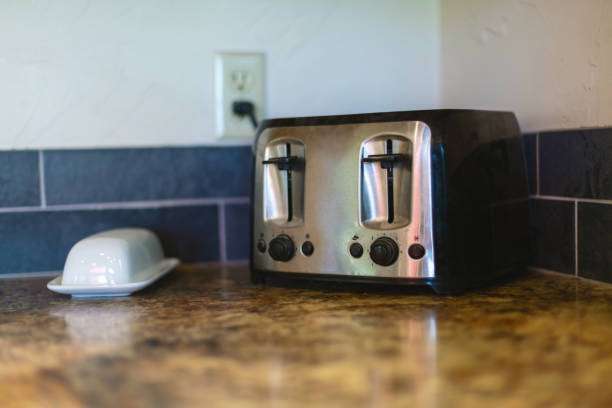
Over time, the internal materials of the toaster inevitably undergo minor changes. These include:
- The metal heating wires experience slight thermal fatigue under prolonged power supply and high-temperature cycling, potentially causing gradual changes in resistance and resulting in fluctuations in heating power.
- The outer metal casing undergoes slight deformation due to repeated thermal expansion and contraction, gradually loosening the supporting structural components.
- The plastic insulation material may experience slight shrinkage or aging under thermal cycling and ambient humidity.
- The temperature control circuit may exhibit response lag or deviation after prolonged use.
These are all long-term changes that are difficult for users to perceive, but they have a cumulative effect on baking results.
Bread that initially baked evenly in just a few minutes may now show signs of slight over-burning on the surface or uneven internal temperature. Heating time may need fine-tuning, and even different slices of bread may begin to perform differently. This discontinuity in experience is a typical manifestation of the difference between “first-time use and long-term use.”
Variability of baking results
With prolonged use of the toaster , inconsistencies in baking results begin to appear across different bread types, even on the same setting:
- Thin slices of toast may behave slightly differently, sometimes with a crispy surface and sometimes slightly dry and hard.
- Thick-cut bread or whole-wheat bread may have a lower internal temperature, requiring longer heating times or selecting a different setting.
- Bagels and bagels may have areas that are too dry on the outside while remaining moist on the inside.
This inconsistency stems from a complex combination of slight variations in the heat flow path, fluctuations in heating element power, and delays in temperature control response.
Changes in user operating habits
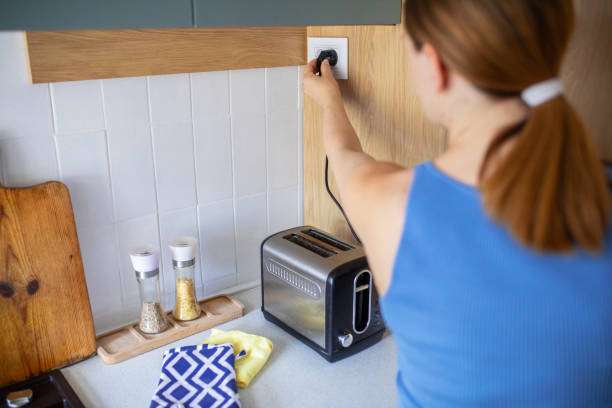
When using the machine for the first time, users typically follow the instruction manual strictly, precisely selecting the mode, setting the time, and matching the bread type.
However, with prolonged use, users gradually become familiar with the machine’s individual characteristics and begin to rely on experience to make adjustments. For example, knowing that a certain mode always makes the inside of thick-cut bread cooler, a user might extend the heating time or adjust the position of the bread slices.
This accumulation of operational experience, to some extent, compensates for the impact of decreased machine performance, but it also brings psychological burden and operational complexity.
The impact of cleaning and maintenance on the experience
Over time, breadcrumbs and grease inevitably accumulate in the heating wires, tray, and internal cavity of a toaster . Even with regular cleaning, tiny residues can still affect heat distribution.
These residues lead to uneven heat transfer, causing localized temperatures to be either too high or too low, further exacerbating fluctuations in baking results. A significant difference exists between the pristine environment of a toaster during its initial use and its actual condition after long-term use, resulting in a discontinuity in the user experience.
Meanwhile, the frequent cleaning of the toaster increases the cost and psychological burden of using it. Users have to spend more time ensuring a clean internal environment to maintain relatively consistent baking quality. This is a hidden cost that is difficult to anticipate during the first use.
The gap in psychological experience
The initial satisfaction of using a toaster contrasts sharply with the experience of long-term use. Initially, operation is simple, results are consistent, and the user experience is pleasing. However, with prolonged use, users require more judgment and fine-tuning to maintain the same baking effect.
This psychological gap can affect the overall evaluation of the machine; even if the toaster itself is still functioning normally, users may perceive it as less efficient or reliable than when it was new.
This disconnect is not only reflected in the user experience but also in expectation management. Users may have high expectations for performance after their first use, but inevitable fluctuations during long-term use will reduce satisfaction, even if the machine is still working within normal limits.
Long-term impacts of design and material selection
Toaster design and material selection directly impact the long-term user experience.
High-quality materials like durable heating wire, stable temperature control circuitry, heat-resistant plastics, and a robust metal casing can delay the onset of performance degradation. Conversely, relatively low-cost materials may perform well in the short term, but they are more likely to experience power fluctuations, uneven heat flow, and structural loosening over long-term use.
Therefore, when choosing a toaster, users should consider material durability and design stability, rather than solely focusing on the initial sensory experience and feature richness.
Toaster maintenance and upkeep
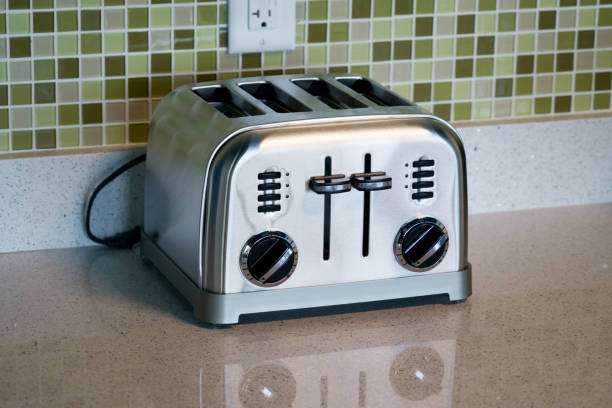
To delay the decline in user experience and maintain baking stability, users can adopt a series of maintenance strategies:
- Regularly deep clean the internal heating wires and trays to prevent residue buildup from affecting heat distribution.
- Avoid baking large quantities of thick-cut bread in a short period to reduce heating element fatigue.
- Monitor for looseness in the outer shell and internal structural components, making timely adjustments or reinforcements.
These strategies not only extend the machine’s lifespan but also make the long-term user experience closer to the stable feel of initial use.
Frequency of use and experience gap
Toaster use frequency is also a significant factor in determining when the experience gap appears.
High-frequency toasters experience more thermal cycles of their internal components, leading to faster material aging and a noticeable cumulative effect of temperature control drift and uneven heat flow. While low-frequency toasters generally have a longer lifespan, the initial stability advantage gradually diminishes over time.
Regardless of usage frequency, the experience gap between initial use and long-term use is an unavoidable physical and psychological phenomenon.
Summarize
The core argument revolves around the inevitable gap between the initial user experience and the long-term performance of a toaster. This gap stems from subtle changes in the heating element, casing material, temperature control system, and thermal inertia over extended use. The sensory satisfaction and psychological pleasure experienced during initial use gradually diminish as internal materials age, residue accumulates, and thermal flow changes. While user experience and maintenance practices can partially bridge this gap, psychological disappointment and operational complexity remain. Understanding this difference in experience helps in managing usage expectations and implementing maintenance strategies to extend the toaster‘s stable baking performance.
FAQ
Question 1: What are the main differences between using a toaster for the first time and after one year?
The main difference lies in the consistency of baking results and the user experience. With prolonged use, aging of the heating element and changes in heat flow may cause slight fluctuations in surface brittleness or internal temperature.
Question 2: Will long-term use significantly affect the machine’s lifespan?
Proper maintenance and cleaning can slow down aging, but frequent high-temperature use, residue accumulation, and high-load operation will accelerate the wear and tear of internal components, affecting long-term stability.
Question 3: How can I make the long-term toaster experience feel more like the first time I used it?
Regularly cleaning the inside of the toaster to remove residue, paying attention to the baking order and bread thickness, avoiding excessive continuous high-load use, and monitoring the condition of the heating wires and structural components can help maintain a more stable baking effect.
Related guides for long-term toaster use
If you are comparing first-time performance with long-term toaster use, focus on cleaning, bread fit, control consistency, and whether the toaster still suits your routine.
Quick FAQ
How long does a toaster usually last?
Lifespan depends on use frequency, cleaning habits, build quality, and whether crumbs or residue are allowed to accumulate around internal parts.
What helps a toaster stay easier to use over time?
Choose a toaster with a removable crumb tray, a practical slot size for your bread, stable controls, and a footprint that stays convenient on your counter.