
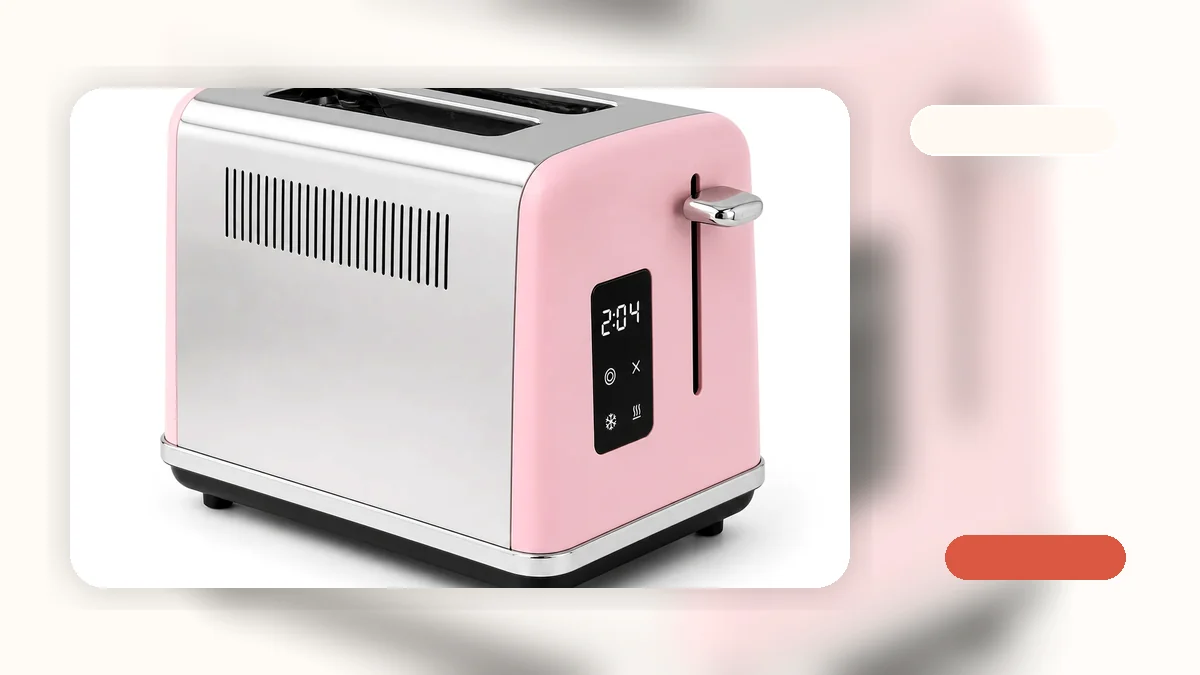
Is a Cool Touch Toaster Safer? A Practical Guide to the Feature
If you have ever brushed the side of a hot toaster while reaching for your coffee mug, you already understand why the “cool touch” label catches attention. A cool touch toaster is designed with exterior housing that stays noticeably cooler during and after use compared to a standard stainless steel or metal-bodied toaster. For households with children, small kitchens with tight counter space, or anyone who wants a little extra margin around a hot appliance, this feature can be worth a closer look.
But what does cool touch actually mean in practice? Is it a real safety upgrade, or just a marketing label? This guide breaks down how the feature works, which types of cool touch toasters are available—from 2-slice compact models to 4-slice family-sized options—and how to decide if one fits your breakfast routine.
What ‘Cool Touch’ Actually Means for a Toaster
The term “cool touch” refers to the toaster’s exterior housing being engineered to remain cooler to the touch than a traditional metal-bodied toaster during and immediately after a toasting cycle. This is typically achieved through double-wall insulation or heat-resistant plastic materials that create a buffer between the internal heating elements and the outer surface.
The primary benefit is straightforward: it helps reduce the risk of accidental burns if you or someone else touches the side or top of the toaster while it is running. In a busy kitchen, that can matter more than you might expect.
However, here is the practical expectation to set. A cool touch toaster is not cold. The inside of the slots, the heating elements, the bread itself, and the lever mechanism will all still be very hot during and after use. Think of “cool touch” as a risk-reduction feature, not an elimination of risk. You still need to unplug the toaster and let it cool before cleaning, and you should never reach into the slots while the toaster is in use.
Most cool touch housings use one of two approaches. Some models use a double-wall design where an outer shell of heat-resistant plastic or specially coated metal surrounds the inner chamber. Others use a single wall of material with low heat conductivity. The result in both cases is an exterior that warms up less than a standard stainless steel body would. If you are browsing toasters and see “cool touch” listed as a feature, it is worth checking the product description for details on how the insulation is built.
The Real Safety Advantage: Beyond Just a Label
In households with young children or curious pets, a cool touch toaster adds a useful layer of caution. Kids reach for things. Cats jump onto counters. Even in a household with only adults, a busy morning rush—everyone grabbing breakfast at once, moving mugs, pouring cereal—creates more chances for accidental contact with a hot appliance.
Here is a scenario that comes up more often than people expect. You are toasting bread while washing fruit or making coffee. Your hands are slightly damp. You reach to adjust something near the toaster and your wet hand grazes the side. On a standard metal toaster, that contact can transfer heat quickly. A cool touch exterior gives you a bit more room for these small, everyday moments of inattention.
The cleaning angle is also practical. When you pull the crumb tray out for routine cleaning, you are gripping the toaster body. A cooler exterior makes that task slightly more comfortable. That said, the crumb tray, interior walls, and slots must still cool completely before you clean them. The cool touch benefit is mostly about handling the unit itself, not about being able to clean immediately after use.
In my experience reading through product complaints and safety questions, the toasters that cause the most frustration are often the ones where the product page did not clearly explain what to expect. A cool touch toaster is not a substitute for common sense—it is a design feature that can make your morning routine a little less risky. If you want to understand how this feature fits alongside other safety and convenience factors, our toaster buying guide covers the full range of what to look for.
Exploring Cool Touch Toaster Models: From 2-Slice to 4-Slice
Cool touch housings are available across different toaster sizes. The right choice depends on how many people eat breakfast at your counter and how much space you have.
2-Slice Cool Touch Toasters
A 2 slice cool touch toaster is the most common format for individuals, couples, and small kitchen setups. The compact footprint fits easily on an apartment counter, in a dorm, or in a kitchen where every inch of space counts. Controls tend to be simple—a shade dial, a few function buttons, and a lever.
Models like the Classic Compact 2-Slice Toaster are designed with small kitchens in mind, focusing on a clean countertop footprint and straightforward operation. If you mainly toast sandwich bread, English muffins, or the occasional bagel, a 2-slice format is usually all you need.
The Toastmaster 2 slice cool touch toaster is another option in this category, often positioned as a budget-friendly choice with basic shade control and a removable crumb tray. For a single person or a couple with staggered breakfast times, a 2-slice model is typically more practical than a larger unit.
4-Slice Cool Touch Toasters
A 4 slice cool touch toaster makes more sense when two or more people eat breakfast at the same time. Instead of waiting for two rounds of toasting, you can get four slices done in one cycle. Many 4-slice models feature dual independent controls, which means you can set different shade levels on each pair of slots—useful when one person prefers light golden toast and the other likes it darker.
The trade-off is counter space. A 4-slice toaster cool touch model will take up roughly twice the footprint of a 2-slice version. If your kitchen is tight, measure your available space before committing. The height and depth can also matter if you have low-hanging cabinets.
Premium and Mid-Range Options
On the higher end, the ZWILLING Enfinigy Cool Touch 4-Slice Toaster is a well-known option. The ZWILLING Enfinigy cool touch toaster line uses a more refined insulation approach and a modern, minimalist design. The 4-slice version is built for households that want both the safety feature and a polished kitchen aesthetic. It typically includes multiple shade settings and defrost or reheat functions. The price point is higher than budget models, so it makes the most sense if the cool touch housing, build quality, and design are all priorities for you.
For a mid-range 2-slice option with a modern look, the Stainless Steel 2-Slice Toaster with Touch Controls offers touch-style controls and six shade settings in a clean, compact design. While not all stainless steel toasters are cool touch by default, models with insulated or double-wall construction can offer some of the same exterior temperature benefits.
Choosing the Right Cool Touch Toaster for Your Kitchen
Once you have decided that a cool touch toaster is worth considering, the next step is matching the right model to your kitchen and breakfast habits.
Start with your counter space. Measure the area where the toaster will live, including clearance above if you have low cabinets. A 4-slice cool touch toaster needs a wider footprint—typically around 11 to 12 inches across—while a 2-slice model is closer to 6 to 7 inches wide. Do not forget to leave a few inches of clearance on all sides for ventilation.
Match the size to your breakfast crew. If you live alone or your household has staggered breakfast schedules, a 2-slice toaster is usually sufficient. If two or three people sit down to eat at the same time, a 4-slice model reduces the waiting. For families of four or more, the time savings of a 4-slice toaster cool touch can be meaningful on weekday mornings.
Look beyond the cool touch label. The housing material is one feature among many. Also consider:
- Slot width: Wide slots matter for bagels, thick bread, frozen waffles, and artisan slices. If you regularly toast anything thicker than standard sandwich bread, check the slot width before buying.
- Crumb tray design: A removable crumb tray makes routine cleaning easier. Some models have trays that slide out from the front; others pull from the back.
- Shade control: More shade settings give you finer control over browning. Five to seven settings is the common range.
- Extra functions: Bagel setting, defrost, and reheat are practical if you use them. If you only eat plain toast, you may not need them.
Set a realistic budget. Cool touch appears on entry-level models and premium ones alike. A basic 2-slice cool touch toaster may cost under $30, while a feature-rich 4-slice model from a brand like ZWILLING Enfinigy can run well over $100. The price difference usually reflects build quality, insulation performance, number of features, and design. Decide which of those matter most to your daily routine. You can browse all toaster products to compare options across price ranges.
Frequently Asked Questions About Cool Touch Toasters
Is a cool touch toaster really safer?
Yes, but with an important caveat. A cool touch toaster is designed to have a cooler exterior, which reduces the risk of contact burns if you touch the outside of the appliance during or after use. This is especially valuable in households with children or pets. However, the interior slots, the heating elements, the lever, and the toast itself are all still very hot. Cool touch is a layer of protection, not a guarantee against all burns. Always unplug the toaster and let it cool before cleaning, and keep hands and utensils out of the slots while the toaster is operating.
Do all cool touch toasters work the same way?
No. The level of insulation and the resulting exterior temperature can vary significantly between brands and price points. Budget models may use basic heat-resistant plastic that warms up noticeably during extended use. Higher-end models, such as the ZWILLING Enfinigy cool touch 4-slice toaster, typically use more advanced insulation materials that keep the exterior cooler for longer. If the cool touch feature is a priority for you, it is worth checking product descriptions for details on the insulation approach rather than relying on the label alone.
Can I put a cool touch toaster directly against a wall?
No. Even with cool-touch housing, toasters generate significant heat internally and need proper ventilation. Most manufacturers recommend leaving at least 4 to 6 inches of clearance around the sides and back of the toaster. Placing any toaster directly against a wall or under a cabinet with no gap can trap heat and create a fire risk. Always check the specific clearance recommendations in the product manual.
How do I clean a cool touch toaster?
The cool-touch exterior can be wiped down with a damp cloth once the toaster has fully cooled and been unplugged. This is one of the practical advantages of the feature—you can handle the unit more comfortably when removing the crumb tray. However, the interior slots, heating elements, and crumb tray must also cool completely before cleaning. Never use abrasive cleaners on a cool touch exterior, as they can damage the insulation surface. For detailed care instructions, check your toaster’s manual or refer to general toaster care and cleaning guidelines.
Final Thoughts
A cool touch toaster is not a must-have for every kitchen, but it is a practical feature for specific households. If you have young children, a small counter where the toaster sits close to your workflow, or you simply want a little extra peace of mind, the cooler exterior is a real benefit—not just a label. The key is to understand what it does and does not do, then match the right size and feature set to your breakfast routine.
Ready to see how a cool touch toaster fits into your kitchen? Browse toasters with this safety feature and find the right size for your breakfast routine.