How Does a Toaster Work? Heating Elements, Timer, and Pop-Up Mechanism

How Does a Toaster Work? Heating Elements, Timer, and Pop-Up Mechanism
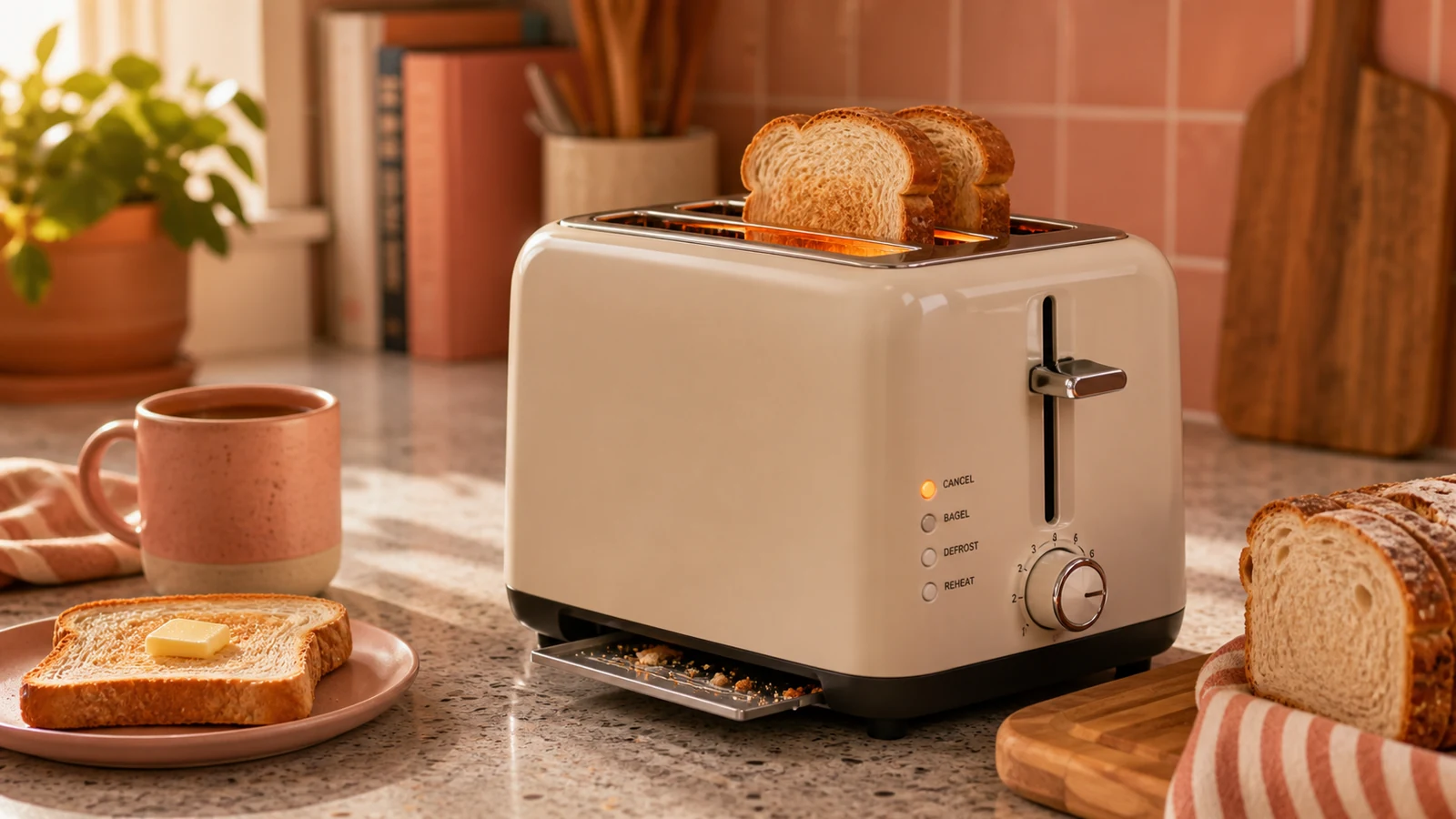
A pop-up toaster looks simple from the outside: bread goes down, heat appears, and toast pops up. Inside, several parts work together in a short, repeatable cycle. The lever lowers the bread into position, heating elements warm the slots, a shade control changes how long the cycle runs, and a timer, thermostat, or electronic control releases a pop-up mechanism when the cycle ends. You do not need an electrical engineering lesson to understand it. For everyday breakfast decisions, it helps to know what each part does and why different breads toast differently.
How does a toaster work?
A toaster works by sending electric current through heating elements inside the slots. These elements turn electricity into radiant heat that browns the bread. A timer, thermostat, or electronic control manages the heating cycle, and a spring-loaded mechanism pops the toast up when the cycle ends.
What happens when you push the lever down?
When you push the lever down, the bread is lowered into the toaster carriage. That carriage holds the slices near the heating elements and usually locks in place so the cycle can begin. Once the carriage locks, the internal circuit starts and the heating elements begin to glow. At the same time, the toaster’s control system begins counting the cycle.
On many simple toasters, the shade dial mainly affects how long the toaster stays on. On some newer models, electronic controls may adjust timing behavior in a more precise way. Either way, the basic breakfast sequence is the same: lower the bread, start the heat, manage the time, then release the toast.
How heating elements brown bread
The glowing strips inside a toaster are heating elements. They give off radiant heat, which reaches the surface of the bread and dries it. As the surface loses moisture and heats up, it begins to brown. That is why toast changes texture before it changes color: soft bread becomes drier and firmer, then the surface gradually darkens.
Bread type affects the result. Thin sandwich bread usually browns quickly. Thick bread needs more time for heat to reach the surface evenly. Frozen waffles and frozen bread often need a longer cycle or a defrost setting because the toaster must warm the frozen food before normal browning can happen. Bagels, sourdough, and dense artisan slices may also need different timing because their moisture level and thickness vary.
How the shade dial changes the cycle
The numbers on a toaster usually do not mean minutes. In most everyday toasters, the shade dial changes the heating cycle so the bread stays near the heating elements for a shorter or longer time. A lower number usually means lighter toast, while a higher number usually means a longer cycle and darker toast.
Different brands behave differently, so the same number can produce different results on two machines. If your toaster has numbers that feel confusing, our toaster numbers guide explains how shade controls usually work. For buyers comparing controls, the broader toaster features guide can help translate settings into daily use.
Why toast pops up
The pop-up action comes from a spring-loaded carriage. When you push the lever down, the carriage is held in place while the heating cycle runs. When the timer, thermostat, or electronic control reaches the end of the cycle, it releases the latch. The spring then raises the carriage and brings the toast back up where you can reach it.
The cancel button interrupts this process early. Pressing cancel stops the cycle and releases the carriage before the normal timer finishes. This is useful when the bread is browning faster than expected or when you realize the setting is too dark for the slice you put in.
Why toaster results vary by bread type
A toaster does not know what kind of bread you put inside. It only applies heat for the selected cycle. Sandwich bread, bagels, sourdough, frozen waffles, and thick slices all respond differently because they have different thickness, moisture, sugar, and surface texture.
- Sandwich bread: Usually toasts quickly because it is thin and consistent.
- Bagels: Need enough slot width and often benefit from a bagel setting.
- Sourdough: Often needs longer slots or careful placement because slices can be wide or irregular.
- Frozen waffles: Need more time because they start cold and firm.
- Thick slices: Need wider slots and may require a slightly longer cycle.
If you are choosing a toaster for specific bread types, the toaster buying guide can help you compare capacity, slot shape, controls, and cleaning access without focusing only on price.
Cleaning and safety basics
Crumbs can fall near the heating elements during normal use. When crumbs build up, they can smoke, smell burnt, or affect how cleanly the toaster runs. This is why the crumb tray matters. A removable tray makes it easier to empty loose crumbs before they collect inside the appliance.
Before cleaning, unplug the toaster and let it cool completely. Brush loose crumbs gently, avoid metal tools inside the slots, and do not immerse the toaster in water. For a full step-by-step routine, use our guide on how to clean a toaster. If you want to understand energy and heat in practical terms, the toaster wattage guide explains watts and temperature expectations in plain language.
FAQ
Do toaster numbers mean minutes?
Usually, no. Toaster numbers commonly adjust the shade cycle rather than matching exact minutes. The same number can behave differently across brands and models.
Why does a toaster glow red?
The heating elements glow red when electric current passes through them and they become hot enough to give off visible light and radiant heat.
Why does toast pop up?
A spring-loaded carriage holds the bread down during the cycle. When the timer, thermostat, or electronic control releases the latch, the spring raises the toast.
Why does frozen bread need a different setting?
Frozen bread needs extra time because the toaster must warm the frozen slice before normal surface browning can happen.
Can crumbs affect how a toaster works?
Yes. Crumbs can smoke, smell burnt, and collect near heating elements. Emptying the crumb tray and brushing loose crumbs helps the toaster stay cleaner during everyday use.
A toaster works by combining a simple lowering carriage, radiant heating elements, a shade control, and a pop-up release. Once you understand that cycle, toaster behavior becomes easier to troubleshoot. Lighter or darker toast is usually about timing, bread type, slot fit, and crumb buildup rather than mystery. The practical goal is not to memorize the mechanics, but to choose and maintain a toaster that fits your morning routine.