
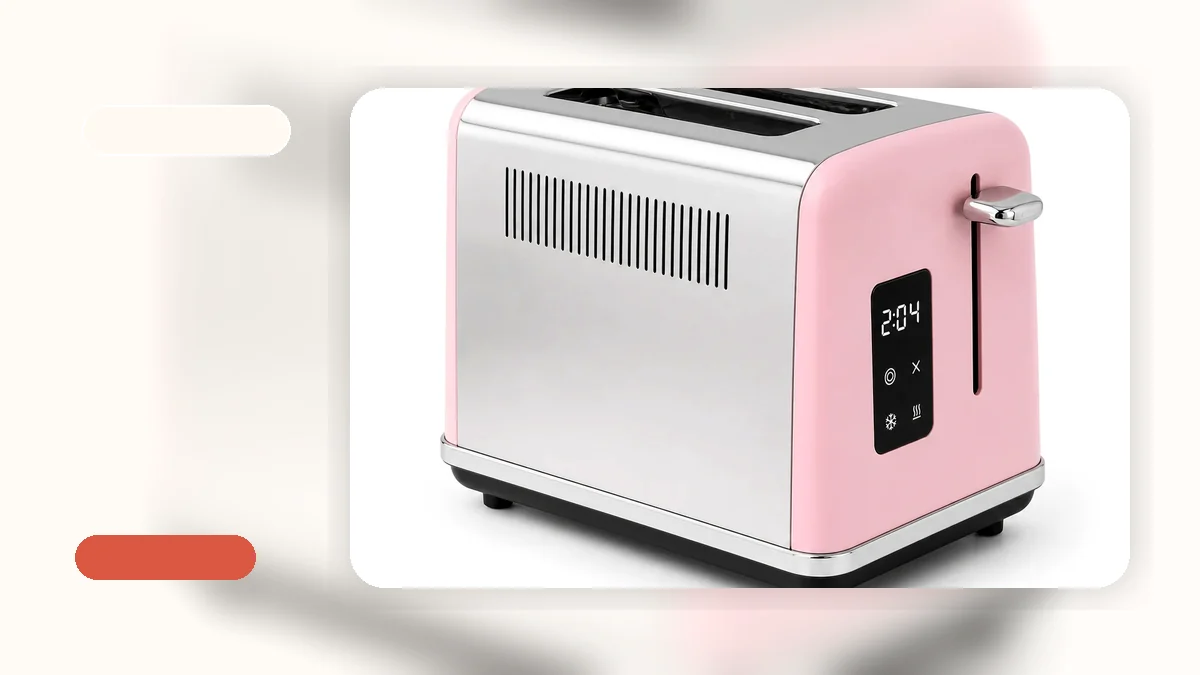
How to Choose a Digital Toaster: A Practical Guide for Modern Kitchens
If you’re looking at a digital toaster, you probably want more control over your morning toast than a simple dial provides. A digital toaster uses electronic controls—often a touchscreen or digital display—to let you set shade levels, use preset functions, and get consistent results. This guide will help you understand the key features, compare 2-slice and 4-slice models, and decide which setup fits your kitchen size and breakfast habits. For a broader overview of toaster options, our toasters collection is a good starting point.
What Is a Digital Toaster and Who Is It For?
A digital toaster replaces traditional dials or levers with electronic controls. These might include a touchscreen, buttons with LED displays, or digital shade settings that give you precise feedback. Common features include bagel mode, defrost for frozen waffles, and reheat for leftover toast. This type of toaster is best for users who want clear visual control, consistent browning, and a modern look in their kitchen. It’s especially useful if you often toast different types of bread and appreciate seeing exactly what setting you’ve chosen. For a deeper dive into choosing any toaster, see our toaster buying guide.
Digital toasters aren’t necessarily better than traditional ones—they’re different. If you prefer simplicity and don’t mind adjusting a manual dial, a classic toaster might be fine. But if you value precision and like the idea of preset modes, a digital model could simplify your routine.
Key Features to Consider in a Digital Toaster
When comparing digital toasters, focus on features that actually affect your breakfast. Here’s what to look for:
- Touchscreen or digital display controls: These make it easy to adjust shade settings and select functions like bagel or defrost. A digital touchscreen toaster can help you consistently toast sourdough to your preferred shade without guesswork.
- Preset modes: Bagel setting often crisps only the cut side, defrost handles frozen waffles or bread, and reheat warms toast without overcooking. These save time on busy mornings.
- Slot width: Wide slots matter for bagels, thick bread, Texas toast, and artisan slices. If you regularly toast these, check the slot dimensions.
- Shade control: Look for multiple browning settings (e.g., 6 levels) to get your toast exactly how you like it—from light gold to dark crisp.
- Safety features: Auto shutoff helps prevent overheating, and cool-touch housing reduces burn risk. Always unplug and let the toaster cool before cleaning.
In Nora’s experience, the most useful digital features are the ones that solve real breakfast problems—like not having to re-toast frozen waffles or getting the same shade every time.
2-Slice vs. 4-Slice Digital Toasters: Which Size Fits Your Kitchen?
Choosing between a 2-slice digital toaster and a 4-slice digital toaster depends on your space, household, and breakfast habits.
2-slice digital toaster: This model is compact, saves counter space, and is ideal for single users, couples, or small apartments. It’s easier to store and fits well in tight kitchens. If you mainly toast sandwich bread or a couple of bagels, a 2-slice toaster digital model might be all you need.
4-slice digital toaster: This suits families, roommates, or anyone who toasts multiple items at once. A 2-slice digital toaster with touchscreen controls is great for small households, but if two people eat breakfast together, a digital 4 slice toaster can streamline mornings by toasting more at once. Keep in mind that 4-slice models require more countertop room.
A practical consideration: if you often toast bagels or thick bread, slot width matters more than slice count. Wide slots in either size help fit irregularly shaped items. For small kitchens where space is tight, a compact toaster for small kitchens might be worth considering, even if it’s not digital.
Practical Benefits and Real-World Uses for Digital Toasters
Digital toasters add value in specific everyday scenarios:
- For small kitchens: Digital controls often have a smaller footprint than manual models with bulky knobs, leaving more counter space for other appliances.
- For busy mornings: Preset functions like defrost or reheat save time. You can toast frozen waffles straight from the freezer without pre-thawing.
- For consistency: Digital shade settings help achieve the same toast color daily. This is useful in households where people have different preferences—one person likes light toast, another prefers dark.
- For families: A 4-slice digital toaster can toast bagels for two people simultaneously while using the bagel setting to crisp only the cut side, preserving the soft exterior.
These benefits are observational—based on how people use toasters in real kitchens. Not every user needs a digital toaster, but if these scenarios match your routine, it could be a practical upgrade. Browse all toaster options in our toaster shop.
Cleaning and Maintenance for Digital Toasters
Easy cleaning is important for daily use. Here’s how to care for a digital toaster:
- Removable crumb tray: This is a must-have feature. It collects bread crumbs, makes cleaning simple, and helps prevent burnt smells or smoke. Empty it regularly.
- Gentle cleaning for digital surfaces: Avoid harsh cleaners on touchscreens or displays—use a soft, damp cloth instead.
- Safety first: Always unplug the toaster and let it cool completely before cleaning. This reduces burn risk and electrical hazards.
- Regular maintenance: Cleaning the crumb tray and exterior helps maintain performance and reduces the chance of sparking or uneven browning.
For more detailed care tips, our toaster buying guide includes general maintenance advice.
Frequently Asked Questions About Digital Toasters
Are digital toasters worth the extra cost compared to traditional models?
Digital toasters offer more precise control and convenience features like preset modes, but value depends on your breakfast habits. If you want consistent results and like visual feedback, they might be worth it. If you rarely change settings, a traditional toaster could be simpler and cheaper.
What features should I prioritize in a digital toaster for a small kitchen?
Focus on compact design, a removable crumb tray for easy cleaning, and multifunction controls that save space. A 2-slice model with digital shade settings often fits well in small apartments or dorms.
How do I clean and maintain a digital toaster safely?
Always unplug and cool the toaster first. Remove and empty the crumb tray regularly. Wipe the exterior and digital surfaces gently with a damp cloth—avoid abrasive cleaners that could damage the screen.
Can a digital toaster handle bagels, frozen waffles, and thick bread?
Yes, if it has wide slots and the right settings. Look for a bagel mode to crisp cut sides, a defrost function for frozen items, and enough slot width to fit thicker slices without forcing them in.
Ready to Choose Your Digital Toaster?
Choosing a digital toaster comes down to your kitchen space, what you typically toast, and which features matter most to you. If you want precise control, easy cleaning, and modern convenience, a digital model could fit well. Consider starting with a 2-slice toaster if you’re short on space, or a 4-slice version for family breakfasts.
Browse digital toasters that match your kitchen size and breakfast routine in our toasters collection, or explore all options in our toaster shop to find the right fit.