
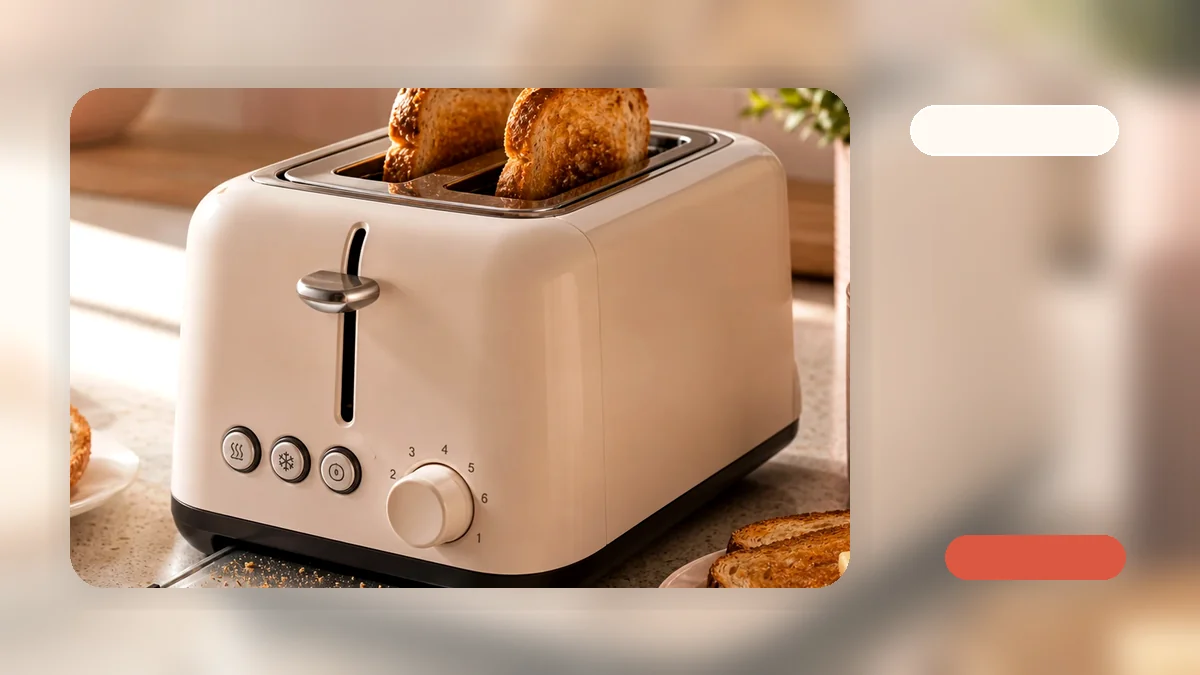
Toaster With Gluten Free Setting: What Actually Exists and What to Look For
If you are searching for a toaster with a gluten free setting, you are probably asking a straightforward question: does this feature actually exist, and does it matter? The honest answer is that a labeled gluten-free setting is found on select toaster models only — it is not a standard feature. But the underlying problem it tries to solve is real. Gluten-free bread behaves differently in a toaster than regular wheat bread, and understanding why will help you choose a toaster that works for your morning routine.
This guide explains what a gluten-free toaster setting actually does, which practical features matter more than a label, and how to match a toaster to your household — whether you are the only gluten-free person in the kitchen or the whole family avoids gluten.
What a Gluten Free Setting on a Toaster Actually Means
A gluten free toaster setting is a dedicated program on some toaster models that adjusts the toasting cycle for bread with different density and moisture content. Gluten-free bread is typically made without wheat gluten, which means it lacks the elastic structure that gives regular bread its familiar texture. In practice, this makes GF bread denser, more fragile, and quicker to dry out or burn at the same shade setting you would use for wheat bread.
When a toaster has a labeled gluten-free setting, it usually runs a longer, gentler cycle — often at a slightly lower heat — to give the bread time to crisp without over-drying the surface. Some models may also adjust the timing based on the bread’s thickness.
Here is the part most product pages will not tell you clearly: this setting is not universal. You will not find it on every toaster on the shelf. It appears on some mid-range and higher-end models, but it is far from a standard feature. Many toasters that work perfectly well for gluten-free bread simply do not have the label.
What matters more than the label is whether the toaster gives you enough control over browning. A toaster with 5 to 7 shade settings lets you dial down from the level you would use for regular wheat bread and find the lighter setting that works for your specific GF loaf. In my editorial experience reading toaster specs and buyer feedback, the shade control range is what actually determines whether gluten-free bread comes out the way you want it — not whether the button says “gluten-free” on it.
For a deeper look at how shade control, slot width, and other features compare across toaster types, our toaster buying guide walks through the practical decision points.
Why Gluten-Free Bread Toasts Differently (And Why It Matters for Your Toaster Choice)
Understanding why gluten-free bread behaves differently in a toaster helps you know what to look for when you shop. Here is the short version: gluten-free bread is structurally different from wheat bread, and that difference shows up in the toaster.
Gluten is the protein that gives wheat bread its stretch, chew, and ability to hold its shape. Without it, most gluten-free breads use a mix of rice flour, tapioca starch, potato starch, or other alternatives. These ingredients produce bread that tends to be:
- Denser and more compact — which means it absorbs and holds heat differently than light, airy wheat bread.
- More fragile and crumbly — especially after toasting, when the surface dries out and becomes more brittle.
- Variable in shape and size — some GF loaves produce slices that are thinner, shorter, or oddly shaped compared to standard sandwich bread.
- Quicker to dry out or burn — the same shade setting that gives you golden wheat toast can push GF bread past crisp and into dry or burnt territory.
This matters for your toaster choice because it means precision matters more. A toaster with only two or three shade options gives you less room to find the right level. A wider shade range — 6 or 7 settings, for example — gives you finer control, which is especially useful when you are dialing in a new GF bread brand that toasts differently than the last one you tried.
There is also a practical concern that comes up in almost every gluten-free household: cross-contamination. If you share a toaster with people who eat regular wheat bread, crumbs from previous toasting sessions sit in the crumb tray and can mix with your gluten-free slices. For people with celiac disease or serious gluten sensitivity, this is not a minor worry. A compact 2-slice toaster for small kitchens used exclusively for gluten-free items is one of the simplest solutions — affordable, easy to store, and no shared crumbs.
Key Features to Look For in a Gluten-Free-Friendly Toaster
Whether or not a toaster has a labeled gluten-free setting, these are the features that actually make a difference for GF bread and pastries. This is what I look at first when comparing models.
Shade Control Range
More shade settings give you finer adjustment. Because gluten-free bread browns and dries at different thresholds than regular bread, having 6 or 7 settings instead of 3 gives you a much better chance of finding the right level on your first try — and adjusting when you switch bread brands.
Wide or Long Slots
Many gluten-free breads are thicker, irregularly shaped, or sold frozen. Wide slots let you drop a frozen GF slice straight into the toaster without forcing it. A long slot 4-slice toaster is particularly useful if you buy longer artisan-style GF loaves that do not fit neatly into standard-width slots.
Removable Crumb Tray
This is critical for shared households. A removable crumb tray makes it easier to clean out wheat crumbs before toasting gluten-free bread. It also keeps the toaster running cleaner overall — accumulated crumbs can cause burning smells and uneven heating. I have a small brush in my own kitchen specifically for cleaning around the toaster, and a tray that slides out cleanly makes that job far less annoying.
High-Lift Lever
Smaller or more fragile GF bread slices can be hard to grab from a standard-depth slot. A high-lift lever raises the bread higher so you do not have to fish it out with tongs or risk crumbling it with your fingers.
4-Slice With Dual Controls
In a household where some people eat gluten-free and others do not, a 4-slice toaster with dual control panels lets each side run independently. You can toast GF bread on one set of slots at a lighter shade and regular bread on the other at a darker shade — at the same time. A model like this 4-slice toaster with dual controls and 7 shade settings handles that scenario well without requiring two separate toasters.
Labeled Gluten-Free Setting: Bonus, Not Requirement
If a toaster you are considering has a dedicated gluten-free setting, that is a nice addition. But it should not be the only reason you choose that model. The features above — shade control, slot fit, crumb tray design, and lever height — are what change the daily experience of toasting gluten-free bread.
Which Toaster Style Fits a Gluten-Free Household
The right toaster depends on how many people in your kitchen eat gluten-free and how you eat breakfast.
Solo GF User in a Small Kitchen or Apartment
A compact 2-slice toaster with good shade control and a removable crumb tray is usually enough. You are the only one using it, so cross-contamination is not a concern. You can set it on the counter or store it in a cabinet between uses. This is the simplest and most affordable option.
Shared Household: One GF, One Not
This is where dual-control 4-slice toasters earn their counter space. Each person gets their own side with independent settings. Alternatively, some people keep one side exclusively for GF use and label it — a low-tech but effective system.
Family With Multiple GF Eaters
A long slot toaster offers flexibility for varied bread sizes and pastry shapes. If the whole family is gluten-free, a dedicated toaster is easier to manage than trying to keep one half of a shared machine clean.
The Dedicated Toaster Option
One practical approach that comes up often: buy an inexpensive second toaster used only for gluten-free items. A basic compact model handles the job. It eliminates cross-contamination worry entirely, and it does not require a labeled gluten-free setting — just a shade range that works for your bread.
Toasting Gluten-Free Toaster Pastries: What You Need to Know
Gluten-free toaster pastries are a different use case than bread. They need gentle, even heat — not the aggressive browning that works for a slice of sourdough. Popular options like Katz gluten free toaster pastries are designed to go straight from the box into the toaster. The goal is warm and slightly crisp on the outside, not deeply browned.
A few practical notes for gluten-free toaster pastry use:
- Use a lower shade setting. Start at the lowest or second-lowest level. The pastry shell burns faster than bread, and the filling can leak if heated too aggressively.
- The reheat function works well here. If your toaster has a reheat button, it warms the pastry without running a full toasting cycle. This is especially useful for a gluten-free toaster pastry that has cooled after the first round.
- Watch for size differences. Most standard toaster pastries fit normal slots, but some GF varieties may be slightly thicker or wider. Wide slots help.
- Cross-contamination applies to pastries too. If you share a toaster and the last person toasted a regular pastry, crumbs and filling residue may remain in the slot or tray. Clean the crumb tray before using the toaster for GF items.
If you are shopping for a toaster that handles both bread and pastries well, all toaster products on our site include slot width and shade control details to help you compare.
Frequently Asked Questions About Toasters and Gluten-Free Use
Do all toasters have a gluten-free setting?
No. A gluten-free setting on a toaster is found on select models only. It is not a standard feature across the category. Most toasters can still toast gluten-free bread effectively if they have adequate shade control — typically 5 to 7 browning settings. The label is a convenience, not a requirement.
Can I use a regular toaster for gluten-free bread?
Yes, but clean the crumb tray thoroughly before the first GF use to reduce cross-contamination from previous gluten-containing items. Wipe down the slots if possible. For households managing celiac disease, a dedicated toaster is the safest option.
What shade setting should I use for gluten-free bread?
Start one or two settings lower than you would for regular wheat bread and adjust from there. Gluten-free bread tends to brown and dry out faster due to its different moisture content and density. The right number depends on the specific bread brand, so expect a few tries before you find your preferred level.
Can I toast gluten-free toaster pastries like Katz in a regular toaster?
Yes. Use a low shade setting — usually the lowest or second-lowest — and watch for filling leaks. If the toaster has a reheat function, that works well for warming pastries without over-toasting the shell. The goal is warm and slightly crisp, not deeply browned.
Do I need a dedicated toaster if someone in my household is gluten-free?
It is the safest way to prevent cross-contamination, and for people with celiac disease, it is worth the small investment. If you prefer to share one toaster, choose a model with a removable crumb tray and clean it thoroughly before each GF use. A separate compact 2-slice toaster is a practical and affordable alternative to a second full-size machine.
Ready to find a toaster with the shade control, wide slots, and easy-clean features that work well for gluten-free bread and pastries? Browse all toaster options here.