
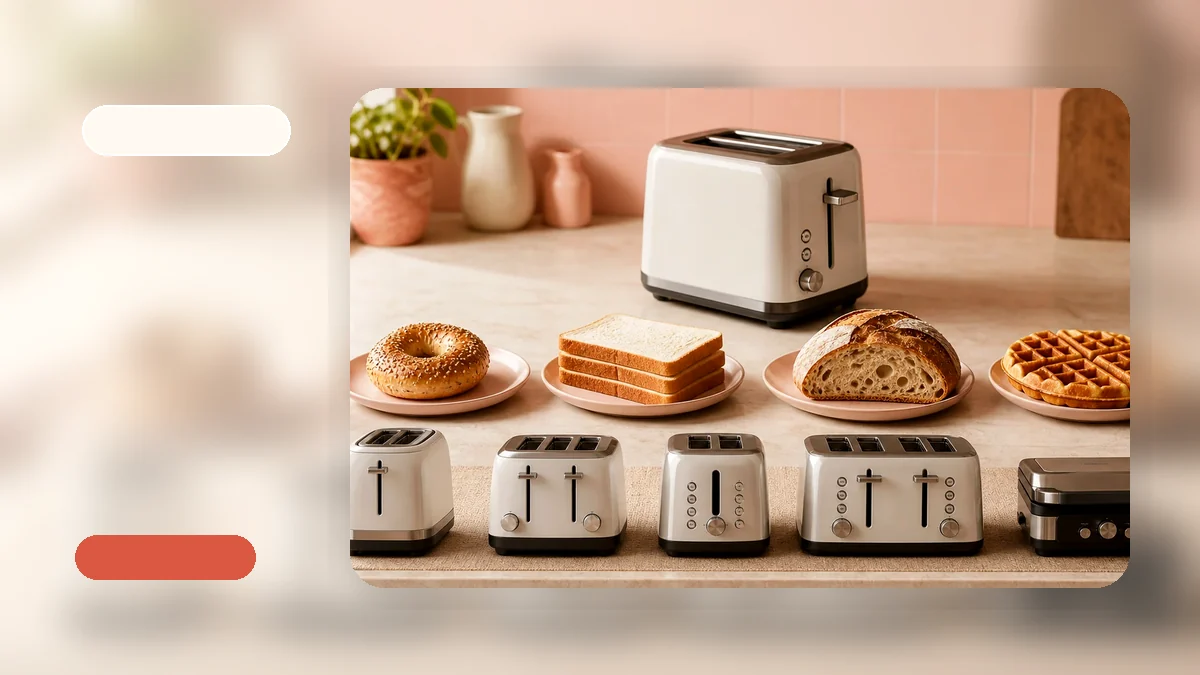
Toaster for Thick Bread: How to Find a Wide-Slot Toaster That Actually Fits
If you have ever tried to shove a thick slice of sourdough, a bagel half, or a piece of Texas toast into a standard toaster — and watched it get stuck, tear at the edges, or toast unevenly — you already know the problem. The toaster was not built for your bread. Finding the right toaster for thick bread comes down to one measurement above all others: slot width. Once you know what width you need, the rest of the buying decision — capacity, features, counter space — gets much easier.
This guide walks through what slot width actually means, which features matter for thick-bread breakfasts, how to choose between a 2-slice and 4-slice bread toaster, and what to do when you need crispy, even toast on slices that are wider than average. We also cover a few no-toaster methods for occasional use, so you can decide whether you need a dedicated appliance or just a workaround.
Why Standard Toasters Struggle with Thick Bread
Most standard toasters have slots that measure around 1.25 inches wide. That is fine for regular sandwich bread, English muffins, and thin slices from a grocery-store loaf. But bagels, Texas toast, artisan sourdough rounds, and thick-cut bakery slices often measure 1.5 inches or more. When you try to fit them into a narrow slot, a few things happen:
- The bread tears or compresses when you push it down
- Only the edges touch the heating elements, leaving the center pale and cold
- The lever does not stay down because the bread is wedged too tightly
- You end up holding the bread with your fingers, which defeats the purpose of a toaster
The practical version is simple: if your bread does not fit without force, the slot is too narrow. A wide-slot toaster solves this by giving you 1.5 to 1.75 inches of clearance — enough room for bagels, thick slices, and frozen waffles without tearing or wedging.
What Slot Width Actually Means for Your Morning Toast
When shopping for a toaster for thick sliced bread, slot width is the single spec that matters most. Here is a rough breakdown of what different widths handle:
| Slot Width | Fits These Bread Types |
|---|---|
| ~1.25 inches (standard) | Sandwich bread, English muffins, thin slices |
| ~1.5 inches (wide) | Bagels, thick-cut bread, frozen waffles, medium Texas toast |
| 1.6+ inches (extra-wide) | Sourdough rounds, artisan bread, very thick Texas toast, hand-cut bakery slices |
Long-slot toasters are a different category. They offer more length — useful for long artisan loaves or oversized slices — but the width may still be standard. If the bread is thick rather than long, width matters more than length. For a deeper look at size and fit, our toaster buying guide covers dimensions, capacity, and kitchen-fit questions in more detail.
Features That Matter More Than Buttons and Price Tags
Once slot width is settled, the best toaster for thick bread is the one whose features match your actual breakfast habits. Here is what to look for — and what to skip if it does not help your routine.
- Shade control (5–7 settings): Thick bread takes longer to toast through. A range of shade settings lets you start at medium-high and adjust after the first cycle, rather than guessing. This is more useful than a fancy display.
- Bagel setting: This concentrates heat on the cut side of a bagel while warming the outside more gently. It is helpful for thick bagels and English muffins, but it is not the same as “extra crispy mode” — it heats one side, not both evenly.
- Defrost function: If you keep thick bread, bagels, or waffles in the freezer, a defrost setting lets you toast from frozen without pre-thawing. It adds a short warm-up cycle before the main toast cycle.
- Removable crumb tray: Thick bread tends to shed more crumbs than thin sandwich slices. A removable tray makes routine cleaning easy — pull it out, empty it over the trash, slide it back. Without one, crumbs build up, burn, and create smoke.
- High-lift lever: This raises smaller or thinner items higher out of the slot, so you do not have to fish them out with your fingers. Less critical for thick bread, but useful if the same toaster handles English muffins or thin toast.
In our experience, shade control and a removable crumb tray are the two features that affect daily use the most. A cancel button is also worth having — it lets you stop the cycle early if the toast smells done before the timer runs out.
Browse our wide-slot toasters collection to compare models with these features side by side.
2-Slice vs 4-Slice: Which Fits Your Thick Bread Breakfast?
A friend once asked me whether she should get a 2-slice or 4-slice bread toaster. My first question was: how many people eat breakfast at the same time? If the answer is one, a compact 2-slice wide-slot toaster is almost always the more practical choice. It takes up less counter space, uses less energy, and is easier to clean.
A 4-slice toaster makes sense when two or more people toast at the same time every morning — or when one person wants to toast two different things (a bagel and a slice of sandwich bread, for example). The trade-off is counter space. Wide-slot 4-slice models are noticeably larger, so measure your countertop before buying.
For apartment kitchens, dorms, or small households, a compact 2-slice model is usually the better fit. The Classic Compact 2-Slice Toaster for Small Kitchens is a straightforward example — simple controls, a small footprint, and enough slot width for everyday thick bread. If budget is the main concern, the Affordable Black 2-Slice Toaster for Everyday Breakfasts covers the basics without extra features you may not use.
How to Get Crispy, Even Toast on Thick Slices
Finding the best bread toaster for crispy bread comes down to understanding what actually produces crispiness — and what does not. A few things to know:
- Thick bread takes longer. The heat has to penetrate more material. A higher shade setting helps, but patience matters more than cranking everything to maximum.
- Even browning depends on heating element placement. If the elements are close to the bread surface and evenly spaced, the result is more consistent. This is a design detail that most product pages do not highlight — but user reviews often mention it.
- A second light cycle is sometimes better than max shade. Instead of setting the toaster to the darkest shade and risking a burned edge, try a medium-high cycle and then a very short second pass. This gives the center more time to crisp without overdoing the outside.
- Bagel setting is not a crispy mode. It concentrates heat on one side. If you want both sides evenly crispy, use the regular toast setting instead.
In Nora’s experience, the people who are happiest with their toaster for thick bread are the ones who take the first week to dial in their shade setting — rather than expecting the factory default to be right.
How to Toast Bread Without a Toaster — Quick Alternatives
If you are figuring out how to toast bread without a toaster — maybe yours broke, maybe you are in a temporary kitchen — there are a few methods that work for occasional use.
- Oven broiler: Place bread on a baking sheet under the broiler. Toast 1–2 minutes per side, watching closely. This works for thick slices, but it is easy to walk away and come back to burned bread.
- Stovetop pan: Use a dry or lightly buttered pan over medium heat. Flip once. This gives you good control but ties up a burner and your attention.
- Air fryer: Works for toast, but it is louder and takes up more counter space than a toaster for a single task.
These methods are fine for a morning or two. But if you toast thick bread daily, a dedicated toaster is more consistent, faster, and does not require you to stand over it. If you are ready to look at all toaster options, you can compare models by slot width, capacity, and features.
Frequently Asked Questions
How can I toast bread without a toaster?
You can use an oven broiler (1–2 minutes per side on a baking sheet), a stovetop pan over medium heat, or an air fryer. These work for occasional use, but how can you toast bread without a toaster consistently? Honestly, for daily thick-bread breakfasts, a toaster gives you more even results with less effort. The same applies if you are wondering how do you toast bread without a toaster — the methods work, but they are workarounds, not replacements.
What bread types need a wide-slot toaster?
Bagels, Texas toast, sourdough rounds, thick-cut artisan slices, and frozen waffles all benefit from wide slots — generally 1.5 inches or wider. Standard sandwich bread and English muffins fit in most regular toasters without issues.
Is a wide-slot toaster worth it if I only eat thick bread sometimes?
Yes. Wide slots also fit regular sandwich bread with no downside. A wide-slot toaster covers both use cases — thick bread days and thin-slice days — without requiring two appliances. It is a practical default if you are not sure what you will toast tomorrow.
What shade setting should I use for thick bread?
Thick bread usually needs a slightly higher shade setting than thin bread, or a short second light cycle. Start at medium-high on your first try, then adjust up or down. If the outside browns but the center feels soft, try a lighter first cycle followed by a very brief second pass.
Find the Right Wide-Slot Toaster for Your Kitchen
Choosing a toaster for thick bread does not need to be complicated. Start with slot width — 1.5 inches or wider for bagels, thick slices, and artisan bread. Then think about your kitchen size and how many people eat breakfast at the same time. After that, look at shade control, a removable crumb tray, and any features that match your routine.
If your bread keeps getting stuck or coming out uneven, it might be the toaster, not the bread. Browse wide-slot toasters → built for bagels, thick slices, and morning routines that need a little more room. Or see all toaster options → to compare across every category.