Toaster The Truth Behind 5-Gear Distortion: Why Are the Differences Between Gears Abnormally Huge?

The original intention of the toaster gear design
Toaster oven settings were to allow users to select different heating intensities and times based on the type of bread and their personal taste preferences, thereby achieving the ideal baking effect. Home toasters typically have five settings, increasing from the lowest to the highest, nominally ranging from light baking to deep caramelization.
However, in real-world use, users often find that the actual differences between the settings are not linear or proportional, and can even be unusually large or almost imperceptible. This distortion in settings confuses users when making selections and directly affects the controllability of the baked texture.
Toaster temperature distortion lies in the mismatch between the heating system, temperature control mechanism, and heat transfer efficiency. The heating process is determined by the heating wire power, heat flow direction, temperature control accuracy, and mechanical timer or electronic control system within the toaster.
However, design costs , material limitations, and engineering trade-offs mean that the temperature settings do not increase ideally, but rather exhibit non-linear differences. For example, lower settings have shorter heating times but less noticeable internal temperature accumulation, while higher settings concentrate heating power, causing a rapid temperature rise in a short period, thus amplifying the difference in experience between adjacent settings.
Heat accumulation and gear difference
During operation, heat is transferred to the surface of the bread slices via heating wires, while some heat diffuses into the machine body, air, and surrounding environment. The low heating power is insufficient to quickly change the surface temperature of the bread, resulting in a less-than-ideal baked texture—soft but lacking crispness. The medium heating power is increased, but due to thermal inertia, the temperature accumulates rapidly, causing the bread surface to caramelize.
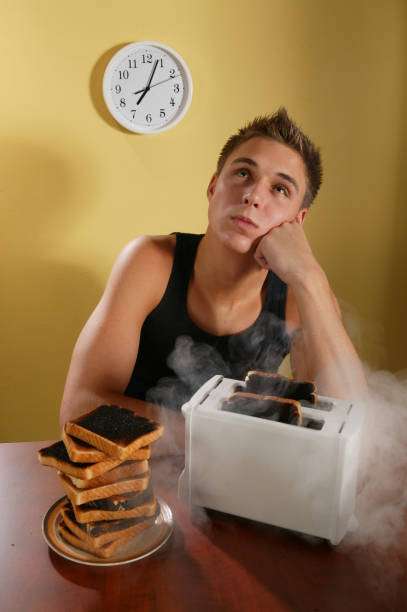
The high heating power is concentrated, and the temperature rises rapidly, easily causing the surface to burn while the inside remains undercooked, resulting in a crispy exterior and raw or dry interior. This uneven heat input between the toaster’s settings makes the actual user experience significantly different from the indicated settings.
Furthermore, heat conduction within bread is delayed. Thick-cut bread or frozen toast may not reach the desired temperature at low settings, while at high settings it may be burnt on the outside and raw on the inside. This heat accumulation and conduction delay directly leads to inconsistent performance of different settings across different bread types, making setting selection more complex.
Limitations of temperature control systems
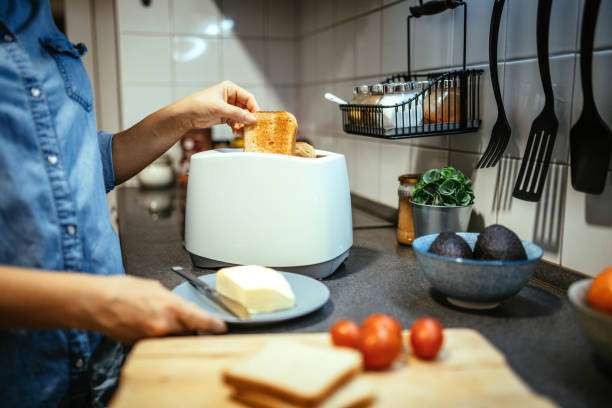
Distortion in temperature settings is also closely related to the accuracy of the temperature control system. Most home toasters use simple mechanical knobs or low-precision electronic control systems, switching between settings by controlling the energizing time of the heating element. Mechanical timers have errors, and electronic systems have limited resolution, making precise heat gradient control impossible. Therefore, there may be abrupt temperature changes or uneven heat accumulation between adjacent settings, resulting in almost imperceptible differences between low and medium settings, while the differences between high and near-high settings are extremely noticeable.
The toaster’s temperature control system also affects the speed setting performance. While the heating wire heats up quickly, a lag in the sensor or uneven sampling can make the speed setting adjustment coarse, resulting in a non-linear or unstable perceived difference in speed settings. Furthermore, slight variations in the power of heating wires between different batches of toasters exacerbate this speed setting distortion in actual use.
Bread type on toaster gear perception
Different types of bread vary greatly in their sensitivity to toaster settings. Thin slices of toast achieve a light caramelization at a low setting, while thick-cut bread, bagels, or frozen bread require a high setting to achieve a crispy exterior and a soft interior. The setting scale is typically designed based on experiments with standard thin slices of toast, but in actual use, differences in bread thickness, moisture content, and initial temperature make the setting performance more distorted. When trying different types of bread, users may find that the selected setting is completely unsuitable for their actual taste preferences, leading to repeated trial and error.
For example, a low setting might over-toast thin slices of bread, while the same setting is almost ineffective for thick slices. A high toaster setting might over-toast thin slices of bread, but only achieves the desired effect on thick slices. The linear increase in the indicated heat setting, coupled with the uneven actual heat transfer, amplifies the differences between the settings, causing confusion for users.
Design cost and engineering trade-offs
The distortion of toaster settings also involves design costs and engineering trade-offs. Ideal linear settings require high-precision heating wire control, closed-loop temperature control, uniform heat flow guidance, and complex electronic systems, which significantly increases manufacturing costs. Home toasters typically employ low-cost solutions, achieving settings through controlling heating time and simple power adjustments, rather than pursuing absolute linearity. This design trade-off is one of the root causes of settings distortion. Manufacturers often prioritize cost efficiency over precise settings gradients, resulting in a user experience where the perceived settings are uneven.
In addition, the design of the contact surface between the heating element and the bread, the air circulation channel, and the heat insulation structure of the body also affect the performance of the heating levels. Even if the heating power is designed reasonably, uneven heat flow can still cause local temperature jumps, making the experience between the heating levels feel abrupt.
User experience and adaptation strategies
Faced with inaccurate power settings, users typically adapt through experience. For example, they might create “usage notes” by repeatedly testing different power settings and recording the optimal heating time for different types of bread to achieve the desired texture. Thick-cut bread or frozen toast often requires a higher power setting and longer heating time, while thin slices of toast or bread with softer edges are heated using a lower power setting and shorter time. While this accumulation of experience can improve the user experience, it increases the learning curve and operational complexity.
Another strategy is to choose a standardized bread thickness to reduce the impact of setting sensitivity on taste. However, with diverse dietary needs, users still find it difficult to avoid confusion caused by setting distortion. In addition, the performance of different brands and models of toasters varies greatly, requiring users to re-explore when operating across different devices, increasing the difficulty of use.
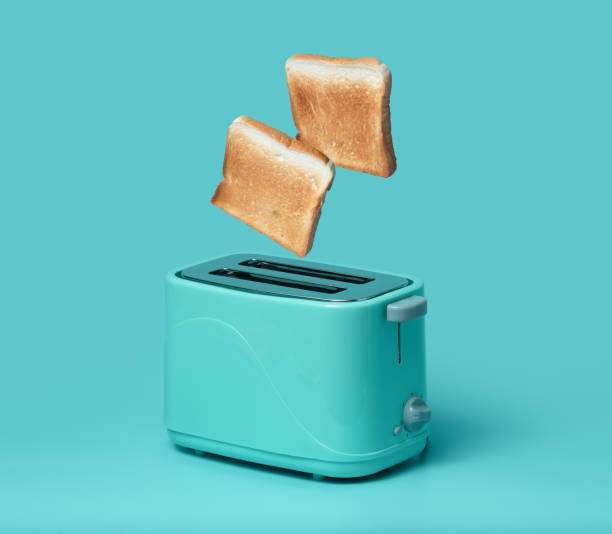
Potential impact of gear shift distortion on kitchen safety
Inaccurate heat settings not only affect the taste but may also indirectly increase safety risks. Heating too quickly at a high setting can cause bread to burn on the outside but remain raw on the inside, producing localized smoke or overheated steam, increasing the risk of burns or fire. Heating for extended periods at a low setting can cause heat to accumulate inside the machine, increasing the load on the heating element and temperature control system, potentially reducing the machine’s lifespan or even causing malfunctions with prolonged use.
When users attempt to control the baking results by adjusting the power level, neglecting issues of heat accumulation and dissipation can easily lead to safety hazards due to improper operation. This further highlights that power level distortion is not only a user experience issue but also closely related to kitchen safety.
Summarize
The toaster’s five-level heating setting was originally intended to meet different taste preferences, but in actual use, there is significant distortion between the settings. Heat buildup, insufficient temperature control precision, differences in bread types, and cost-cutting in the design all contribute to this unusually large difference in settings. Low settings may not effectively heat thick-cut bread, while high settings can easily result in bread that is burnt on the outside but raw on the inside. Users need to adapt through experience and repeated attempts to achieve the desired effect.
This distortion not only affects taste but may also increase heat buildup and safety risks. Understanding the reasons for this distortion will help users make more informed decisions when selecting bread types, setting heating levels, and operating the toaster , thereby improving the user experience and kitchen safety.
FAQ
Question 1: Why do the toaster settings seem to increase, but actually vary greatly?
The distortion of the settings stems from uneven heat distribution in the heating system, limited temperature control accuracy, the cumulative effect of heat, and differences in bread types, making the perceived settings nonlinear.
Question 2: Will the temperature setting affect the taste?
It will significantly affect the taste. The low setting may not be able to heat the thick-cut bread enough, while the high setting may cause the surface to burn while the inside remains uncooked, affecting the ideal result of a crispy outside and soft inside.
Question 3: How to deal with toaster settings distortion?
Users can achieve more stable baking results by recording the optimal heating time for different bread types at different settings, ensuring uniform bread thickness, or adjusting the settings based on experience, while paying attention to heat dissipation and safety.