Toaster size matters more than it looks on a product photo.
A toaster size is not only about whether it holds two slices or four. Slot width, slot length, body footprint, crumb-tray access, and counter space all affect whether a toaster fits your bread and your kitchen.
Best use: link this page from the footer, small toaster collection, buying guide, and product size notes.
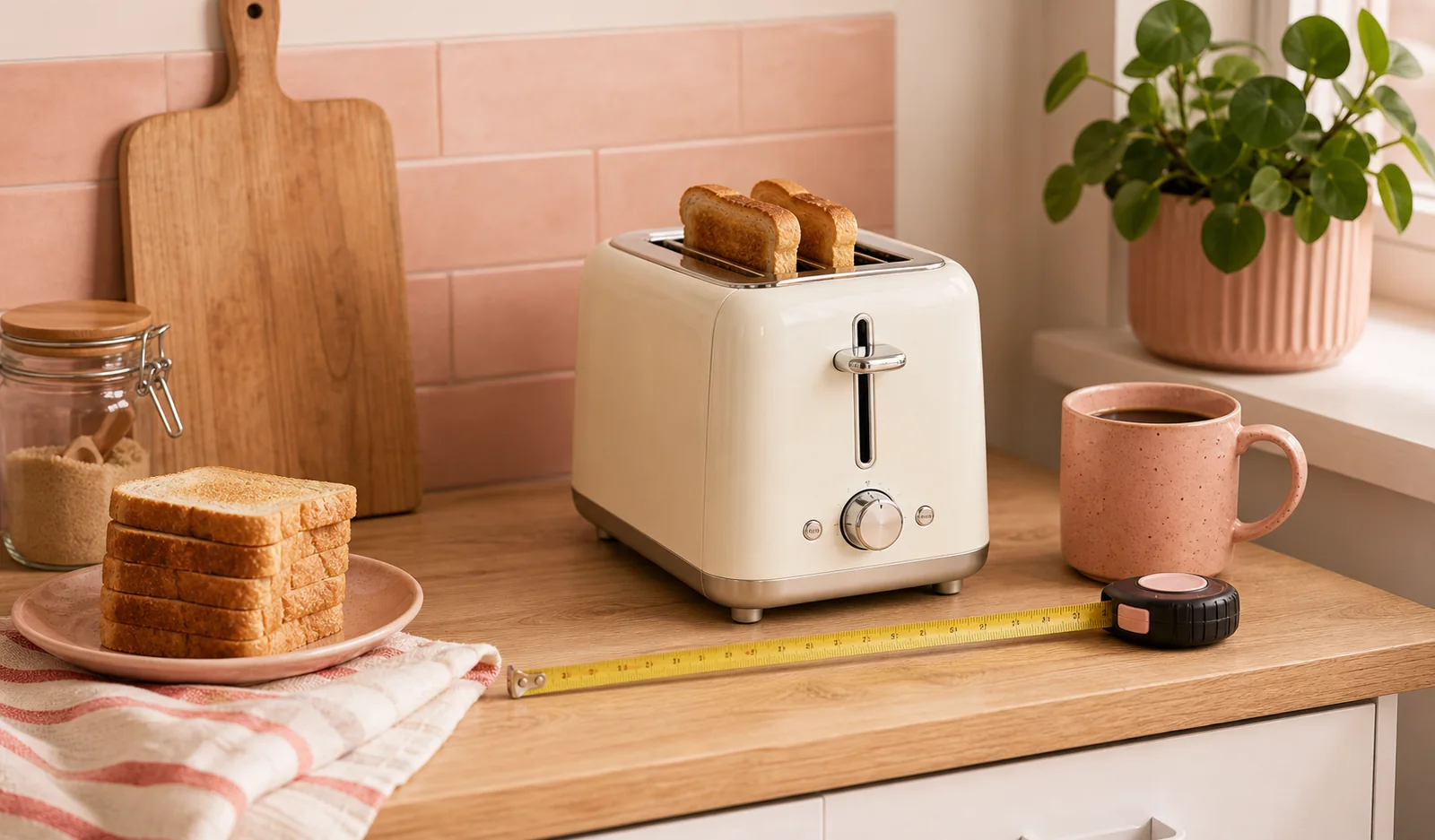
What are the different sizes of toasters?
The main toaster sizes are compact 2-slice, standard 2-slice, 4-slice, long-slot, wide-slot, and larger toaster-oven style models. Size is not only about how many slices fit at once; slot width, slot length, body footprint, and counter space also matter.
Counter footprint decides whether a toaster is easy to live with.
Small kitchens, rented apartments, dorms, and family counters all have different limits. Before choosing a toaster, check the open counter width, cabinet clearance, outlet location, and whether the crumb tray can slide out without hitting a wall. If cleanup access matters to you, review how to clean a toaster before choosing a final size.
- Measure width, depth, and height of the open counter area.
- Check cabinet clearance above the toaster and keep the operating area open.
- Leave room to pull out the crumb tray and handle hot toast safely.
- Think about cord direction and outlet placement before choosing a permanent spot.
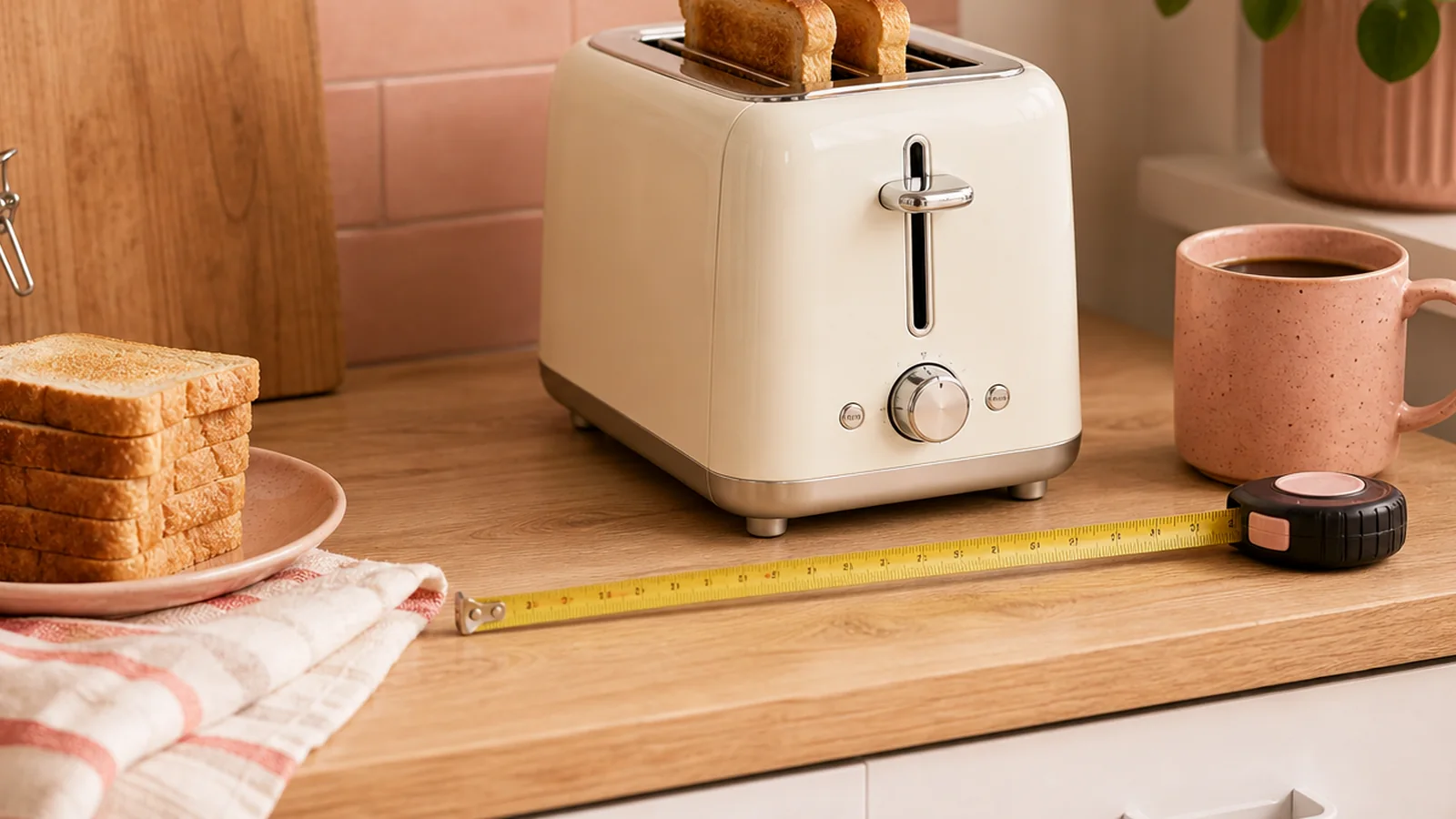
Slice count is only one part of toaster size.
Use slice capacity to estimate breakfast speed, then use slot shape and body footprint to decide whether the toaster fits your bread and counter.
Compact 2-slice
Best for singles, apartments, dorms, and small kitchens where counter space matters more than speed.
Standard 2-slice
A practical fit for couples and small households that toast daily bread, waffles, or English muffins at a slower pace.
4-slice
Usually better for families, roommates, and shared breakfasts when several people want toast at the same time.
Long-slot
Useful for sourdough, artisan bread, and longer slices that may not sit well in standard short slots.
Wide-slot
Helpful for bagels, Texas toast, thick bread, and frozen waffles. Check actual slot width, not only the label.
Toaster oven style
More versatile for pizza, snacks, and reheating, but it takes the most counter space and is not the same decision as a pop-up toaster.
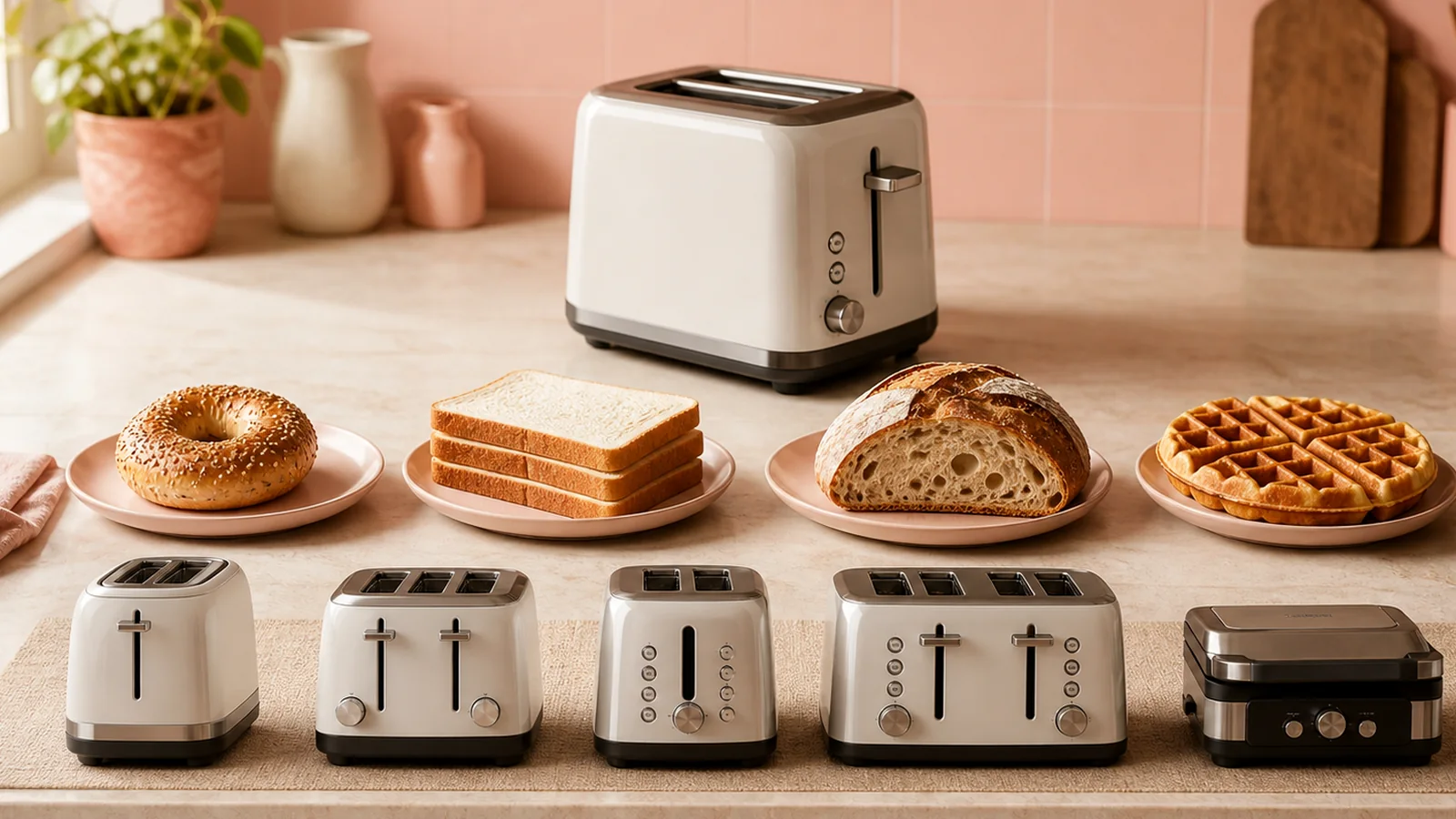
Slot width and slot length decide what bread actually fits.
Wide slots, long slots, and standard slots solve different problems. Bagels, frozen waffles, Texas toast, sourdough, and artisan bread can all change which toaster size feels practical in daily use.
- Choose wide slots for bagels, thick bread, frozen waffles, and Texas toast.
- Choose long slots for sourdough, artisan bread, and irregular slices.
- Choose a simple compact toaster if your routine is mainly standard sandwich bread.
- For feature language beyond size, compare our toaster features guide.
Compare toaster sizes by bread fit and counter space.
This table keeps the size guide broad. For the narrower family-capacity question, use the dedicated 2-slice vs 4-slice toaster article. If price is part of the decision, use the toaster price guide after narrowing size and slot fit.
| Toaster Size | Best For | Bread Fit | Counter Space | Best Next Step |
|---|---|---|---|---|
| Compact 2-slice | Singles, apartments, dorms | Sandwich bread, small slices | Lowest | Shop compact 2-slice options |
| Standard 2-slice | Couples, small households | Daily toast and waffles | Low | Compare 2-slice vs 4-slice |
| 4-slice | Families, shared breakfasts | Multiple slices at once | Medium to high | See 4-slice toaster options |
| Long-slot | Sourdough, artisan bread | Longer slices | Medium | Compare long-slot designs |
| Wide-slot | Bagels, Texas toast, thick bread | Thicker items | Varies | Read toaster features |
| Toaster oven | Pizza, snacks, more than toast | More versatile foods | Highest | Consider if you need more than toast |
2-Slice vs 4-Slice: the everyday decision
If one or two people toast at different times, a 2-slice toaster can be enough. If several people eat together, a 4-slice model usually saves time. The dedicated 2-slice vs 4-slice toaster guide covers that decision in more detail without turning this size guide into a single comparison article.
Toaster size questions.
What is the most common toaster size?
The most common toaster size for everyday kitchens is a 2-slice pop-up toaster. It fits singles, couples, small kitchens, and standard sandwich bread without taking much counter space.
Is a 2-slice toaster enough?
A 2-slice toaster is usually enough for one or two people, apartments, dorms, and small households. If three or four people often eat toast at the same time, a 4-slice toaster is usually more practical.
Who should buy a 4-slice toaster?
A 4-slice toaster fits families, roommates, and shared breakfasts where several slices need to be toasted in one round. The tradeoff is a larger body and more counter space.
What is the difference between wide-slot and long-slot toasters?
Wide-slot toasters are made for thicker foods such as bagels, Texas toast, and frozen waffles. Long-slot toasters are made for longer slices such as sourdough and artisan bread.
Does a bigger toaster use more electricity?
A larger toaster may have higher wattage because it heats more slots or a larger space. In everyday use, total energy depends on cycle length, slice count, and how many rounds you run.
Should I choose a toaster or toaster oven?
Choose a pop-up toaster if your main routine is toast, bagels, waffles, or English muffins. Consider a toaster oven if you regularly reheat pizza, snacks, or foods that need a small oven-style chamber.