How Much Should You Spend on a Toaster?
Toaster price depends on capacity, slot design, material, controls, cleaning design, and how often you use it. The practical choice is not always the cheapest or the most expensive one. It is the toaster that fits your bread, counter space, and morning routine without making you pay for features you will not use.
SaleToaster focuses on fair everyday value: what is worth paying for, what is optional, and what may not matter for your kitchen.
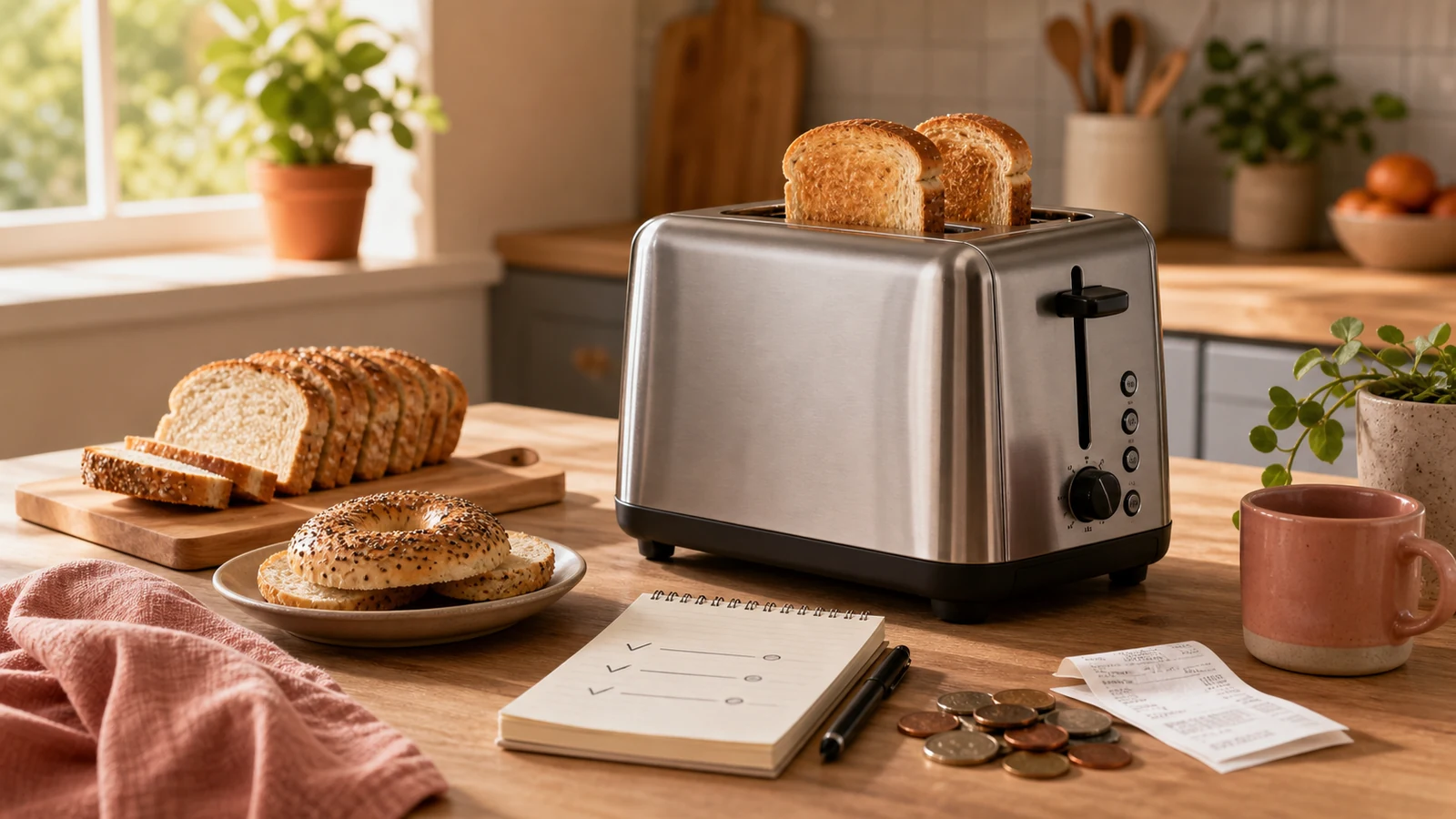
How much does a toaster cost?
A toaster can cost under $30 for a basic 2-slice model, around $30-$80 for most everyday 2-slice and 4-slice options, and over $100 for premium materials, digital controls, or design-focused models. For most buyers, practical value comes from the right capacity, slot fit, shade control, and easy cleaning.
Compare toaster prices by everyday value.
Use price range as a starting point, then check whether the extra cost solves a real breakfast problem.
| Price Range | Typical Toaster | Best For | What to Check |
|---|---|---|---|
| Under $30 | Basic 2-slice | First toaster, tight budget, occasional use | Slot width, crumb tray, shade control |
| $30-$50 | Everyday 2-slice | Apartments, couples, daily toast | Cleaning access, slot fit, consistent controls |
| $50-$80 | Wide-slot or 4-slice | Families, bagels, frozen waffles | Dual controls, counter footprint, removable crumb tray |
| $80-$120+ | Stainless, digital, design-focused | Style-focused kitchens or more controls | Whether the extra feature reduces daily effort |
| $120+ | Premium or specialty models | Buyers who care about design or specific functions | Avoid paying for features you will not use |
What actually raises toaster price?
Several details can raise price without meaning every buyer needs them. Capacity, material, controls, slot design, brand/design, specialty features, and the choice between a toaster oven and a pop-up toaster all affect what you pay.
Capacity
4-slice models usually cost more than basic 2-slice models because they toast more at once. See the 2-slice vs 4-slice toaster guide if breakfast timing is your main question.
Material and finish
Stainless steel and design-focused finishes can raise price. Pay more when the material fits your kitchen and cleans easily, not only because it looks premium.
Controls
Digital panels, extra presets, and more shade settings can add cost. The useful question is whether controls make your routine clearer.
Slot design
Wide slots and long slots cost more on some models, but they matter if you eat bagels, Texas toast, sourdough, or frozen waffles.
Brand and design
Some price comes from appearance, reputation, or matching a kitchen style. That can be valid, but it should not replace practical fit.
Toaster oven vs pop-up toaster
A toaster oven can do more than toast, but it costs more and takes more space. Choose it only if you need more than a pop-up toaster.
Which toaster features are worth paying for?
The best value features are the ones that reduce friction in real morning use. Wide slots are worth it if you eat bagels or thick bread. 4-slice capacity is worth it if your family eats together. A removable crumb tray makes cleaning easier, clear shade control helps repeat your preferred result, a high-lift lever helps with smaller items, and dual controls help when people share the toaster.
For a broader feature breakdown, use the toaster features guide, then compare your counter space in the toaster size guide.
Pay when the feature matches your bread or routine.
If a feature will not change what you toast, how often you toast, or how easy cleanup is, it may not need to drive your budget.
Which features may not be worth it for everyone?
Some upgrades are useful for specific households but unnecessary for others.
Touchscreen controls
Helpful if they make settings clearer, but not automatically better than a simple dial.
Too many presets
Extra modes can add price without daily value if you mostly toast the same bread.
Oversized body
A larger toaster can be frustrating in a small kitchen even if it has more features.
Premium appearance
A good finish is fine, but it should not be the only reason to move up a price tier.
Long slot design
Long slots are useful for sourdough and artisan bread, but less important if you only eat sandwich bread.
Cleaning complexity
If a model is awkward to clean, the daily value drops. Review how to clean a toaster before you buy.
How to choose by budget.
Budget is easier to use when it is tied to a real household scenario.
Budget apartment buyer
Start with an everyday 2-slice model. Prioritize small footprint, clear shade control, and a crumb tray over extra presets.
Family breakfast buyer
Look at 4-slice capacity, dual controls, counter footprint, and easy cleaning. Spending more can make sense when it saves repeated cycles.
Bagel / sourdough buyer
Pay attention to wide slots or long slots before appearance. Slot fit matters more than decorative upgrades for thick or longer bread.
Ready to compare value, not just price?
Use the buying guide for the full checklist, compare size and features, then shop only after you know which details matter for your breakfast routine.
Toaster price questions.
How much should I spend on a toaster?
Most everyday buyers should start by matching price to routine. A basic 2-slice toaster can be enough for occasional use, while daily users often get better value from clear shade control, suitable slot fit, and an easy crumb tray.
Is an expensive toaster worth it?
An expensive toaster is worth it only if the added cost reduces daily effort or fits a real need, such as 4-slice capacity, wide slots, durable materials, clearer controls, or easier cleaning.
Are 4-slice toasters more expensive?
Usually, yes. A 4-slice toaster often costs more because it has more slots, more heating area, and sometimes dual controls. The value depends on whether your household eats together often enough to use the extra capacity.
What is the best toaster price range for most homes?
For many homes, the practical range is around $30-$80. That range often covers everyday 2-slice and 4-slice models with useful features without paying mainly for appearance or extra presets.
Should I buy a toaster or toaster oven?
Choose a pop-up toaster if your main routine is toast, bagels, waffles, or English muffins. Consider a toaster oven if you regularly reheat pizza, snacks, or foods that need a small oven-style chamber.
What features are worth paying extra for?
Features worth paying extra for include wide slots if you eat bagels or thick bread, 4-slice capacity for shared breakfasts, a removable crumb tray, clear shade control, a high-lift lever, and dual controls for shared use.