
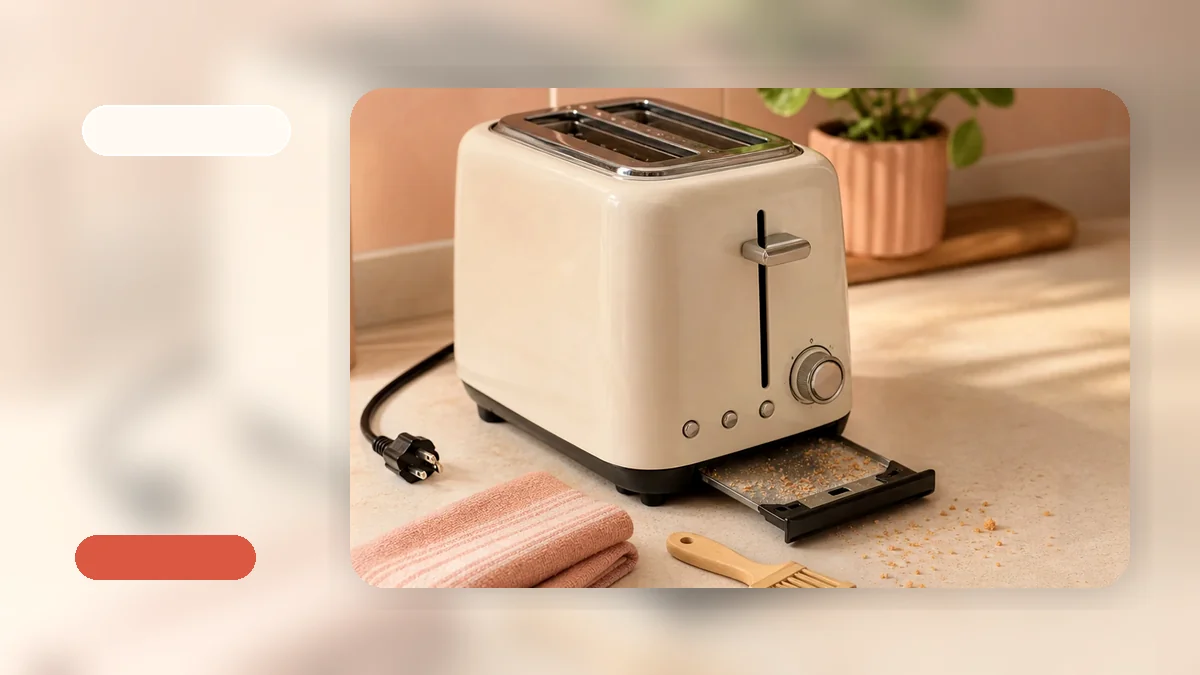
Toaster Sparking: Causes, Safety Steps, and When to Replace
Toaster sparking is one of those kitchen surprises nobody wants to see. A small flash of light from inside your toaster slots can be alarming — and for good reason. While some causes are minor, others signal a real safety risk that needs immediate attention. This guide explains why toaster sparking happens, what to do right away, and how routine cleaning can help prevent it.
Why Is My Toaster Sparking?
There are several reasons a toaster might spark. Understanding the most common causes can help you decide whether the problem is a quick fix or a sign that the appliance needs to go.
- Crumb buildup near heating elements. This is the most frequent cause. Over time, crumbs collect inside the toaster and can fall onto or near the heating coils. When that happens, those crumbs can burn, smoke, or spark. A removable crumb tray helps reduce this buildup, but only if you empty it regularly.
- Worn or damaged heating coils. Heating elements degrade with age. If the coils are visibly cracked, discolored, or broken, they may arc or spark during use.
- Loose or frayed internal wires. Internal wiring can loosen over time, especially in older or frequently moved toasters. Damaged wires are a serious electrical hazard.
- Metal objects inside the slots. Forks, knives, or foil accidentally left in the toaster can contact the heating elements and cause immediate sparking. Never reach into a toaster with metal utensils.
- Food debris stuck in the base. Crumbs are not the only concern. Small food fragments — from bagels, frozen waffles, or crumbly artisan bread — can lodge in hard-to-reach areas and ignite.
Is a Sparking Toaster Safe to Use?
No. A sparking toaster is not safe to use. Even a brief spark indicates that something inside the appliance is not working as it should. Continuing to use a sparking toaster creates both a fire risk and an electrical shock hazard. If you see sparks, smoke, or smell burning plastic, stop using the toaster immediately.
It is worth noting that auto shutoff features are designed for normal operation, not for fault conditions. A toaster that is sparking may not shut itself off in time to prevent damage or injury. For more on general kitchen appliance safety, see our toaster safety tips.
What to Do If Your Toaster Sparks: A Step-by-Step Response
If your toaster sparks while in use, follow these steps:
- Unplug the toaster immediately. Do not rely on the lever or power button. Pull the plug from the wall outlet.
- Let it cool completely. Wait at least 30 minutes before touching the interior. Heating elements stay hot longer than most people expect.
- Do not use metal tools inside. If you suspect a crumb or food piece is stuck, resist the urge to poke it out with a fork or knife. Use a dry, soft brush instead.
- Inspect for visible damage. Look for melted plastic, scorch marks, frayed wires, or broken coils. If you see any of these, do not use the toaster again.
- Try a safe cleaning. If the interior looks normal and the issue seems to be crumb buildup, follow these safe cleaning steps after the toaster has fully cooled.
- Test carefully or stop using it. If sparking returns after cleaning, the problem is likely internal. Unplug it and plan to replace it.
How to Clean Your Toaster to Prevent Sparking
Regular cleaning is the simplest way to reduce the risk of toaster sparks. In Nora’s experience, the small habit of emptying the crumb tray once a week — and keeping a small brush near the toaster for the occasional interior sweep — prevents more problems than any fancy feature on the box.
Here is a basic maintenance routine:
- Empty the crumb tray weekly if you use your toaster daily. For lighter use, every two weeks is usually enough.
- Shake out loose crumbs by turning the unplugged toaster upside down over a trash can.
- Brush the interior gently with a dry, soft brush — like a clean pastry brush or a dedicated small cleaning brush.
- Never use water or cleaners inside the slots. Moisture near heating elements and wiring creates new hazards.
- Always unplug before cleaning. Even if the toaster feels cool, the cord and outlet should be disconnected.
A thorough interior brush-out after heavy use — say, a weekend of toasting bagels or crumbly sourdough — helps keep food debris from reaching the heating elements. For a complete maintenance walkthrough, visit our full cleaning guide.
When Should You Replace a Sparking Toaster?
Not every toaster that sparks is beyond saving. But some signs point clearly toward replacement:
- Sparking continues after a thorough cleaning.
- You see visible damage to heating elements, housing, or wiring.
- The toaster is more than five years old and showing other signs of wear — inconsistent browning, a sticky lever, or a damaged cord.
- You smell burning plastic or see smoke during use.
The cost of a new toaster is almost always lower than the risk of a kitchen fire or electrical injury. If your sparking toaster is telling you it is done, listen to it. Our toaster buying guide walks you through what to look for in a replacement — including easy-clean features, wide slots for bagels, and compact designs for small kitchens. If you want a reliable starting point, the Classic Compact 2-Slice Toaster is a straightforward option with a removable crumb tray and simple controls.
Toaster Sparking: Frequently Asked Questions
Can I fix a sparking toaster myself?
For minor crumb buildup, careful cleaning may resolve the issue. But for internal wiring problems, damaged coils, or electrical faults, do not attempt a DIY repair. Toaster internals carry enough voltage to cause serious injury. If cleaning does not stop the sparking, contact a qualified repair technician or replace the appliance.
Are some toasters more prone to sparking?
Older models with degraded heating elements are more likely to spark. Cheaper toasters may use less durable components. However, even a well-made toaster can spark if it is not cleaned regularly. Proper maintenance matters more than brand name when it comes to preventing toaster sparks.
Does a sparking toaster always mean it’s broken?
Not always. Sometimes excessive crumb buildup is the only cause. A thorough cleaning after the toaster has fully cooled may solve the problem. But if sparking continues after cleaning, it likely indicates internal damage that cleaning alone cannot fix.
How often should I clean my toaster to prevent sparks?
Empty the crumb tray at least once a week for daily users. Do a more thorough interior brush-out monthly, or after heavy use — like toasting multiple bagels or crumbly artisan bread. Keeping up with this routine is the best way to prevent crumb-related sparking.
Is sparking more common in older or cheaper toasters?
Age and build quality can both be factors. Older heating elements naturally degrade over time, and budget models may have less durable internal components. That said, even a high-quality toaster can spark if it has been neglected. Regular cleaning and careful inspection help regardless of what you paid.
If your toaster is past saving, learn how to choose a new one that’s easier to maintain and safer for your kitchen. Our toaster buying guide covers slot width, cleaning features, and small-kitchen fit to help you find the right match.