
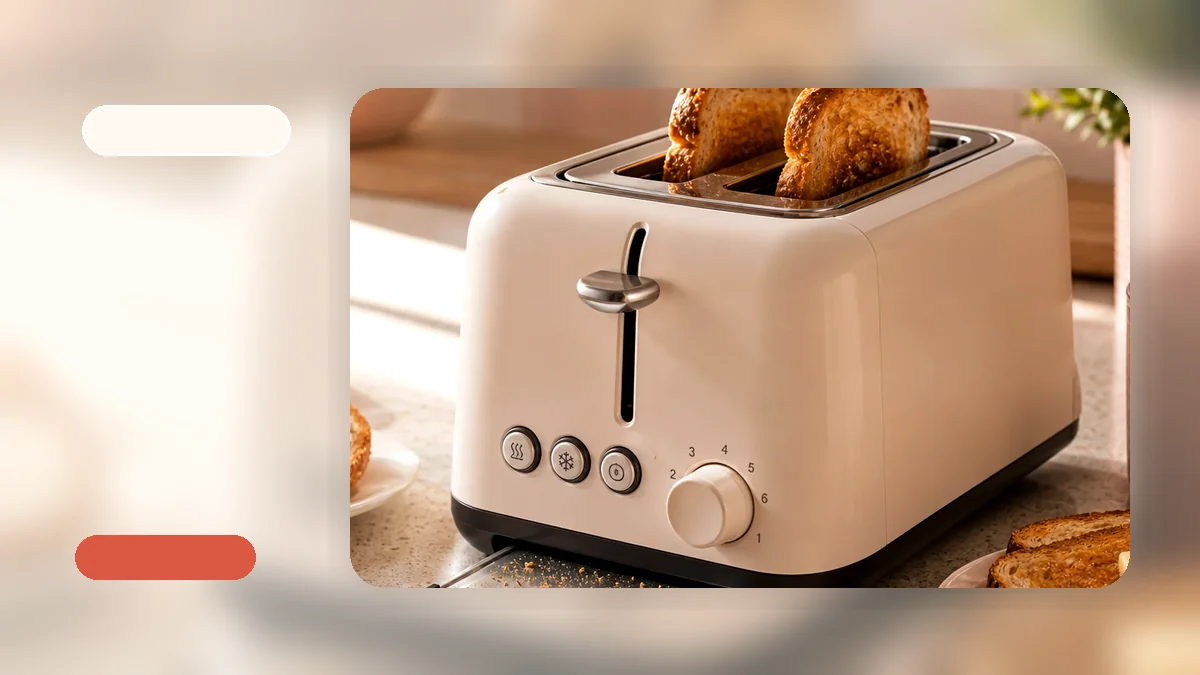
What Does the Reheat Button on a Toaster Do? A Guide to Every Toaster Button
When you are shopping for a toaster, the buttons on the front panel can be confusing. Reheat, bagel, defrost, frozen, cancel, gluten-free—each label promises to solve a different problem, but what does the reheat button on a toaster actually do? And which toaster buttons are worth paying for?
The answer depends on what you eat for breakfast and how your mornings work. A household that toasts frozen waffles every weekday needs different features than a single person who eats plain sandwich bread. Before you decide which toaster to buy, it helps to understand what each button does and who it is designed for.
Why Toaster Buttons Matter More Than You Think
Buttons like reheat, bagel, and defrost are not marketing gimmicks. Each one adjusts how the toaster heats, how long it runs, or which heating elements activate. Knowing what each button does helps you avoid two common mistakes: over-toasting your bread because you ran it through a full cycle when it only needed warming, or paying extra for features you will never touch.
In Nora’s experience evaluating small kitchen appliances, the first things she checks are not the number of buttons but the basics: shade control, slot width, crumb tray access, and whether the controls are clearly labeled. Extra buttons only matter if they solve a breakfast problem you actually have. If you never eat bagels, a bagel button is wasted money. If your toast always cools down before you sit down to eat, a reheat function might save you from the disappointment of cold or over-browned bread.
The right toaster should be simple to use, easy to clean, and clear to control. Buttons should add convenience, not confusion. Our toaster buying guide covers the full range of features worth considering, but here we will focus specifically on what each button does and when it matters.
What Does the Reheat Button on a Toaster Do?
The reheat button on a toaster warms already-toasted bread without browning it further. Instead of running a full toast cycle—which would add more heat and turn your golden toast darker—reheat uses a lower temperature or a shorter time to bring your toast back to a warm, pleasant eating temperature.
This matters more than you might expect. In busy households, toast often sits on the counter for two or three minutes before someone gets to it. By then, it has cooled enough to feel disappointing. A regular toast cycle would over-brown it. The reheat function solves this by adding warmth without additional color.
A friend once asked me whether she needed a 2-slice or 4-slice toaster for her family of three. The real issue was not capacity—it was timing. Her kids finished getting ready at different times, and by the time the last person sat down, the first round of toast was cold. For her, a toaster with a reheat function was more useful than an extra pair of slots.
Not every toaster includes a reheat button. On some models, you get shade control, cancel, and that is it. If reheat matters to you, check the control panel before buying. The Black 4-Slice Toaster with Dual Controls and 7 Shade Settings includes reheat alongside defrost and cancel, making it a practical choice for families who do not always eat at the same moment. The Family-Size 4-Slice Long Slot Toaster with 7 Shade Settings also includes a reheat function for the same reason—families rarely eat in perfect sync.
What Does the Bagel Button on a Toaster Do?
The bagel button on a toaster adjusts how heat is distributed during toasting. On most toasters, pressing the bagel setting redirects or reduces heat so the cut side of the bagel gets toasted more than the outside. Some models achieve this by activating only the inner heating elements; others simply lower the heat on one side. The result is a bagel that is warm and lightly browned on the inside while staying softer on the outside crust.
If you eat bagels regularly, this toaster bagel button is a genuinely useful feature. Without it, you would need to run your bagel through a standard cycle, which often toasts the outside too much or leaves the cut side underdone. The bagel setting on a toaster is designed to fix that balance.
However, a few practical notes matter here. First, not all toasters with wide slots have a bagel setting, and not all bagel buttons work the same way. Second, if you rarely eat bagels, this button is not a priority. Wide slot width matters more for fitting bagels in the first place—the bagel button only changes how they are toasted. You can read more about slot width and bagel compatibility in our toaster buying guide.
I have never been a fan of the phrase “perfect toaster” because it ignores these differences. A toaster with a bagel button is better for someone who eats bagels three mornings a week. For someone who eats English muffins or plain sandwich bread, that button sits unused.
Defrost Button on Toaster: What It Does and When You Need It
The defrost button on a toaster extends the toasting cycle to thaw frozen bread, frozen waffles, or frozen pastries before browning them. Without the defrost function, frozen items may come out warm and browned on the outside but still cold or doughy in the center. The extra time allows the heat to penetrate all the way through.
This is one of the most practical toaster buttons for American households. Frozen waffles, frozen bagels, and frozen bread slices are breakfast staples in many kitchens. If your freezer is where your bread lives, a defrost button saves you from the frustration of bread that looks done but feels cold when you bite into it.
Some toasters combine defrost with a longer automatic cycle. Others have a separate frozen button. The Family-Size 4-Slice Long Slot Toaster mentioned earlier includes both frozen and reheat functions, which covers two of the most common breakfast timing problems—frozen bread and cold toast. If you want to see all available options, all toaster products in our shop include function details in their product descriptions.
Is There a Difference Between a Frozen Button and a Defrost Button?
On most toasters, the frozen button and the defrost button do the same thing. Both extend the toasting cycle to thaw frozen items before browning them. Some brands label the function “frozen”; others use “defrost.” The practical result is similar: your frozen bread or waffle gets thawed and toasted in one cycle rather than coming out with a warm outside and a cold center.
If a toaster has both buttons labeled separately, it is worth checking the product manual. In rare cases, the frozen setting may use a different temperature profile than the defrost setting, but on most mid-range and budget toasters, they are interchangeable labels for the same extended cycle.
Gluten-Free Button on Toaster: Does It Actually Do Anything?
A gluten-free button on a toaster typically adjusts the toasting cycle to account for how gluten-free bread behaves differently than regular wheat bread. Gluten-free bread can dry out faster, brown unevenly, or become crumbly when exposed to a standard toast cycle. The gluten-free setting often uses a gentler or modified heat profile to compensate.
This is not a common feature on most budget or mid-range toasters. You are more likely to find it on specialty or higher-end models. If you eat gluten-free bread regularly, it may be worth checking for—but the honest reality is that most users can get similar results by adjusting the shade control manually. Dropping the browning setting one or two levels often prevents the over-drying that gluten-free bread is prone to.
The gluten-free button is about toast cycle adjustment, not any nutritional claim. It does not make your bread healthier or change its ingredients. It simply runs a different timing and heat profile. For a compact toaster with straightforward shade control that works across bread types, the Classic Compact 2-Slice Toaster for Small Kitchens offers simple, clear settings without overcomplicating the controls.
Other Toaster Buttons Worth Knowing: Cancel, Shade Control, and More
Before you think about reheat, defrost, or bagel buttons, two controls matter on every toaster:
- Cancel button: Stops toasting immediately. Useful when you smell burning, want to check progress, or change your mind. Every toaster should have one.
- Shade control: The browning dial or digital setting that controls how light or dark your toast gets. This is the most universally useful control on any toaster. It is the one setting you will use every single morning.
Some digital toasters put reheat, defrost, bagel, and cancel on a touchscreen panel. That can look clean and modern, but it also means you are tapping a screen to make toast. For some people, that is fine. For others, a simple dial and a few physical buttons feel more reliable.
A toaster with fewer buttons but clear shade control may serve you better than one with many buttons you never use. I have always been more interested in whether a crumb tray slides out easily than whether a toaster has six or eight buttons. Practical details—like how easy it is to clean—tend to matter more over the life of the toaster than the number of functions on the panel.
How to Choose a Toaster Based on Its Buttons and Settings
Choosing the right toaster comes down to matching buttons to your breakfast habits. Here is a simple framework:
- If you eat bagels regularly: Look for wide slots and a bagel setting. Wide slots fit the bagel; the bagel button controls how it toasts. They solve different problems.
- If you keep bread or waffles in the freezer: A defrost or frozen button matters. It extends the cycle so your food thaws and toasts evenly.
- If your toast cools before you eat it: A reheat function is useful, especially in households where people eat at different times.
- If you eat gluten-free bread: Check for a gluten-free button, or plan to use a lower shade setting to prevent over-drying.
- If you mostly eat sandwich bread: A simple 2-slice toaster with good shade control and a cancel button covers most everyday needs.
Do not pay extra for buttons you will never use. A toaster that toasts evenly, cleans easily, and has a clear shade dial is more useful in a real kitchen than a toaster packed with buttons for functions you do not need. I once evaluated a toaster that looked impressive on the product page—beautiful design, long feature list—but the crumb tray was nearly impossible to remove without making a mess. That toaster never made it into any recommendation. Practical value over feature count, always.
Wide slot width is often more important than the number of buttons for bagel and thick bread users. And for anyone replacing an older toaster, check whether the controls are clearly labeled. A confusing panel makes breakfast slower, not easier.
For a full comparison of models with reheat, defrost, bagel, and shade settings, the Family-Size 4-Slice Long Slot Toaster and the Black 4-Slice Toaster with Dual Controls both include multiple button functions with clear labeling.
Frequently Asked Questions About Toaster Buttons
Does the reheat button on a toaster actually make a difference?
Yes. Reheat warms cooled toast without adding more browning. Running cold toast through a full toast cycle adds heat and turns it darker. The reheat function uses lower heat or a shorter cycle to bring toast back to a warm temperature without over-cooking it. It is most useful in households where toast sits for a few minutes before eating.
What is the difference between defrost and frozen on a toaster?
On most toasters, they do the same thing—extend the toasting cycle to thaw frozen bread or waffles before browning them. Some brands use “frozen” as the label; others use “defrost.” If your toaster has both, check the manual for any difference, but in most cases they are interchangeable.
Do I need a bagel button if my toaster has wide slots?
Wide slots help fit the bagel inside the toaster. The bagel button changes how the bagel is toasted—typically by redirecting heat to the cut side. They solve different problems. If you rarely eat bagels, neither feature may be a priority for you.
Which toaster buttons are worth paying for?
Shade control and cancel are universally useful on any toaster. Reheat, defrost, and bagel buttons depend on your specific breakfast habits. If you do not toast frozen items, skip defrost. If you do not eat bagels, skip the bagel setting. Choose based on what you actually eat, not what sounds appealing on a product page.
Why do some toasters have a gluten-free button?
It adjusts the toasting cycle for gluten-free bread, which can brown or dry out differently than standard wheat bread. This feature is not common on most budget toasters, and you can often achieve similar results by lowering the shade setting one or two levels manually.
For a deeper look at choosing the right toaster for your kitchen and breakfast habits, explore our toaster buying guide.
Ready to find a toaster with the right buttons for your breakfast? Browse our full toaster collection to compare reheat, defrost, bagel, and shade settings across models.