Toaster with Removable Crumb Tray: Easy-Clean Buying Guide

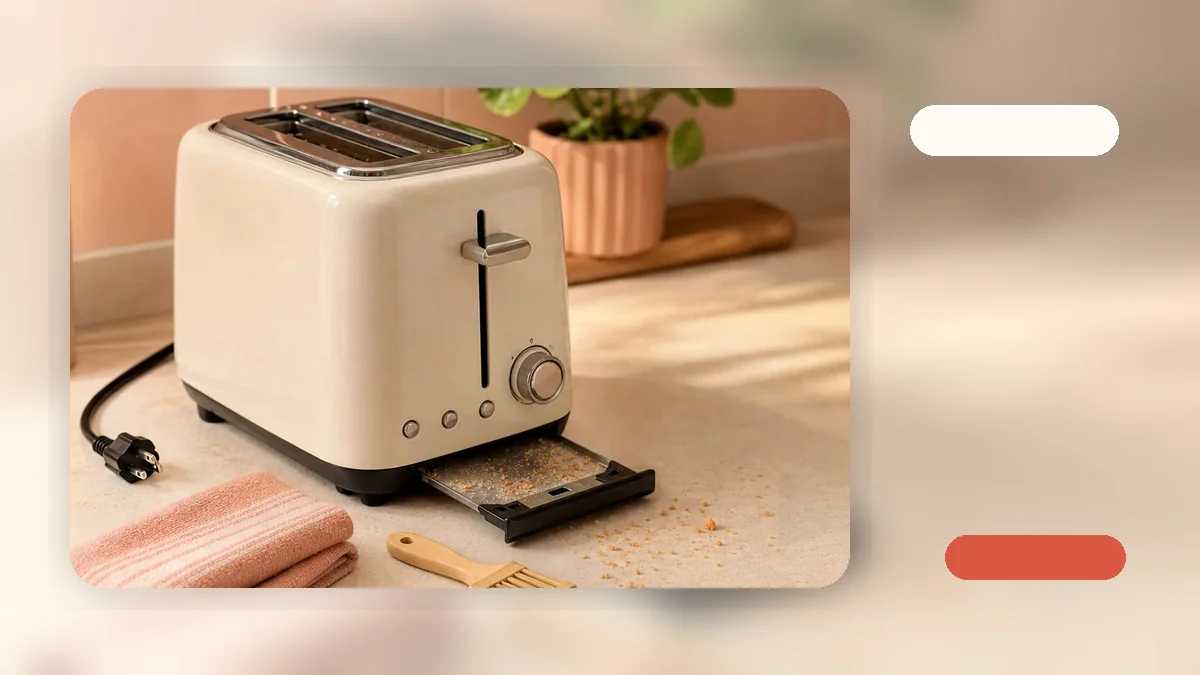
Toaster with Removable Crumb Tray: A Practical Buying Guide for Easy Cleaning
When you are choosing a toaster with a removable crumb tray, you are thinking about something most product pages overlook: how easy is this thing to clean on a Tuesday morning when you are already running late? The crumb tray is not a glamorous feature. It does not get a bullet point on the front of the box the way “7 shade settings” does. But in a real kitchen, the difference between a removable crumb tray and no crumb tray at all shows up fast—in smoke, in smell, and in how often you need to flip the toaster upside down over the sink.
This guide explains what to look for in a toaster with a removable crumb tray, how slice count and slot width affect your mornings, and how to keep your toaster clean without creating a mess or a safety problem.
Why a Removable Crumb Tray Matters for Your Toaster
A removable crumb tray is a small, sliding or pull-out compartment at the bottom of a toaster that collects bread crumbs, small food particles, and debris that fall during toasting. Most modern toasters include one, but not all trays are equally easy to remove, empty, or clean.
Why does this matter for everyday use? Three reasons stand out:
- Less smoke and odor. When crumbs accumulate at the bottom of a toaster, they can burn during subsequent uses. That burning smell in the morning? Usually old crumbs, not your fresh slice.
- Easier routine cleaning. A tray that slides out smoothly lets you empty it over the trash in seconds. A tray that is hard to reach or not removable at all means you either skip cleaning or risk tipping the whole toaster over.
- Better hygiene over time. Crumbs left inside attract moisture and can become a problem in humid kitchens. Regular emptying keeps the interior drier and cleaner.
In Nora’s experience writing about small kitchen appliances, the crumb tray is the feature people wish they had paid more attention to before buying. It is not just a bonus—it is part of the daily experience of owning a toaster. If you are comparing models, a practical starting point is to check whether the crumb tray slides out easily with one hand and whether the tray itself is smooth enough to wipe clean. For a broader overview of what else to compare, our toaster buying guide walks through slice count, slot width, shade control, and more.
Choosing a Toaster with Removable Crumb Tray: Slice Count, Slot Width, and More
The crumb tray is important, but it is not the only feature that determines whether a toaster fits your morning routine. Here is how to think about the other decisions.
2-Slice vs. 4-Slice
For one person in a small apartment, a 2-slice toaster is usually the practical choice. It takes up less counter space and handles sandwich bread, English muffins, and a single bagel without extra bulk. If two or more people eat breakfast around the same time, a 4-slice toaster with a removable crumb tray can save real time. You toast twice as many slices at once, and some 4-slice models include dual control panels so each side can run at a different shade setting.
A Black 4-Slice Toaster with Dual Controls and 7 Shade Settings is one example that pairs four individual slots with removable crumb trays and independent controls—useful when one person wants light toast and another wants theirs dark.
Slot Width Matters for More Than Bread
Wide slots are more useful for bagels, thick bread, frozen waffles, and artisan slices than for standard sandwich bread. If you regularly toast bagels or Texas toast, look for slots that are at least 1.5 inches wide. Forcing a bagel into a narrow slot is frustrating, and it often leads to uneven toasting.
A long-slot toaster offers a different kind of flexibility. Instead of wider slots, it provides extended-length slots that fit longer slices of sourdough or artisan bread without trimming. The Long Slot 4-Slice Toaster with 6 Shade Settings uses two extended slots with 6 shade settings and an easy-clean crumb tray—designed for households that want more slot length without a larger countertop footprint.
Other Features Worth Checking
Beyond slice count and slot width, a few features can make daily use smoother:
- Shade control: Most toasters offer 5 to 7 shade settings. The numbers are not universal across brands, so you may need to experiment with your first few slices.
- Defrost and reheat: Defrost handles frozen bread or waffles without over-toasting. Reheat warms a cooled slice without adding more browning.
- Cancel button: Lets you stop the cycle mid-toast. A small thing, but useful when you smell burning or change your mind.
For more detail on matching features to your bread type and kitchen habits, the toaster buying guide covers the full decision framework.
Other Important Features for a Hassle-Free Toaster
A good toaster crumb tray solves one cleaning problem, but a few other features affect the overall ease of ownership.
High-lift lever. This raises smaller items—like English muffins or thin bread—higher out of the slots so you do not have to reach in with your fingers. It is a small design detail that helps reduce the chance of touching hot surfaces.
Auto shutoff. If you walk away and forget about your toast, auto shutoff stops the heating cycle. It does not replace paying attention, but it adds a layer of safety, especially in households with kids.
Cool-touch housing. Some toasters are designed so the outer surface stays cooler during use. This is helpful in small kitchens where counter space is tight and you might bump the toaster while reaching for something else.
Compact footprint. For apartment kitchens, dorm rooms, or crowded countertops, a smaller 2-slice toaster is often more practical than a 4-slice model. Measure your available counter space before buying—depth matters as much as width.
Safety and cleaning are closely connected. Accumulated crumbs can smoke, and smoke near a hot appliance is not ideal. Our toaster safety tips cover what to watch for and when to stop using a toaster that is behaving unusually.
How to Clean and Maintain Your Toaster’s Crumb Tray
Cleaning a toaster with a removable crumb tray is straightforward, but there are a few steps worth following every time.
- Unplug the toaster and let it cool. Never clean a toaster while it is still plugged in or warm. This is the most important safety step.
- Remove the crumb tray. Slide it out gently. On most models, the tray is located at the bottom back or bottom front of the toaster.
- Empty the tray into the trash. Tap it gently to dislodge stuck crumbs.
- Wipe the tray with a damp cloth. A dry cloth works for light crumbs; a slightly damp one handles sticky residue. Let the tray dry completely before reinserting it.
- Turn the toaster upside down over the sink and shake gently. This dislodges any crumbs that missed the tray. Do this over a sink or trash can, not over your countertop.
How often should you do this? If you toast daily, emptying the crumb tray once a week is a reasonable habit. If you start to smell burning during normal toasting, that is usually a sign that crumbs have accumulated and it is time to clean—no matter how recently you last emptied the tray.
What If Your Toaster Does Not Have a Removable Tray?
Some older or very basic toasters do not include a removable crumb tray at all. In those cases, turning the toaster upside down and shaking out crumbs over a trash can is the main option. Be cautious: always unplug first, wait until the toaster is fully cooled, and never insert objects inside the slots to scrape out crumbs. If you are regularly dealing with this inconvenience, it may be worth upgrading to a model designed with easier cleaning in mind. Knowing how to clean a toaster without a crumb tray safely is useful, but having a removable tray makes the process faster and less messy.
Frequently Asked Questions About Toaster Crumb Trays
Does every toaster have a crumb tray?
Most modern toasters include a crumb tray, but not all do. Some very basic or older models may lack one entirely. When shopping, check the product specifications or product photos for a visible tray slot at the bottom of the unit. A toaster without a crumb tray will require more manual cleaning—turning the toaster over and shaking out crumbs—which is less convenient and can be messier.
How do I clean a toaster without a removable crumb tray?
Unplug the toaster, wait for it to cool completely, then turn it upside down over a trash can or sink and shake gently to dislodge crumbs. You can also use a soft brush to sweep crumbs out of the slots. Never insert metal utensils into a toaster, and never clean a toaster while it is still plugged in. This is a less convenient process than emptying a removable tray, which is why many buyers prioritize the removable tray feature.
Can I replace the crumb tray in my Black and Decker toaster?
It depends on the model. Some Black and Decker toaster crumb trays are available as replacement parts through the manufacturer or third-party parts retailers. Check your toaster’s model number (usually on a sticker on the bottom) and search for “Black and Decker toaster crumb tray replacement” along with that model number. If a replacement is not available or the cost is close to the price of a new toaster, replacing the whole unit may be more practical.
What is the benefit of a toaster tray to catch crumbs?
A toaster tray to catch crumbs keeps debris contained in one removable spot instead of scattered inside the toaster housing. This makes regular cleaning faster, reduces the chance of old crumbs burning and producing smoke or odor, and helps keep your countertop cleaner. It is one of those features that seems minor until you live without it.
Ready for Easier Mornings? Explore Toasters with Removable Crumb Trays
A toaster with a removable crumb tray is not a luxury feature—it is a basic cleaning convenience that makes daily use simpler. When you are shopping, match the toaster to your bread type, your household size, and your counter space. Wide slots help if you eat bagels or thick bread. A 4-slice model saves time for families. And a crumb tray that slides out easily turns a weekly chore into a 30-second task.
Not every user needs a premium smart toaster with a dozen buttons. For most small-kitchen users and everyday breakfast makers, a practical toaster with a removable crumb tray, clear shade control, and the right slot size is enough to make mornings a little smoother.
Browse toasters with easy-clean crumb trays that fit your morning routine and kitchen space.