Toaster for Sourdough Bread: How to Choose One That Fits

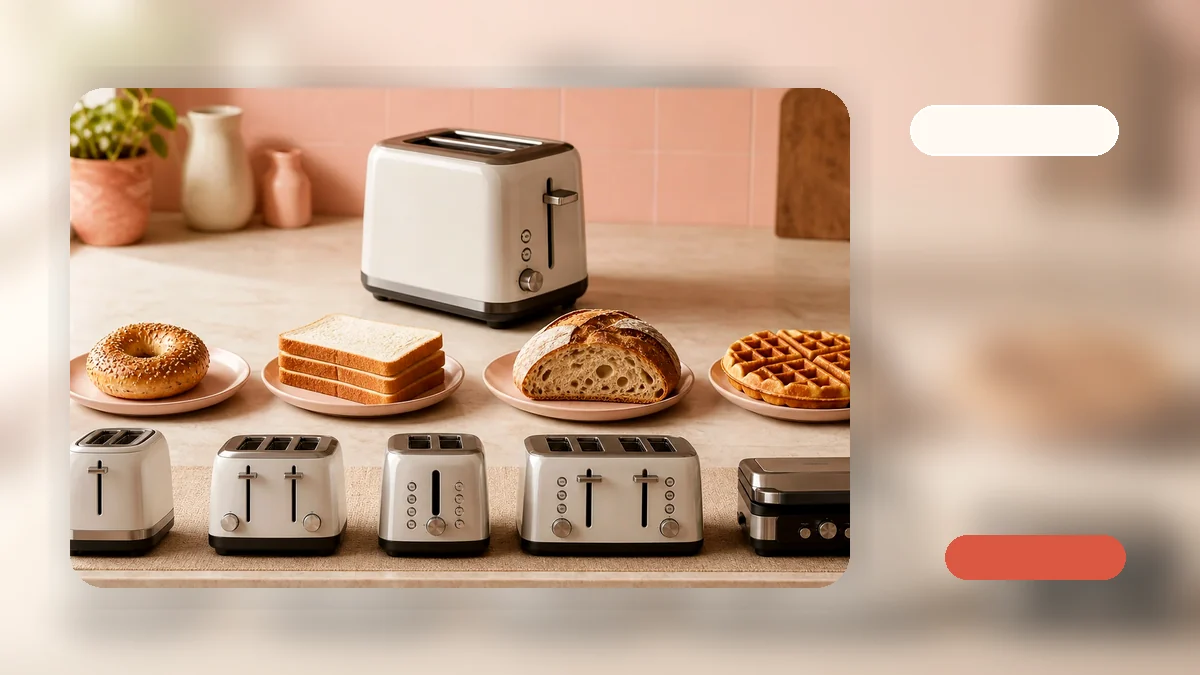
Toaster for Sourdough Bread: How to Choose One That Actually Fits
You brought home a beautiful loaf of sourdough, sliced it thick the way you like, and tried to slide it into your toaster. It didn’t fit. Or it fit, but only after you shoved it in and the crust scraped the sides. If you’ve been there, you’re not alone. Finding a toaster for sourdough bread comes down to two things most product pages don’t explain clearly: slot width and slot length.
This guide walks through exactly what to look for in a sourdough bread toaster — from dimensions to shade control to cleaning — so you can choose a model that fits your bread, your kitchen, and your breakfast routine.
Why Your Standard Toaster Might Not Work for Sourdough
Most standard toasters are designed around the dimensions of pre-sliced sandwich bread: roughly 4 inches wide and about half an inch thick. Sourdough and artisan breads break those assumptions. A round boule sliced by hand might be 5 inches across. A batard cut lengthwise produces long, irregular slices. A piece of miche might be thick enough that it physically cannot slide into a narrow slot without tearing.
The problem isn’t that your toaster is poorly made. The problem is a mismatch between what the toaster was designed for and what you’re trying to put into it.
There are two key measurements that determine whether a toaster can handle sourdough:
- Slot width — the distance between the inner walls of the slot, which determines how thick a slice you can insert.
- Slot length — the top-to-bottom measurement of the opening, which determines how long a slice can be before it sticks out.
Standard 2-slice toasters typically have slots around 1.25 inches wide and 5 to 5.5 inches long. That works fine for sandwich bread. For sourdough, you usually need more room in at least one direction — or both. Our toaster buying guide covers the general decision framework, but for artisan bread specifically, slot dimensions deserve extra attention.
Understanding Slot Dimensions: Width vs. Length
When you’re looking for a toaster that fits sourdough bread, the design solution usually falls into one of two categories: wide slots or long slots. Each serves a different bread shape.
Wide Slots (1.5 Inches or Wider)
Wide-slot toasters have openings that are noticeably wider than the standard 1.25 inches. A slot width of 1.5 inches or more can accommodate thick-sliced sourdough boules, bagels, Texas toast, and frozen waffles without forcing them in.
Wide slots work best when your sourdough comes from a round loaf — a boule — and you’re cutting it into thick, roughly square slices. If the slice is both thick and round, the width is usually the limiting factor.
You can browse wide-slot toasters to see models designed for exactly this kind of bread.
Long Slots (10 Inches or Longer)
Long-slot toasters take a different approach. Instead of making the slot wider, they make it longer — often 10 inches or more. This design suits elongated artisan loaves: batards, ciabatta slices, and long sourdough pieces that would hang over the edge of a standard slot.
A long-slot toaster can often handle both long slices and shorter, wider items, making it a versatile choice if your bread basket changes through the week. One morning it’s a long sourdough slice, the next it’s a shorter piece of rye.
The trade-off is footprint. Long-slot toasters are narrower but physically longer on the counter. If you have depth available but limited width, this may actually fit your kitchen layout better than a wide 4-slice model.
Beyond Size: Other Features That Matter for Artisan Bread
Finding a toaster big enough is step one. But a good sourdough bread toaster should also handle the way dense, crusty bread behaves during toasting. Here are four features worth considering.
Shade Control and Browning Settings
Sourdough is denser than sandwich bread, and the crust browns differently than the interior. A toaster with 6 or 7 shade settings gives you finer control than a simple light-dark dial. In practice, this means you can start at a medium setting, check the result, and adjust on your next slice without guessing.
Some users find that dense artisan bread benefits from a slightly longer, gentler toast cycle — enough to warm the interior through without scorching the crust. More shade settings make that kind of adjustment easier.
Defrost and Reheat Functions
If you freeze slices of sourdough (which many home bakers do to keep loaves fresh), a defrost function is genuinely useful. It adjusts the cycle to thaw and toast in one step, so you don’t end up with a burnt exterior and a cold center. A reheat function helps when your toast has gone cold before you got to it — it warms without over-browning.
High-Lift Lever
Thick sourdough slices can sit low in the slot. A high-lift lever raises the carriage higher than a standard lever, making it easier to grab smaller or thicker pieces without fishing around with tongs or burning your fingers.
Removable Crumb Tray
Dense breads tend to shed more crumbs than soft sandwich bread. A removable crumb tray is a small feature, but it matters for daily use. If you toast sourdough several times a week, crumbs accumulate quickly. A tray you can slide out, empty, and slide back in keeps things clean and reduces the chance of burning crumbs producing smoke or off smells.
Matching a Toaster to Your Kitchen and Routine
Technical specs only matter if they fit your real kitchen. Here’s how to think about a bread toaster for sourdough in the context of your space and habits.
Counter Space
Long-slot toasters are typically longer but narrower than 4-slice wide-slot models. If your counter has depth but limited front-facing width, a long-slot model may tuck in more easily. On the other hand, a compact 2-slice toaster with wide slots takes up less space overall and works well for smaller households. Something like this compact 2-slice toaster for small kitchens keeps the footprint minimal while still offering room for thicker slices.
Household Size
If you live alone or with one other person, a 2-slice toaster — whether wide-slot or long-slot — is usually sufficient. A family where multiple people want different bread types at the same time (sourdough for one, bagels for another, frozen waffles for a kid) benefits from a 4-slice model with dual controls.
Breakfast Habits
Think about what you actually toast most mornings. If sourdough is your primary bread, prioritize slot dimensions over extra features. If you rotate between sourdough, bagels, and frozen items, a wide-slot model with a defrost function gives you more flexibility. The right toaster should be simple to use, easy to clean, and clear to control — not overloaded with buttons you’ll never press.
Quick Checklist: Questions to Ask Before You Buy
If you need a toaster big enough for sourdough bread, run through these questions before you add anything to your cart:
- Measure your most common bread. What is its widest or thickest point? How long is a typical slice? Write these numbers down — they’re your starting point.
- Check the slot specs. Look for a slot width of 1.5 inches or wider for thick slices. For long batards, look for slot lengths of 10 inches or more.
- Consider your full breakfast. Do you also toast bagels, frozen waffles, or English muffins? A wide-slot model may be more versatile than a long-slot model if your bread basket varies.
- Assess your kitchen layout. Measure your available counter space — both width and depth. Long-slot toasters need more depth; wide 4-slice models need more width.
- Decide on controls. Do you want precise shade settings (6–7 levels), or is a basic dial fine? If you toast different bread types, more control helps.
- Check for easy cleaning. Does it have a removable crumb tray? With dense sourdough, you’ll want this.
You can view all toaster options to compare models across these features.
Frequently Asked Questions
Can you actually toast sourdough bread in a toaster?
Yes, you can toast sourdough bread in a toaster — but only if the toaster’s slots are wide enough or long enough to fit your slices. Many standard toasters have slots around 1.25 inches wide, which is too narrow for thick-sliced sourdough without forcing or trimming the bread. Look for a toaster with slot widths of 1.5 inches or more, or a long-slot design that accommodates longer artisan slices. If the bread fits comfortably without pressing against the sides, it will toast evenly.
What is the best way to toast sourdough bread in a toaster?
Here’s how to toast sourdough bread in a toaster with good results:
- Slice to a consistent thickness — about half an inch to three-quarters of an inch works well. Uneven slices toast unevenly.
- Start at a medium shade setting. Sourdough’s dense crumb and thick crust can go from golden to burnt quickly. A medium start lets you calibrate.
- Use the defrost setting if the bread is cold from the fridge or freezer. This extends the cycle to thaw before browning.
- Don’t force a piece that’s too large. If it won’t slide in easily, it’s the wrong toaster — not the wrong bread.
Is a long-slot toaster or a wide-slot toaster better for sourdough?
It depends on the shape of your sourdough. A long-slot toaster is better for elongated, irregular artisan loaves — batards, long ciabatta slices, and bread cut lengthwise. The extended slot length means you don’t have to trim long slices to fit. A wide-slot toaster is better for round boules cut into thick, roughly square slices, and it also handles bagels, Texas toast, and frozen waffles. If you bake or buy different shapes of sourdough, a long-slot toaster tends to be the more versatile choice for that specific bread type.
How can I toast bread without a toaster?
There are a couple of ways to toast bread without a toaster. An oven broiler on high heat can toast bread in 1–2 minutes per side if you watch it closely. A dry skillet or cast-iron pan on medium heat works too — place the bread in the pan and flip once the underside is golden. These methods require more attention than a toaster, and the results can be less even, but they work in a pinch. For daily sourdough toasting, a toaster with the right slot dimensions is more convenient and consistent than stovetop or oven methods.
If you regularly bake or buy artisan loaves, a toaster that fits your bread changes your morning. You can explore long-slot and wide-slot toasters designed for this exact purpose.