How to choose a toaster without getting lost in small appliance noise.
This guide turns toaster specs into breakfast decisions: capacity, slot shape, shade settings, cleaning, countertop space, and whether a feature is worth paying for.
Use this page as the main footer hub for practical buying advice.
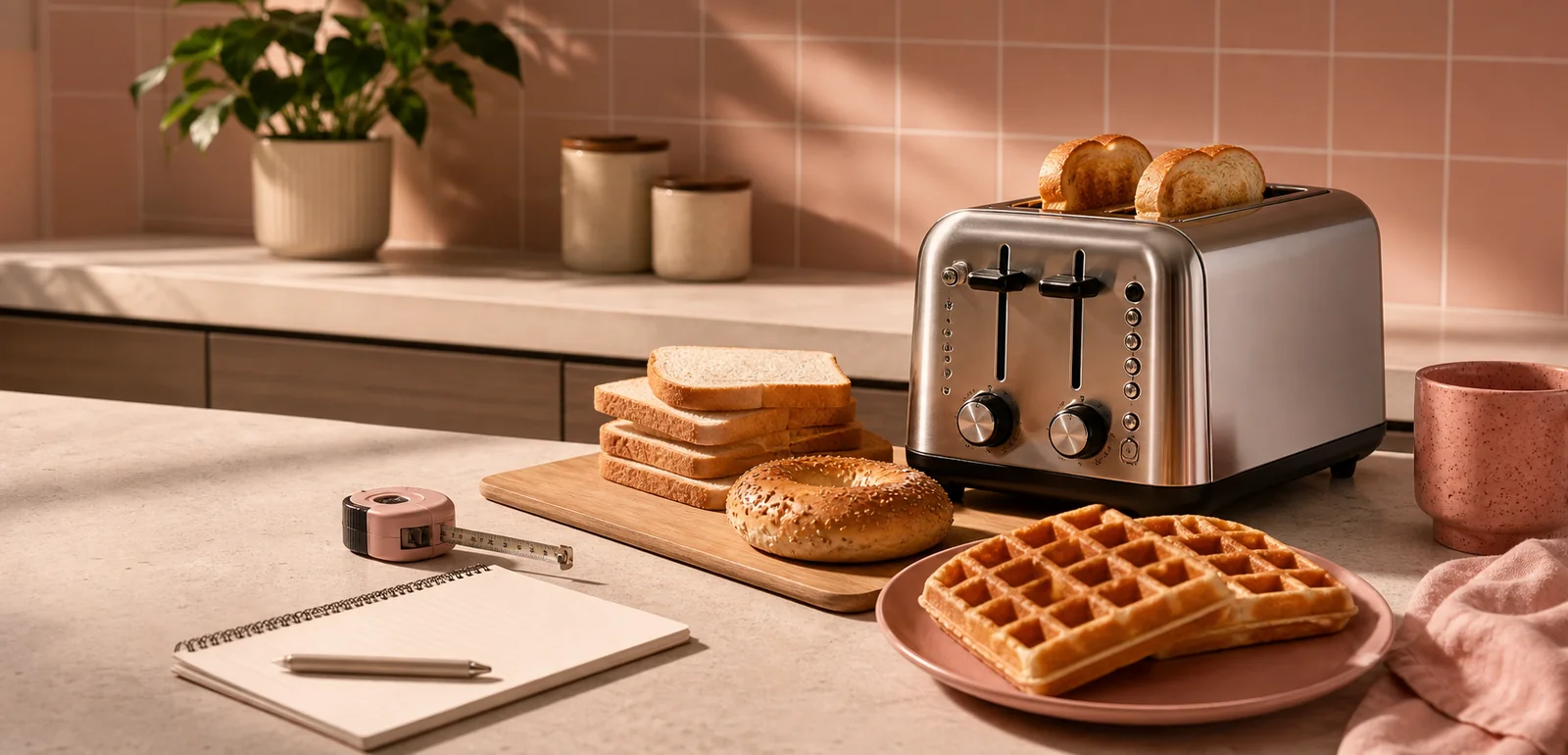
Most toaster choices come down to seven practical decisions.
A toaster is a simple product, but the wrong fit can annoy you every morning. Instead of starting with “best,” start with how the machine will live on your counter.
Slice capacity
2-slice is practical for small households. 4-slice is better for families and repeated morning use. Larger capacity is only useful if your counter has room for it.
Slot width
Wide slots matter for bagels, thick bread, frozen waffles, and Texas toast. If the bread has to be forced in, the toaster is already a poor fit.
Slot length
Long slots solve a different problem: longer, irregular slices such as sourdough or artisan bread. Do not confuse width with length.
Shade settings
Numbers are useful only when they are easy to repeat. A simple dial can be better than a confusing digital panel if it helps you find your regular toast shade.
Cleaning
Crumbs are not a small detail. A removable crumb tray and wipe-friendly surfaces make the toaster easier to keep on the counter.
Countertop space
Measure the spot where the toaster will sit, including clearance around the sides. A compact toaster that actually fits is often better than a feature-heavy one.
Budget and value
Fair value means paying for the functions you use, not for language that sounds more advanced than the product really is.
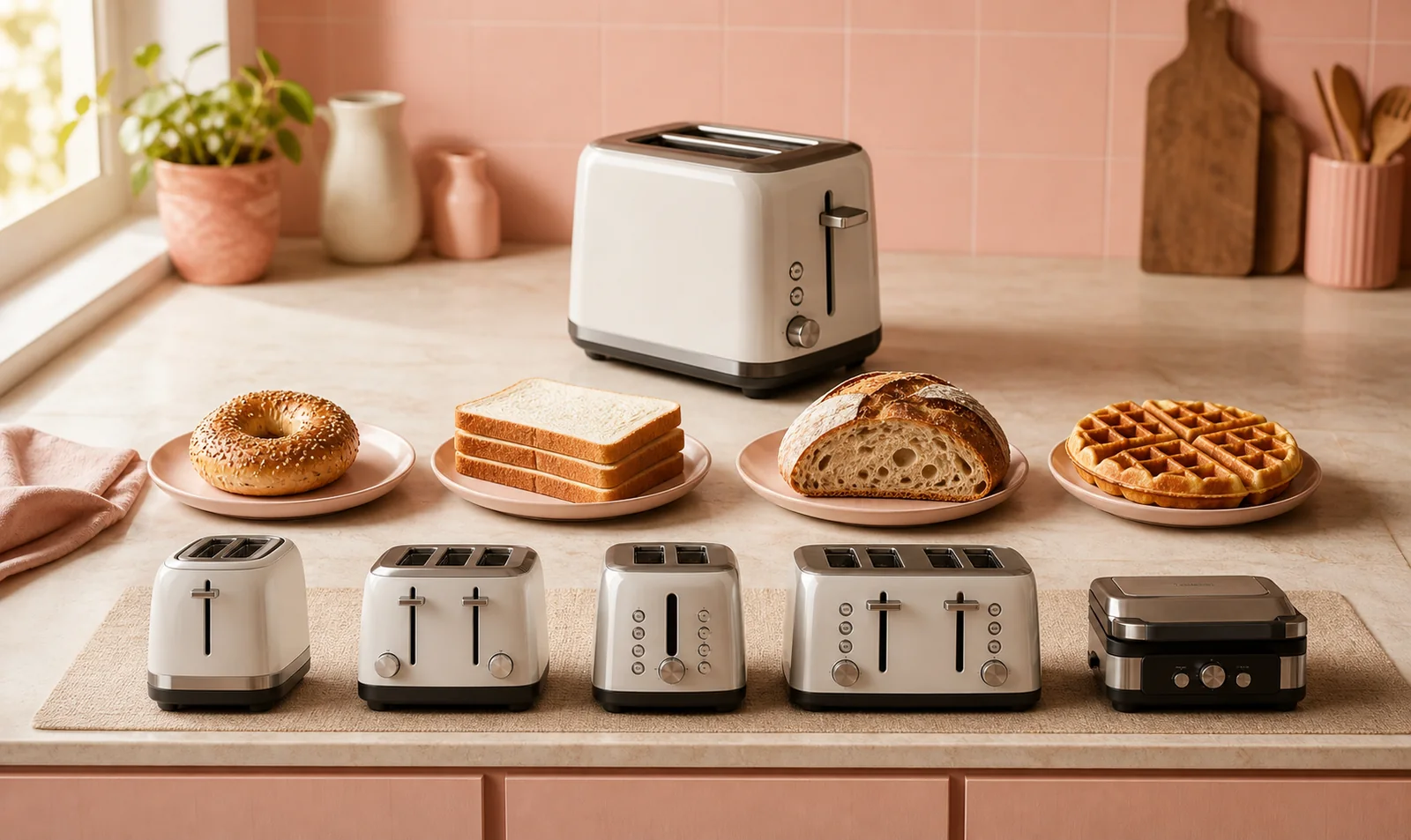
Match the page to the problem.
SaleToaster uses collection pages as practical decision paths, not just product bins. This keeps the site clear for users and search engines: capacity pages handle capacity intent, slot pages handle bread-fit intent, and support guides explain the choices in between.
- Capacity intent: 2-Slice Toasters and 4-Slice Toasters.
- Small-space intent: Small Toasters and the Toaster Size Guide.
- Thick bread intent: Wide Slot Toasters and Bagel Toasters.
- Artisan bread intent: Long Slot Toasters.
What toaster features actually mean in daily use.
Use this table when product descriptions start to sound similar. It translates features into buyer benefits and fit boundaries.
| Feature | Useful when | Watch for | Next page |
|---|---|---|---|
| Wide slots | You toast bagels, waffles, or thick bread | Do not assume every wide-slot product has a dedicated bagel button | Wide Slot Toasters |
| Long slots | You toast sourdough or longer artisan slices | Long bodies may take more counter width | Long Slot Toasters |
| Defrost | You toast frozen waffles or frozen bread | Settings differ by model; use cautiously | Food safety FAQ |
| Removable crumb tray | You want easier weekly cleaning | Check where the tray pulls out | Care & Cleaning |
| Dual controls | Family members want different shade levels | Usually appears on larger 4-slice models | 4-Slice Toasters |
Apply the guide to actual SaleToaster products.
Use these as starting points, then verify the product page for capacity, dimensions, functions, and final image details.
Buying guide questions.
What should I look for when buying a toaster?
Start with slice capacity, slot width or length, shade controls, crumb tray access, countertop footprint, and the foods you actually toast. These choices matter more than broad claims about being premium or perfect.
Is 2-slice or 4-slice better?
Neither is universally better. A 2-slice toaster is easier to place in a small kitchen. A 4-slice toaster is better when several people eat at once or when you regularly toast multiple items.
What is the difference between wide slot and long slot?
Wide slots help with thickness, such as bagels and waffles. Long slots help with length, such as sourdough and artisan slices. Some models offer both, but the buying reason is different.
How many shade settings do I need?
Most users do not need the highest number possible. What matters is whether the settings are clear, repeatable, and easy to adjust for different bread types.
What makes a toaster easier to clean?
A removable crumb tray, accessible exterior surfaces, and simple controls make cleaning easier. Crumbs are a daily detail, so cleaning should be part of the buying decision.