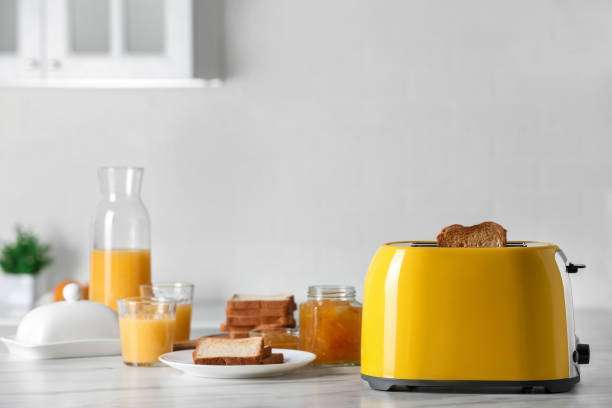
Toaster A fragmented truth: Why do we keep changing things even though we know they’re imperfect?

Neglected old kitchen items
In most kitchens, the toaster occupies an extremely awkward position. Unlike the refrigerator, it doesn’t determine the fate of food, nor does it participate in the core preparation of daily meals like the stove. It’s more like a “supporting actor,” making only a brief appearance in the morning and almost never being seriously discussed.
However, this inconspicuous little appliance often has an unexpectedly long service life. Many people are well aware that their toasters have various imperfections, such as uneven heating, inaccurate bounce time, difficulty in cleaning, and overheating, yet they still use them for many years; even after they are clearly worn out, they are still reluctant to replace them.
This phenomenon is not an isolated case but a prevalent consumer mentality. The “imperfections” of toasters seem to be tacitly accepted. Its shortcomings are tolerated, its outdated nature is forgiven, and its obsolescence is taken for granted.
Behind this is not technological stagnation, nor a lack of choice for users, but a long-overlooked, incomplete truth: toasters were never intended to be used with the goal of a “perfect experience” in mind; they serve a function of fulfilling emotions and habits, rather than being a purely efficiency tool.
Imperfection does not equal unacceptability
If judged by modern standards, a toaster has problems in almost every aspect:
- The temperature control knob often lacks precise markings, and the same setting performs inconsistently at different times and in different humidity levels.
- The heating wire distribution causes the edges of the toast to burn easily while the center remains just browned.
- The spring-loaded mechanism has a mechanical delay, easily leading to overbaking.
- Even higher-priced models struggle to completely resolve these issues.
Strangely, users rarely express strong dissatisfaction because of this. On the contrary, many people describe their toasters with a tone of indulgence and familiarity.
It’s as if these flaws aren’t shortcomings, but rather part of the object’s “personality.” People might say it’s a bit eccentric, but it’s fine once you get the hang of it. Others might say it’s unevenly baked, but they actually like the varying shades of toast.
This attitude contrasts sharply with our expectations of other home appliances. A washing machine that doesn’t get things clean is quickly discarded. An air conditioner with inconsistent cooling will immediately elicit complaints.
Only the toaster seems to be allowed to have its flaws. This isn’t because it’s unimportant, but because of its unique position. It doesn’t connect to “must-do tasks,” but rather to a dispensable yet cherished moment in life.

Psychological buffer for breakfast scene
The toaster truly comes in handy at the start of the day. The kitchen in the early morning doesn’t need high efficiency; it needs a transitional state.
As we transition from sleep to wakefulness, we’re not suited to complex choices and precise operations. The toaster provides a low-cognitive-burden behavioral pattern. The process involves:
- Place the toast in.
- Turn the knob to the familiar position.
- Press the button.
- Wait.
This process requires almost no thought. Precisely because toasters are not perfect, people have developed a usage style that relies on experience rather than reason.
You know today’s toast is a little thicker, so you turn the setting down a bit. You know this machine browns faster in humid weather, so you prepare in advance. This “tacit understanding” formed through long-term interaction makes the toaster a stable psychological buffer.
In such a scenario, perfection seems superfluous. If a toaster were truly accurate to every second and every degree, people would need to relearn how to use it.
The imperfections of older machines actually lowered the barrier to entry, making the process more familiar and reassuring.
It’s not the machine itself that I’m reluctant to replace.
Many people experience an unexpected hesitation when actually replacing their toaster.
Even if the new machine surpasses the old one in every aspect of performance, a sense of unease still arises. This feeling doesn’t stem from a fondness for the old, but rather from a resistance to the disruption of familiar rhythms.
a toaster lie in the fact that it bears the marks of time. Every adjustment of the knob, every scorched edge after a misjudgment, every helpless moment of cleaning up breadcrumbs—all these gradually accumulate into a kind of life memory.
The flaws of the old toaster are precisely the anchors of these memories. Once replaced, a small but stable node in life disappears.
This is why many people, even after buying a new toaster, will repeatedly compare it to their old one over time, and even miss its performance. The new machine may be more intelligent, but it lacks “predictable flaws.”
And a person’s sense of control over their life often comes from familiarity with uncertainty, rather than the pursuit of perfection.
Tacit defects in industrial design
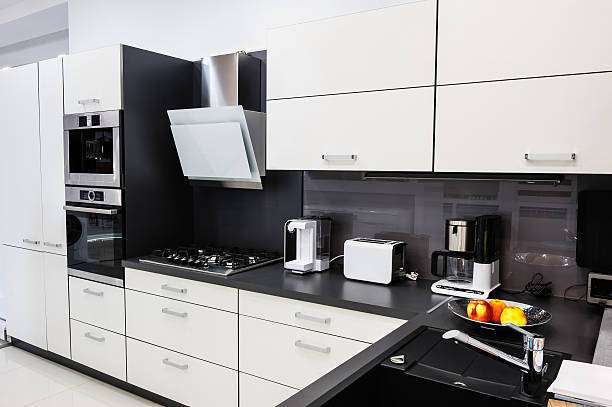
From a product design perspective, the long-term stability of the toaster ‘s form is no accident. Its basic structure has remained largely unchanged for decades, not because engineers are unable to improve it, but because the market has accepted its “imperfect solution.”
In its design, the toaster is allowed for heating errors, structural simplifications, and compromises in usability.
This tacit acceptance is essentially a psychological negotiation between design and use. Users don’t expect it to solve all problems, as long as it works within a controllable range.
The designers also understand that a toaster is not a device that needs to be highly trusted in the home; it doesn’t directly involve safety risks or determine the main dietary structure, thus naturally allowing for greater tolerance.
This logic, uncommon in other products, has been consistently applied to Toaster. It serves as a rare example demonstrating that not all products need to pursue the ultimate experience;
The value of some products lies precisely in their “good enough but not perfect” state.
The sense of participation brought by imperfection
a toaster also give the user a sense of participation. You’re not simply pressing a button and waiting for the result, but rather making judgments through continuous adjustments.
This sense of participation gives the result a personal touch. The same loaf of toast, baked by different people using the same machine, will produce different styles.
When machines are not fully automated, people become part of the process. This participation transforms breakfast from a passively received outcome into a process of gentle intervention.
The satisfaction people derive from it comes not from the standardization of the result, but from familiarity with and control over the process.
toasters even knowing that more advanced equipment exists. Its drawbacks, ironically, make people feel like they are still “making breakfast,” rather than being replaced by the equipment.
The core of the incomplete truth
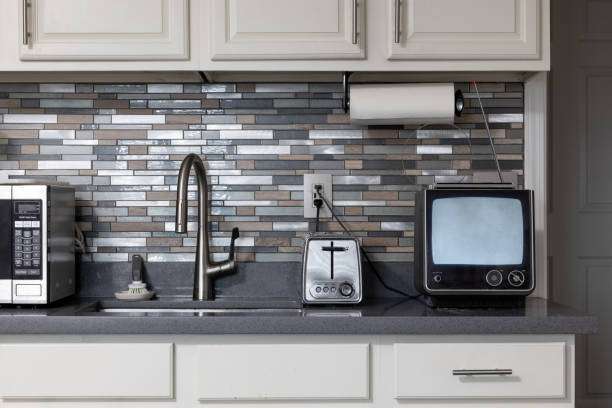
of a toaster isn’t its technical limitations, but rather that it was presumed from the outset to be something that doesn’t need to be perfect.
Placed on the periphery of life, it happens to connect with people’s emotions and habits.
Its imperfections don’t diminish its value; rather, they strengthen its presence within the family.
When we say we can’t bear to replace it, what we’re really reluctant to part with isn’t the machine itself, but rather the moments in life where we don’t have to think or strive for the best solution.
Toaster reminds us that not all tools need constant upgrades. Some objects exist to keep life in a predictable and less stressful state.
In an era that pursues efficiency and intelligence, the slowness, clumsiness, and imperfections of the toaster become a scarce and stable factor. It reminds people that life doesn’t always need to be optimized; some imperfections are part of comfort in themselves.
FAQ
Question 1: Is uneven heating in a toaster a quality issue?
In most cases, this is not a simple quality defect, but a common phenomenon due to structural design and cost control. As long as the heating performance is stable and predictable, it is generally considered to be within an acceptable range.
Question 2: Is it necessary to upgrade to a new model for a more even baking effect?
If you are already used to the rhythm of using your current machine, the improvement brought by upgrading may not significantly improve the experience, and you may need to readjust.
Question 3: Are there any safety hazards from using an old toaster for a long time?
As long as the breadcrumbs are cleaned regularly and the power supply and heating structure are not obviously damaged, the safety risks under normal use are usually low. However, if abnormal heating or malfunction occurs, it should be stopped immediately.