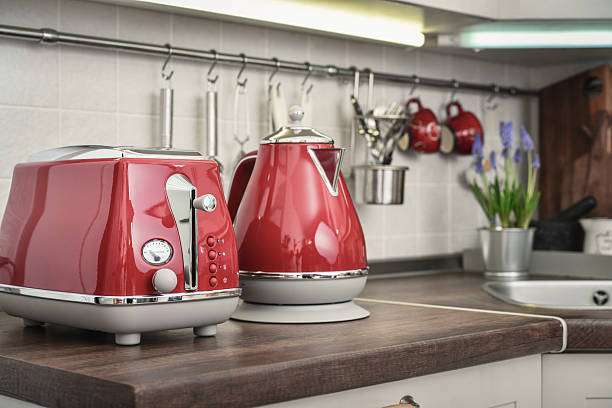
Toaster A 3-centimeter fatal difference: the real risk of burns caused by loss of control during a jump.

Quick answer: why does a toaster heat or brown unevenly?
Uneven browning usually comes from crumbs, bread thickness, frozen spots, off-center placement, a shade setting that is too high, or older heating elements. Start with cleaning and bread fit before assuming the toaster has failed.
| What to check | Why it matters |
|---|---|
| Start with the simple causes | Crumbs, bread fit, placement, and settings often explain everyday toaster problems. |
| Watch for warning signs | Repeated smoke, sparks, damaged cords, or breaker trips are reasons to stop using the toaster. |
| Compare the broader guide | Use the how a toaster works when the issue connects to choosing, cleaning, or replacing a toaster. |
- Unplug and cool the toaster before cleaning.
- Empty the crumb tray and remove loose crumbs.
- Try a standard slice at a moderate setting.
- Check whether thick or frozen bread fits freely in the slots.
FAQ
Can crumbs make a toaster brown unevenly?
Yes. Crumbs and stuck pieces can affect smell, smoke, and how cleanly a cycle runs.
Should I use a higher setting for uneven toast?
Not first. Clean the toaster and check bread placement before increasing the shade setting.
When should I stop troubleshooting?
Stop using the toaster if it sparks, trips a breaker repeatedly, or smokes after careful cleaning.
The moment of being ignored
Most people’s understanding of the dangers of toasters is limited to things like “don’t put your hands in” and “remember to unplug it.” But burns that actually happen in home kitchens often don’t stem from obvious violations of safety regulations but from a detail that almost no one seriously considers—the height the toast bounces.
When the toaster finishes heating up, the internal spring releases, and the toast is pushed upwards—it seems perfectly natural. But it is precisely this short displacement of a few centimeters that determines whether a person’s hand will instinctively approach the high-temperature area, whether steam will be released directly onto the skin, and whether the user “picks it up casually” or has to “reach in.”
Three centimeters may seem insignificant, but it is the dividing line between a toaster sliding from a safety tool into a potential source of harm.
Why is jump height often overlooked?
When consumers choose a toaster, they often focus on power, speed settings, appearance, and whether it is stainless steel or plastic. Few people ask the question: How much of the toast is exposed when this machine pops it up?
The reason is not complicated. The bounce height is not a standardized parameter. Toaster manuals usually do not explicitly state the bounce distance, and reviews focus more on heating uniformity and speed. As a result, a physical dimension that directly affects safety has long been hidden beneath “taken-for-granted” operating habits.
More importantly, people’s judgment of risk is often based on overt threats. Visually, a toaster is a closed, orderly, and seemingly gentle device, without open flames or exposed heating wires. When the toast bounces up, the action is crisp and clean, giving the psychological suggestion that “it’s over.” It is precisely at this moment that vigilance is at its lowest, and the risk erupts all at once.
How did the three-centimeter difference form?
The toaster’s bounce height is not determined arbitrarily, but is the result of the combined effects of its internal structure. Spring length, spring force coefficient, bracket weight, toast thickness compatibility range, and machine height all interact to In practice determine where the toast is pushed.
The problem is that the bounce height of toasters from different brands, batches, and even the same model can change after long-term use. Spring fatigue reduces elasticity, breadcrumb buildup increases resistance, and bracket deformation alters the trajectory. These changes don’t cause the machine to “malfunction,” but they can leave the toast stuck in an awkward position.
When the top of the toast is about three centimeters below the edge of the machine, the user cannot pick it up directly with their fingertips and can only subconsciously reach in. This action puts the fingers into the still-hot area that is dissipating heat. The residual heat on the metal inner wall, the radiant heat that has not completely stopped, and the concentrated upward-released steam combine in a short period of time, causing damage to the skin.
Real burns are not caused by “mistakes”.
Many cases of minor burns in households share a common characteristic: the users don’t think they’ve done anything wrong. They simply wait for the toast to bounce back up, as usual, and then go to get it.
The problem lies precisely here. The toaster’s design assumes users don’t need to assess risks. When the toast bounces, the behavioral chain automatically activates. However, if the bounce height is insufficient, this chain is forced to extend, causing the hand to enter an area it shouldn’t.
Burns don’t always cause instantaneous, excruciating pain. Often, it’s a delayed sensation. When skin is exposed to high-temperature steam or metallic radiation for a short period, a burning sensation may appear only after a few seconds. By the time you realize something is wrong, the damage has already occurred.
These burns are usually not severe enough to require medical intervention, but they can still leave redness, blisters, and even affect daily activities.
Because the consequences seem “not serious”, the risks are consistently underestimated.
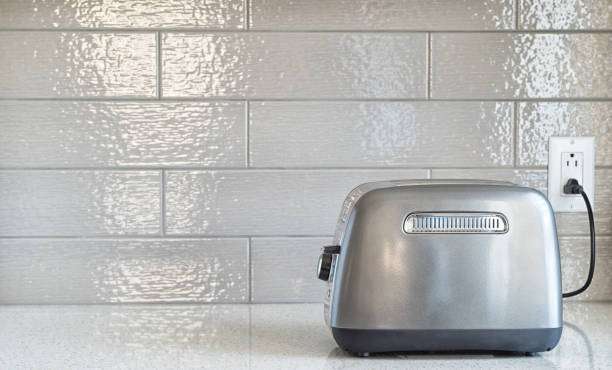
The relationship between jump height and human reaction
Human hand movements largely rely on visual confirmation. When the toast is exposed high enough, the hand movement is to pick it up from above, keeping the wrist at a neutral angle, with the fingertips touching the edge of the toast. This is a relatively safe path.
When the toaster is not high enough, vision can mislead movement. People will try to enter from the side or below, with their wrists bent and fingers extended, widening the contact area. This posture is precisely where they are most likely to come into contact with the hot inner wall.
A difference of three centimeters is precisely the critical point at which the human body transitions from a “clamping action” to a “probing action.” This is not a subjective choice, but a natural reaction of the body under spatial constraints. Once the design crosses this threshold, the risk is no longer under the user’s control.
The Neglected Damage from Steam
Besides direct contact, the bounce height also determines the direction of steam release. During the heating process, the internal moisture of the toast is converted into steam. When it bounces, this steam quickly escapes upwards.
If the top of the toast is higher than the edge of the steamer, the steam will diffuse into the air, causing the temperature to drop rapidly. However, when the toast is positioned lower, the steam will be guided by the inner wall of the steamer and concentrated into the narrow space above. At this point, your finger will be positioned right in the steam channel.
Steam burns are often more insidious than contact burns. They don’t require prolonged contact; a mere instant can cause damage to the skin. This is why some people get burned even when they “haven’t touched anything.”
Why does this risk persist?
If the risk truly exists, why wasn’t the design thoroughly revised? The reasons are not singular.
First, toaster safety standards focus more on electrical safety and fire resistance, with relatively lenient constraints on ergonomic details. Since bounce height is not explicitly included in mandatory specifications, manufacturers naturally compromise between cost and structure.
Secondly, consumer feedback is often fragmented. Minor burns are rarely attributed to product design, but are more often seen as “accidents.” This attribution of responsibility makes it difficult for problems to be systematically exposed.
Finally, while toasters are used frequently, the probability of a single incident posing a risk is low. They don’t present immediate danger like knives, nor do they raise alarm like open flames. The risk is diluted within daily habits, existing long-term yet often overlooked.
A highly uncontrolled chain reaction
If the bounce height gets out of control, it not only poses a risk of burns but also alters the overall user experience. Users might start using tools like tongs or forks to remove the toast, increasing the risk of accidental contact.
Some might also repeatedly operate the machine before it has completely cooled down, attempting to adjust the toast’s position.
These actions, in essence, are all attempts to compensate for design deficiencies, but they inadvertently introduce new dangers. A device that was originally designed for simple operation becomes a “potential risk point” requiring extra attention.
How to determine if your toaster has any hidden problems?
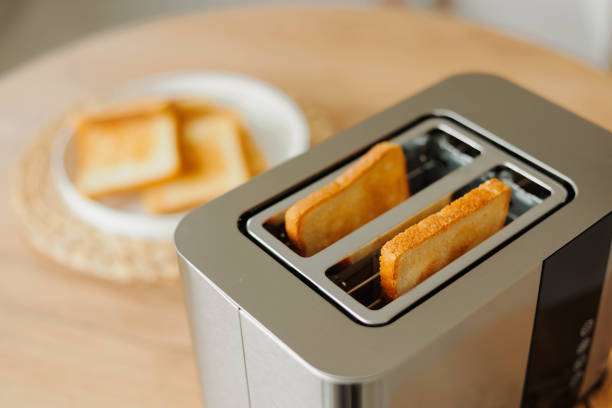
Many people don’t realize the problem until they get burned. But actually, there’s a very intuitive way to judge. When the toast pops up, if you can naturally pick up the top of the toast with just your fingertips without touching the inside of the machine, then the height is relatively safe.
If you need to look down to observe, adjust the angle, or have your fingers inserted below the edge of the device, then this toaster has crossed the risk threshold. Regardless of whether it is still “working normally,” from an ergonomic point of view, it is no longer user-friendly.
Design is not just a matter of function.
toaster bounce height reveals a larger reality. Many household appliances meet functional needs but overlook the body’s natural reaction pathways during use. The risk doesn’t come from extreme situations, but from repetitive daily actions.
A three-centimeter difference is not an exaggeration, but a real safety boundary. When a design crosses this boundary, the responsibility should not fall entirely on the user.
Underestimated kitchen micro-risks
The real danger in the kitchen is often not the open flame and sharp blades, but these devices that are considered “safe.” The danger of a toaster lies not in whether it will explode, but in whether it will make people lower their guard in the most relaxed moments.
When we re-examine this three-centimeter gap, what we see is not just a toaster defect, but a long-overlooked design blind spot.
FAQ
Question 1: Do all toasters have the problem of insufficient bounce height?
Not all models do, but this problem is more common in low- to mid-priced machines and older machines, especially after spring fatigue.
Question 2: Is it safer to use tongs to remove toast?
It is safer after the machine has been completely powered off and cooled down, but using a metal tool at the moment it pops up may increase the risk of electric shock or secondary burns.
Question 3: Does a decrease in bounce height mean that the toaster must be replaced?
If it has already affected normal use and forced hands into the high-temperature area, from a safety perspective, replacing or stopping use is a safer option.
Related toaster safety and choosing guides
For burn-related toaster questions, practical placement, lift height, control layout, and everyday cleaning are often more useful than dramatic claims.
Quick FAQ
What toaster features can make bread removal easier?
A high-lift lever, suitable slot width, and stable controls can make it easier to remove smaller slices or thinner bread without awkward handling.
How can I reduce everyday toaster burn risk?
Let toast rise fully, avoid reaching into slots, keep the crumb tray clean, and stop using a toaster if controls or lifting action feel unreliable.