
A toaster may seem like a simple small appliance, but the core component that truly determines the toasting experience is often not its outer shell, design, or bread slot width, but rather the heating element hidden inside. The material of the toaster’s heating element directly affects thermal efficiency, temperature uniformity, heating response speed, and maximum temperature resistance.
These factors In practice manifest in the toasting results, such as whether the bread develops even browning, whether it remains moist inside, and whether it achieves the desired crispness. Different heating element materials exhibit significant performance differences. Stainless steel, nickel-chromium alloy, quartz tubes, mica heating elements, and ceramic heating elements all influence the final quality of the toaster at different levels. Understanding these differences helps consumers choose a toaster that suits their usage habits and explains why toasters in different price ranges often have vastly different toasting performances.
Relationship between heating element material and thermal efficiency
The core function of a heating element is to convert electrical energy into heat energy. However, different metallic or non-metallic materials vary greatly in terms of thermal conductivity, resistivity, and thermal decay stability. Taking stainless steel heating elements as an example, toasters have a relatively gentle thermal conductivity and a slightly longer heating time, thus tending to have a “slow-heating” characteristic during baking. For users who prefer even color and less scorching of the edges, stainless steel heating elements are relatively user-friendly, but this also means a slower baking speed, a more stable evaporation of moisture from the bread’s interior, and an overall softer texture rather than being too crispy.
In contrast, nickel-chromium alloy toaster heating elements have very high resistivity, allowing them to heat up rapidly and maintain a stable heat output, thus making it easier to achieve a direct, high-temperature browning. Typically, this results in a quickly formed golden-brown crust while the interior remains soft. If the customer prefers a “crispy outside, soft inside” texture, then nickel-chromium alloy heating elements are often more suitable. However, this rapid heating also presents a challenge: it places higher demands on the temperature control system; otherwise, it may lead to localized overheating, causing the bread to become partially burnt.
Ceramic heating elements exhibit entirely different characteristics. Ceramic boasts exceptional far-infrared radiation, enabling efficient penetrating heating at relatively low surface temperatures. This results in more even heating of the bread’s interior moisture, preventing excessive browning on the outside. This material is commonly found in mid-to-high-end toaster products, making it particularly suitable for those who demand extremely uniform browning. The advantage of ceramic heating is its ability to reduce surface drying, preserving more aromatic compounds and resulting in a deeper, more complex flavor profile.
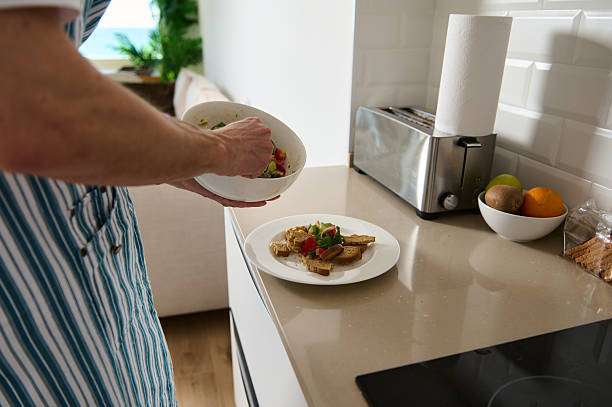
Toaster heating evenness and the appearance of bread caramel patterns
The evenness of the caramelized crust on bread is a key indicator of toaster quality, and the material of the heating element directly affects the stable and even release of heat. Stainless steel heating elements perform well in terms of stability because of their low coefficient of thermal expansion, making them less prone to inconsistent heat decay after prolonged use. However, due to their relatively slow heating rate, their heating texture is softer and less likely to produce dark caramelized patterns, which is actually an advantage for those who prefer a “lightly baked” style.
Nickel-chromium alloy heating elements are characterized by rapid heating, resulting in a noticeable contrast between light and dark brown spots. If designed properly, they can produce very beautiful golden brown patterns. However, if the arrangement of the heating elements or the winding process is not precise enough, localized hot spots can easily appear, causing certain areas of the bread to burn. This is a common problem with many inexpensive toasters .
Quartz tube heating, on the other hand, leans more towards “radiative” uniform heating. Its light and heat diffusion is good, making it suitable for those seeking a fully uniform color during baking. However, quartz glass has relatively poor impact resistance and requires more careful maintenance.
The far-infrared properties of the ceramic heating element also contribute to its excellent uniformity. The penetrating power of infrared rays ensures that heating is not limited to the surface, thereby reducing the risk of localized overheating and resulting in a delicate, soft caramelized crust on the bread.
The deep correlation between thermal response speed and taste
The heating and cooling rates of the heating element directly affect the efficiency of preserving moisture inside the bread. If the temperature rises too quickly, the surface moisture will evaporate rapidly, causing the crust to harden instantly; if the temperature rises slowly, the moisture inside the bread will have more time to migrate outward, resulting in a soft and moist texture.
Nickel-chromium heating elements heat up quickly, resulting in a crispy surface on bread, but they can become too hard if baked for too long. Ceramic heating elements, on the other hand, heat up more gently, keeping the internal moisture of the bread more stable, making them particularly suitable for those who want thicker slices of bread.
For many users, the so-called “delicious toast” often comes from a balance between a light, crisp outer layer and a moist interior. This balance is actually determined by the material of the heating element and the temperature control system. Different materials have different thermal inertia values and therefore different cooling rates. Materials with high thermal inertia, such as ceramic, cool down slowly, making it easier to maintain a stable browning, while nickel-chromium cools down quickly, making it suitable for precise control of browning depth.
toaster heating element durability on browning stability
Over time, heating elements gradually deteriorate due to thermal fatigue, oxidation, and microcracks. This deterioration not only affects lifespan but also heating uniformity and browning. Nickel-chromium heating elements have strong oxidation resistance, but under high-temperature environments, repeated heating can still cause localized darkening, resulting in a less sensitive heating response than before. Stainless steel heating elements exhibit excellent corrosion resistance, but their electrical resistance is less sensitive than that of nickel-chromium elements, making them prone to reduced thermal efficiency after many years of use.
Ceramic heating elements are corrosion-resistant and oxidation-resistant due to their non-metallic properties, enabling long-term stable output and thus leading in maintaining consistent browning in toasters over time. However, ceramic materials are relatively brittle and should be protected from severe vibrations or impacts.
Mica heating elements, thanks to their structural stability, can maintain long-term uniform heating and are therefore commonly found in product lines that seek a balance between cost and performance.
The subtle effect of heating element surface temperature on aroma release
The aroma of baked bread comes from the caramelization of sugars and the Maillard reaction of proteins. The spectrum and surface temperature distribution of heating elements made from different materials all affect how this aroma is released. Nickel-chromium alloy toaster heating elements can quickly caramelize sugars, producing a rich, caramelized aroma, but if the toaster heats up too quickly, the aroma may lack distinct layers. Ceramic heating elements, due to their far-infrared properties, ensure even heating inside the bread, promoting a slower but deeper release of aromas, resulting in a more full-bodied and aromatic bread.
Quartz tube heating is more light-based, resulting in a lighter, more delicate caramel flavor; stainless steel heating elements are more conservative, with a slower caramelization process, making them suitable for baking styles that prefer a milder flavor.

User Needs and Heating Element Selection Recommendations
Different users have different toaster usage habits, taste preferences, and cleaning concerns, so the choice of toaster heating element material should also vary. Those who prefer quick breakfasts and a crispy exterior and soft interior are well-suited to nickel-chromium alloy heating elements; those who value even browning and deep aroma are better suited to ceramic or quartz tube heating elements. For those prioritizing durability and stable performance, stainless steel and mica heating elements are more advantageous.
Understanding the characteristics of toaster heating elements not only improves the accuracy of toaster selection but also allows for better control of heating time during daily toaster use , achieving optimal flavor. These seemingly minor material differences truly influence the bread’s caramelization, color uniformity, and overall taste.